
Home > FISHER and PAYKEL > FISHER AND PAYKEL DD60DHI9-CN Dishwasher
FISHER AND PAYKEL DD60DHI9-CN Dishwasher

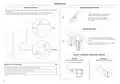
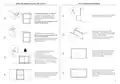
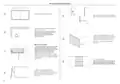
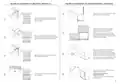



DOUBLE DISHDRAWER™ DISHWASHER
INTEGRATED
DD60DHI9 CN
INSTALLATION GUIDE
CN
592774Bꢀ09.24


| General | Details |
|---|---|
| Name | FISHER AND PAYKEL DD60DHI9-CN Dishwasher |
| Make | FISHER and PAYKEL |
| Language | English |
| Filetype | PDF (Download) |
| File size | 2.98 MB |
 (1 votes, average: 5.00 out of 5)
 Loading...

FISHER and PAYKEL DD60SCTX9 Dishwasher

FISHER and PAYKEL DD60DDFHX9 Dishwasher

FISHER and PAYKEL DD24SCTB9 N Dishwasher

FISHER and PAYKEL DD60SCTW9 Dishwasher

FISHER and PAYKEL DD60SDFTX9 Dishwasher

Fisher and Paykel DW24UT2I2 Dishwasher

FISHER AND PAYKEL DD24SHTI9N Dishwasher

FISHER AND PAYKEL DD60SDFHTX9 Tall Dishwasher

FISHER AND PAYKEL DD24DTI9 N Dishwasher

FISHER AND PAYKEL DD24STI9 Dishwasher

FISHER AND PAYKEL DD60DHI9-CN Dishwasher Overview
Summary of Contents
- Page 1: Double Dishdrawer™ dishwasher Integrated Installation guide
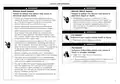
- Page 2: Safety and warnings Electric shock hazard Failure to follow this advice may result in electrical shock or death. Fitting an integrated panel requires access to electrical service areas. Improper connection of the equipment-earthing conductor can result in a risk of electric shock. Before fitting the front panel, the dishwasher must be disconnected from the power supply. Cut hazard Failure to use caution could result in injury. This appliance must be earthed to reduce the risk of electric shock. Tip hazard Failure to follow this advice may result in injury or product damage. The dishwasher must be completely enclosed at the time of installation.
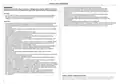
- Page 3: Safety and warnings Ensure the product is not plugged in when fitting custom panels. To reduce the risk of fire, injury to persons or damage when using the appliance, follow the important safety instructions listed below. Installation of custom panels requires basic mechanical and electrical skills. Installation must comply with your local building and electricity regulations. Failure to install the custom panels correctly could invalidate any warranty or liability claims. Do not repair or replace any part of the appliance unless specifically recommended in this guide. The dishwasher must be installed to allow for future removal from the enclosure if service is required. Ensure all water connections are turned off. Do not operate this appliance if it is damaged, malfunctioning, partially disassembled or has missing or broken parts. This appliance must be earthed.
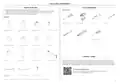
- Page 4: Tools and components Parts supplied Tools required Keep all packing materials until the unit has been inspected. Inspect the product to ensure there is no shipping damage. If any damage is detected, contact the dealer or retailer you bought the product from to report the damage. Fisher & Paykel is not responsible for shipping damage. This video provides an overview of what is needed to install a DishDrawer™ Dishwasher. It is intended as an overview only of the installation process and is not intended to be used as a standalone guide on how to install a DishDrawer™ Dishwasher yourself. Installation should be undertaken by a Fisher & Paykel trained and supported service technician or qualified person. To access installation videos, scan the QR code with your smartphone or watch online at: fisherpaykel.com/dishdrawer-install. Templates can also be downloaded from fisherpaykel.com.
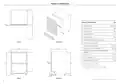
- Page 5: Product dimensions Overall height: 820–880 mm Overall width: [not specified] Overall depth: [not specified] Height of chassis: 811 mm Depth of chassis: 553 mm Ventilation gap between door panels: [not specified] Depth of toe kick recess: [not specified] Minimum clearance between toe kick panel and floor: [not specified] Height of feet: 9–69 mm Actual product dimensions may vary by 2 mm
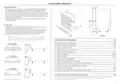
- Page 6: Custom panel dimensions Maximum weight of door panels must not exceed 9kg (including handle). The panel should be adequately sealed to withstand moisture (50°C @ 80% RH). The back and sides of the panel should be completely sealed with a waterproof vapour barrier. The door panel should not rest on the surrounding cabinetry. Installation outside these specifications may result in condensation on cabinetry surfaces. Toe kick panel may need to be cut to clear the underside of the tub. A cutting template has been supplied with your DishDrawer. Toe kick panel height can be determined by using the provided specifications. Minimum clearance between door panels is 2mm. Maximum weight of each drawer panel (including handle) is 9kg.
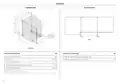
- Page 7: Cabinetry dimensions and clearances are essential for proper installation. Connections can be located in an adjacent cabinet on either side of the DishDrawer. Minimum inside height is specified as 820 mm. Inside width ranges from 600 mm to 610 mm. Minimum clearance to adjacent cupboard door is 2 mm. Minimum clearance to corner cupboard is 13 mm. Minimum overall depth is indicated. Recommended height of adjacent cabinetry is 720 mm. Height of toe kick area ranges from 100 mm to 160 mm. Refer to 'Plumbing & electrical considerations' and 'Cabinetry preparation' for more information on service requirements.
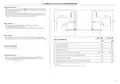
- Page 8: Plumbing and electrical considerations are essential for installation. Services can be installed on either the left-hand or right-hand side of the product. If the drain hoses are not long enough, a drain hose extension kit can be purchased. The recommended water temperature for connection is cold, with a maximum of 60°C. Water connection must comply with local plumbing regulations. Water pressure specifications vary for water softener and non-water softener models. Electrical requirements include a voltage range of 220V to 240V with a minimum of 9.5A. Drains must be separated to meet kosher requirements, and local rabbi confirmation is recommended. Dimensions for drain hoses, power cord, and inlet hose are provided for installation. The maximum distance from cabinetry to the center of the electrical outlet is specified.
- Page 9: Preparation Service access We recommend locating the service holes on either side of the DishDrawer™ Dishwasher. If the holes are created through wood, ensure the edges are smooth and rounded. If the holes are created through metal, ensure the edge protector is fitted. Align the supplied moisture protection tape to the cabinetry as illustrated. Ensure this area is free of debris before carefully applying the tape to the surface. If securing via the drawer removal method, ensure the marked locations provide adequate support. If there are no side partitions, construct timber bracing to secure the fixings to. Select cabinetry securing method: Secure to cabinetry via brackets or secure via drawer removal. Service hole dimensions: Maximum distance between rear of cavity and service hole, maximum distance between floor and service hole, minimum diameter of service hole.
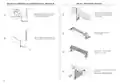
- Page 10: Push the product into the cavity. Fit custom door panels. Remove both side pins from each drawer by pulling the pins out towards you. Secure all four side brackets to the DishDrawer™ Dishwasher, aligning bracket A with slot A and bracket B with slot B. Ensure the ends of the brackets are not pushed into the chassis. Carefully pull both brackets from DishDrawer™ Dishwasher down and out before unplugging the Knock-to-Pause modules and earth wires. Loosen each foot by 1/2 a turn by lightly tilting the product and rotating each leg anticlockwise. On the back of the upper panel, mark the centre and align the base of the upper bracket with the base of the panel. Level the DishDrawer™ Dishwasher by carefully tipping it onto a protected surface. Push the product into the cavity, pulling the hoses through as you push to avoid crushing or twisting them.
- Page 11: Fit custom door panels. Snap the bracket tab to remove. Re-insert the side pins on both drawers and push firmly to secure panels in place. Attach the Knock-to-Pause module to the panels as shown. Ensure the Knock-to-Pause modules are oriented correctly and are not in contact with the brackets before securing. Insert a Phillips screwdriver into the hole above each side pin and rotate to adjust the panel alignment. There is a maximum travel distance of 2mm. To earth the panel bracket, connect the earth wire from the product to one of the tabs. Reconnect the Knock-to-Pause module to the UI 1 slot on the wash controller as shown. Ensure the minimum clearance gap of 8mm between panels is maintained after all adjustments have been made.
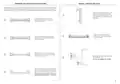
- Page 12: Secure to cabinetry via brackets (method A). Secure to cabinetry via drawer removal (method B). Open the lower drawer and press both locking tabs back to release. Partially open one of the drawers and remove the first screw cover from the trim moulding. Lift the drawer off the runners and carefully set aside on a protected surface. Push runners back in and take care not to pull the drawer out too far to prevent strain on the hoses. Pre-drilling a pilot hole may be required depending on the cabinetry material. Using your hand or the supplied hex socket and a screwdriver, level the DishDrawer™ Dishwasher as required. Secure to cabinetry via all four fixing locations in the chassis. Ensure sound insulation is replaced correctly.
- Page 13: Install prefinished toe kick. Secure to cabinetry via drawer removal. Measure toe kick height. Ensure hoses are not twisted and all latches are facing forward before refitting the drawers. The toe kick meets the bottom of the tub is the recommended cut-off point. Carefully score toe kick at desired height. Refit the drawer to the runners and clip into place via both locking tabs. Snap excess and smooth edges. Snap both end tabs. Slide toe kick onto the mounting rails and secure.
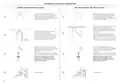
- Page 14: Prepare the custom toe kick panel. If the depth of your toe kick recess is greater than 40mm, the toe kick panel may need to be cut to one of the predetermined profiles to clear the underside of the tub. Align the mounting bracket to the panel ensuring it is horizontally centered. Secure the mounting bracket to the panel using the supplied mounting screws. Carefully cut or router the panel to the desired profile using the cutting template as a guide. Slide toe kick onto the mounting rails and secure. Do not over tighten the screws. Ensure all panel edges are sealed to withstand moisture (50°C @ 80% RH). Discard cutting template responsibly.
- Page 15: Plumbing & electrical connection Sink trap/waste tee installation Install the drain hose support to the back wall, as close to the underside of the countertop as possible. Refer to 'Plumbing & electrical considerations' for minimum install heights. Ensure the drain hose does not extend into water retained in the trap; an air gap is required to prevent waste water from siphoning back into the tub. Unplug or drill out the waste tee before securing joiner to sink trap or waste tee. Ensure the supplied rubber washer is fitted to the coupling before connecting the inlet hose to tap. Using a spanner or pliers, turn a further 180° to secure, avoiding over-tightening. Do not turn water supply on. The DishDrawer™ Dishwasher must be powered on for the flood protection feature to be enabled. Plug product in.
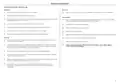
- Page 16: Installer checklist to be completed by the installer includes key installation and electrical checks. Check all parts are installed correctly and secure. Ensure all electrical tests have been conducted in accordance with local regulations. Ensure all clearance gaps have been maintained. Test operation by ensuring the DishDrawer™ Dishwasher is securely fastened and opens and closes freely. Turn on the power and water supplies, then open the drawer to hear a beep and see a program indicator light. Ensure the panel is fitted correctly to the DishDrawer™ Dishwasher. Add three cups of water into the drawer and start the Rinse program. Check the spray arm is in place, mounted correctly, and rotates freely. Ensure the inlet hose has a supplied rubber washer fitted and tightened.
- Page 17: Troubleshooting No program indicator lights up when the drawer is opened. Ensure power is connected and is switched on. Auto power-on may need to be activated. Water supply fault. Ensure the water supply is turned on. Press once to stop the beeping, then again to clear the fault. Drawer doesn’t close properly. Ensure nothing is obstructing the drawer from closing such as hoses or drawer latches. Water appears around water supply and drain connections. Check hoses, connections and existing plumbing for leaks. Drawer cannot drain. Ensure the drainage hose and connection to pipes are not blocked. Press once to stop the beeping, then again to clear the fault. Product is tipping. Ensure the product is secured to the cabinetry. Front panels are misaligned to surrounding cabinetry. Check the cabinetry is square. Check and relevel product. The spray arm has loosened or come off its mounting. Open the drawer and check the spray arm. If it has loosened, re-fit it. If a problem occurs that is not listed, refer to your user guide for additional troubleshooting.

LG LDT7808BD Dishwasher

AEG FSK73767P Dishwasher

Hotpoint HDA2100HCC Dishwasher

Not mentioned WFE 2B19 X UK Dishwasher

FISHER PAYKEL DD60SCHTX9 Dishwasher

NEFF S189YCX01E Dishwasher

BOSCH SMS4EAI28E Free Standing Dishwasher

BLAUPUNKT 5VF4X00BKD Dishwasher

AEG F8642FI Fully Integrated Tall Tub Dishwasher

BOSCH SMD8YC801E Dishwasher