
Mueller DW-1800 Series 18 Inch Dishwasher







Professional Series
18” Built-In
Dishwasher
Model DW-1800
INSTALLATION
MANUAL


| General | Details |
|---|---|
| Name | Mueller DW-1800 Series 18 Inch Dishwasher |
| Make | MUELLER |
| Language | English |
| Filetype | PDF (Download) |
| File size | 0.33 MB |
 (1 votes, average: 5.00 out of 5)
 Loading...

Mueller DW-1800 18 in. Black Front Digital Dishwasher

Mueller DW-2400 Dishwasher

Mueller DW-1800 Series 18 Inch Dishwasher Overview
Summary of Contents
- Page 1: Professional series 18” built-in dishwasher model DW-1800 installation manual.
- Page 2: Important safety instructions Installation requirements Location requirements Drain requirements Electrical requirements Water supply requirements Installation
- Page 3: Important safety instructions are provided with the dishwasher, including installation instructions and a user manual. Read all instructions before installing and operating the dishwasher for the first time. Failure to adhere to these instructions and precautions will void the manufacturer’s warranty. Disconnect electrical power before installing the dishwasher. Permanent installation work must comply with local codes and be performed by authorized personnel only. Do not use the dishwasher until it is completely installed. Check the dishwasher for any damage before installation and contact customer service if any damage is found. The dishwasher must be connected to a hot water supply between 120°F (49°C) and 150°F (65°C) for optimal performance. The appliance must be positioned near an electrical power supply. Installation requires basic mechanical and electrical skills, and improper installation is not covered by the warranty.
- Page 4: Installation requirements outline the necessary tools and parts for installation. Gather the required tools and parts before starting installation. Parts supplied include 4 x #8 wood screws 5/8 long and hole plugs to secure the dishwasher. Water supply hose with screws is packed inside the tub. Tools you will need include a Phillips screwdriver, measuring tape or ruler, carpenter's square, 6 adjustable level, flashlight, and wrench.
- Page 5: Materials you will need include various tools and supplies for new installation. Tools for new installation include thread seal tape, screw type hose clamp, tubing cutter, drill, and hole saw set. Materials for new installation consist of a waste tee, hand shut-off valve, and coupler.
- Page 6: Location requirements for installing a built-in dishwasher include the need for full enclosure on the top, sides, and back. The cabinet opening must be at least 23 inches deep, 17.7 inches wide, and between 32.5 to 34.5 inches high. When installing in a corner, ensure a minimum clearance of 2 inches between the dishwasher and adjacent wall. Select a location close to the sink for easy connections to water and drain lines. The dishwasher should not be installed more than 10 feet from the sink to ensure proper drainage. Avoid installing the dishwasher over carpeted flooring.
- Page 7: Drain requirements These installation instructions are intended for use by qualified professionals. One end of the drain hose is already attached to your dishwasher. The type of drain installation depends on local codes or ordinances regarding air gaps, waste tee or disposer connection height, and drain loop height. If the answer to any of the three questions is yes, Method 1 must be used. Method 1 involves an air gap with waste tee or disposer. Method 2 involves a high drain with waste tee or disposer. Drill a 1” - 1½ diameter hole in the cabinet wall for the drain hose connection. The hole should be smooth with no sharp edges.
- Page 8: Electrical requirements are intended for use by qualified professionals. Ensure that the electrical installation conforms to all national and local codes and ordinances. You must have a 120-volt, 60 Hz, AC-only, 12-amp, fused electrical supply. It is recommended to use a time-delay fuse or circuit breaker and a separate circuit. No other appliances or outlets should be connected to the dishwasher supply circuit. Drill a 1 4⁄5 diameter hole in the cabinet on the right-hand side or rear. For wood cabinets, sand the hole until smooth; for metal cabinets, cover the edge with a grommet. One end of the power cord is already attached to the dishwasher; plug the other end into a grounded 3 prong outlet. Openings for electrical lines must be installed in the marked areas to avoid interference with the dishwasher frame. The improper connection of the equipment grounding conductor can result in a risk of electric shock.
- Page 9: Water supply requirements The water supply line pressure must be 6-145 psi. The water heater should be set to deliver 120°F (49°C) to 150°F (65°C) water temperature to the dishwasher. The water supply hose may enter from either side, within the shaded area shown in Figure F. Cabinet preparation Drill a 14⁄5 diameter hole in the cabinet for the water supply line. Turn off the water supply. Install a hand shut-off valve in an accessible location, such as under the sink. Connect one end of the inlet line to the 3/4-inch FHT and connect to the dishwasher. Flush the water line to clean out debris. Make sure there are no sharp bends or kinks in the water line, which might restrict water flow.
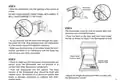
- Page 10: Installation Warning Electrical shock hazard Disconnect electrical power at the circuit breaker box or fuse before installing the dishwasher. Electrically ground the dishwasher. Failure to do so can result in death, fire, or electrical shock. Disconnect electrical power at the fuse box or circuit breaker box before installing the dishwasher. Shut off the water supply to the dishwasher. Insert the drain hose into the cabinet wall hole. Insert the power cord into the other cabinet wall hole. Position water line and house wiring on the floor to avoid interference with the base of the dishwasher.
- Page 11: Reposition the dishwasher by sliding it into the opening a few inches at a time. Do not push against the front panel with knees as it will cause damage to the door. The dishwasher must be level for proper dish rack operation and wash performance. Place the level on the door and rack track inside the tub to check if the dishwasher is level. Ensure the drain hose is not kinked under the dishwasher and there is no interference with the water line and wiring. Check the level from front to back and side to side. Make sure the power cord and hoses are secure under the dishwasher and not pinched. Push the dishwasher into the cabinet so the front corners of the door are flush with cabinet doors. Be careful not to dent front panels with knees or damage countertops or cabinets. Adjust the height by turning the feet to ensure the dishwasher is level.
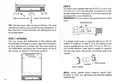
- Page 12: The drain hose molded end will fit 5/8, 3/4”, or 1 diameter connections on the air gap, waste tee, or disposer. Do not cut the corrugated portion of the hose. Pull the lower rack out about halfway. If the rack rolls in either direction, the dishwasher must be leveled again. You can secure the dishwasher to the cabinet with the provided self-taping screws. Tighten the 4 screws into the outer frame of the dishwasher. If a longer drain hose is required, add up to 42'' of length for a total of 10 ft. to the factory-installed hose. Use 5/8'' or 7/8'' inside diameter hose and a coupler to connect the two hose ends. Secure the connection with hose clamps. Total drain hose length must not exceed 10 feet for proper drain operation.
- Page 13: Water line connection Connect drain line to the air gap, waste tee, or disposer using one of the previously determined methods. When connecting the drain line to the disposer, check to be sure that the drain plug has been removed. Dishwasher will not drain if the plug is left in place. Plug the power supply cord into a grounded 3 prong outlet. Make sure the socket is compatible with the plug of the appliance. The socket must have an earthing wire and should be able to hold 120V/13A. Other electric appliances must not use the same socket as the dishwasher. Warning: Electrical shock hazard. Failure to follow these instructions can result in death, fire, or electrical shock.
- Page 14: Perform a pre-test by reviewing this list after installing your dishwasher. Check to be sure the power is off. Open the door and remove all foam and paper packaging. Read the instruction manual for operating instructions. Check the door opening and closing. Make sure that the wiring is secure under the dishwasher. Check door alignment with the tub. Plug the power cord into the outlet. Check to be sure that water enters the dishwasher. Check for leaks under the dishwasher.
- Page 15: Page 15

SIEMENS SE53HS60CE Dishwasher

Whirlpool WDT740SALB Dishwasher

MAYTAG W11680100A Dishwasher

saco DIF 04B1 Merlin House Dishwasher

FRIGIDAIRE FFBD1821MS Dishwasher

BOSCH SPS2IKI04E Free Standing Dishwasher

CANDY CDIH 2L952-80 Dishwasher

Whirlpool 3C26 Daily Reference Dishwasher

ELEKTRO MARKABOLT S175ECX13E Dishwasher

BOSCH SPS4EMI61E Dishwasher