
COSMO COS-DWD24FBR Front Tall Tub Dishwasher













DISHWASHER
COS-DWD24FBR
24 IN. BUILT-IN DISHWASHER
USER MANUAL
IMPORTANT: READ AND SAVE THESE INSTRUCTIONS.
FOR RESIDENTIAL USE ONLY.
INSTALLER: PLEASE LEAVE THESE INSTRUCTIONS WITH THIS UNIT FOR
THE OWNER.
OWNER: PLEASE RETAIN THESE INSTRUCTIONS FOR FUTURE
REFERENCE.
Rev.23.10


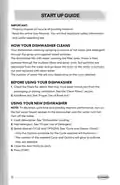
| General | Details |
|---|---|
| Name | COSMO COS-DWD24FBR Front Tall Tub Dishwasher |
| Make | Cosmo |
| Language | English |
| Filetype | PDF (Download) |
| File size | 5.67 MB |
 (1 votes, average: 5.00 out of 5)
 Loading...

COSMO COS-DWD24FBR Front Tall Tub Dishwasher Overview
Summary of Contents
- Page 1: Dishwasher user manual Important: Read and save these instructions. For residential use only. Installer: Please leave these instructions with this unit for the owner. Owner: Please retain these instructions for future reference.
- Page 2: Thank you for your purchase. COSMO Appliances are designed according to the strictest safety and performance standards for the North American market. Each appliance leaves the factory after thorough quality inspection and testing. Our distributors and service partners are ready to answer any questions you may have regarding how to install, use, and care for your products. We hope that this manual will help you learn to use the product in the safest and most effective manner. Before using this product, please read through this manual carefully. Keep this user manual in a safe place for future reference. Please ensure that other persons using this product are familiar with these instructions as well. If you have any questions or concerns, please contact the dealer from whom you purchased the product.
- Page 3: Dishwasher safety Operating requirements Location requirements Water supply requirements Parts and features Start up guide How your dishwasher cleans Before using your dishwasher Using your new dishwasher Dishwasher care
- Page 4: Dishwasher safety Read all instructions before using the appliance. Your safety and the safety of others are very important. We have provided many important safety messages in this manual and on your appliance. This is the safety alert symbol. This symbol alerts you to potential hazards that can kill or hurt you and others. All safety messages will follow the safety alert symbol and either the word WARNING or CAUTION. You can be killed or seriously injured if you don't follow instructions. A potentially hazardous situation which, if not avoided, could result in minor or moderate injury. A potentially dangerous voltage constituting a risk of electrical shock is present that could result in death or serious injury.
- Page 5: WARNING: Improper connection of the equipment-grounding conductor can result in a risk of electric shock. Check with a qualified electrician or service representative if you are in doubt whether the appliance is properly grounded. Do not modify the plug if provided with the appliance. If the plug will not fit the outlet, have a proper outlet installed by a qualified electrician. This appliance must be grounded. In the event of a malfunction or breakdown, grounding will reduce the risk of electric shock by providing a path of least resistance for electric current. For a permanently connected appliance, this appliance must be connected to a grounded metal, permanent wiring system. IMPORTANT SAFETY INSTRUCTIONS: When using your dishwasher, follow basic precautions, including reading all instructions before using the dishwasher. Use only detergents or rinse/wetting agents recommended for use in a dishwasher and keep them out of the reach of children.
- Page 6: Warning regarding dishwasher safety includes several critical points. Items not dishwasher safe may melt and create a fire hazard. Do not touch the heating element during or immediately after use. Ensure all enclosure panels are properly in place before operating the dishwasher. Tampering with controls is prohibited. Avoid sitting or standing on the dishwasher door or dish racks. Children should not play in or on a dishwasher to reduce the risk of injury. Hydrogen gas may be produced in unused hot-water systems, which is explosive. Repairs must be performed by qualified technicians using original parts. Do not store combustible materials near the appliance. The manual does not cover every possible condition or situation.
- Page 7: WARNING Do not use dishwasher until completely installed. Do not push down on open door. Doing so can result in serious injury or cuts. California Proposition 65 Warning Cancer and reproductive harm. Suffocation hazard Before you throw away your old appliance, remove the door or lid. Failure to follow these instructions can result in death or brain damage. Caution Never use harsh chemicals to clean your dishwasher. Never use steam cleaning products to clean your dishwasher. To avoid possible dishwasher damage, do not use harsh chemicals, abrasive cleaners, or abrasive cloths. Protect your dishwasher from the elements.
- Page 8: Operating requirements Electrical requirements Warning: Electrical shock hazard Electrically ground dishwasher. Connect ground wire to green ground connector in terminal box. Do not use an extension cord. Failure to follow these instructions can result in death, fire, or electrical shock. This dishwasher is designed for operation on an adequately wired individual 120 V, 60 Hz, 15- or 20-amp fused electrical supply with copper wire only. Location requirements Install where dishwasher is protected from the elements. Water supply requirements The water supply temperature should be 120°F to 150°F (49°C to 66°C).
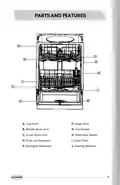
- Page 9: Parts and features Cup shelf Upper rack Middle spray arm Lower spray arm Rinse aid dispenser Detergent dispenser Tub gasket Silverware basket Lower rack Heating element
- Page 10: Specifications include capacity, dimensions, weight, power supply, rated power usage, and water feed pressure. The dishwasher has a capacity of 12 place settings. Dimensions are 23 ⁵⁄₈ x 22 ¹¹⁄₁₆ x 33 ¹¹⁄₁₆. The weight unpacked is 71.4 lb (32.4 kg). Power supply is 120 volts, 60 Hz. Rated power usage includes wash motor at 50 W and heater at 840 W. Water feed pressure ranges from 20-80 psi (138 - 552 kPA). The dishwasher features a multiple filter system for better performance using less water and energy. The Smart Wash system adjusts the wash cycle according to the soil level of the load. The dishwasher can determine the type of cycle required to clean the dishes efficiently.
- Page 11: The adjustable upper rack allows you to load taller items in either the upper or lower rack. The upper rack of your dishwasher can be adjusted 2 (5.08 cm). Adjusting the clearance of the upper rack increases or decreases the clearance of the lower rack. For instructions, see the “Adjustable Upper Rack” section.
- Page 12: Start up guide Properly dispose of/recycle all packing material. Read this entire user manual for important safety information and useful operating tips. Your dishwasher cleans by spraying a mixture of hot water and detergent through the spray arms against soiled surfaces. The dishwasher fills with water covering the filter area, and soil particles are separated from the water. Check the filters for debris that may have been introduced from the packaging or during installation. Add rinse aid before using your dishwasher. To decrease cycle time and possibly improve performance, turn on the hot water faucet nearest to the dishwasher until the water runs hot. Load the dishwasher and add detergent. Select the desired cycle and options, noting that only the options available for the selected cycle will illuminate. Close the door firmly to latch and press start.
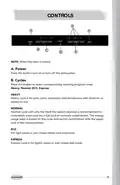
- Page 13: Controls Power Press this button to turn on or turn off the dishwasher. Cycles Press this button to select corresponding washing program code: Heavy, Normal, ECO, Express. Heavy Heavy cycle is for pots, pans, casseroles, and dinnerware with dried-on or baked-on soil. Normal Normal cycle with only the Heat Dry option selected is recommended to completely wash and dry a full load of normally soiled dishes. ECO For light soiled or pre-rinsed dishes and silverware. Express Express cycle is for lightly soiled or well-rinsed dish loads.
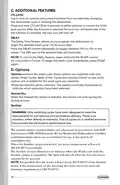
- Page 14: Additional features Child lock prevents children from accidentally changing the dishwasher cycle or starting the dishwasher. Press and hold the child lock for 3 seconds to activate or cancel the option. The delay time feature allows programming the dishwasher to begin the selected wash cycle 1 to 24 hours later. To cancel the delay feature, press and hold the start control for 3 seconds. Options enhance the wash cycle, with some options available only with certain wash cycles. The heated dry option activates the heater during the drying process. Only sanitizing cycles meet the requirements for soil removal and sanitization efficacy. The sanitize option sanitizes dishes and glassware in accordance with NSF/ANSI standard 184 for residential dishwashers. When the sanitize option is selected, the water temperature will reach a maximum of 156.2°F (69°C). It is possible that the water will not reach 156°F (69°C) in sanitize mode if the incoming hot water does not meet the minimum requirement of 120°F (49°C).
- Page 15: Use to maintain the water temperature at 140°F (60°C) max during the wash portion of the cycle. The Sanitized indicator light illuminates when the cycle using the Sanitize option is finished. The light turns off when the door is opened and then closed or any button is pressed. Close the door and press Start. The cycle will begin. Open the door slightly, and then wait for the spray arms and wash action to stop before opening the door completely. Open the door to add or remove items. Press Start to resume the wash cycle. The Rinse Aid indicator light illuminates when the rinse aid level is low. Rinse Aid should be added to the Rinse Aid dispenser. Press and hold Control Lock for 3 seconds to unlock the control panel.
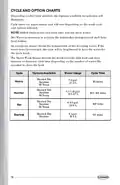
- Page 16: Cycle and option charts provide information on available options based on the selected cycle. Cycle times are approximate and vary depending on the wash cycle and selected options. Added options can increase time and water usage. Hot water is necessary to activate the dishwasher detergent and melt fatty food residue. An automatic sensor checks the temperature of the incoming water. If the water is not hot enough, the cycle will be lengthened to heat the water for the main wash. The Smart Wash Sensor detects the soil level of the dish load and may adjust cycle time based on the number of water fills required. Cycle options available include heated dry, sanitize, and various temperature settings. Water usage varies by cycle, with specific gallons per cycle listed for different options. Cycle times range from express cycles to longer heavy and normal cycles.
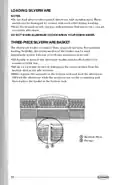
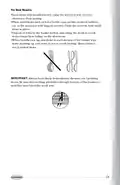
- Page 17: Prepare dishes by emptying liquids and removing leftover food and hard items. It is not necessary to hand-rinse dishes before loading, except for certain foods that may discolor materials. Burned-on foods should be loosened before loading cookware into the dishwasher. Load dishes to ensure the water spray reaches all soiled surfaces. Avoid stacking or overlapping dishes for best drying results. Carefully load heavy pots and pans to prevent denting the stainless steel interior. Ensure pot lids and handles do not interfere with the spray arm rotation. Make sure both the upper and lower spray arms are not blocked and move freely. To avoid noise during operation, secure lightweight items in the racks. For built-in models, keep sink drain plugs closed during operation to prevent noise transfer.
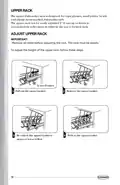
- Page 18: The upper dishwasher rack is designed for cups, glasses, small plates, bowls, and plastic items marked dishwasher safe. The upper rack can be easily adjusted 2 (5 cm) up or down to accommodate taller items in either the top or bottom rack. Important: Remove all items before adjusting the rack. The rack must be empty. To adjust the height of the upper rack, follow these steps: Pull out the upper basket. Remove the upper basket. Push in the upper basket. Re-attach the upper basket to upper or lower rollers.
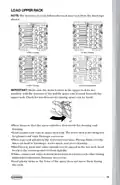
- Page 19: Note: The features on your dishwasher rack may vary from the drawings shown. Make sure the items loaded in the upper rack do not interfere with the rotation of the middle spray arm located beneath the upper rack. Check for interference by turning spray arm by hand. Place items so that the open ends face downward for cleaning and draining. Load glasses and cups in upper rack only. The lower rack is not designed for glasses and cups. Damage can occur. Place cups and glasses in the rows between tines. Placing them over the tines can lead to breakage, water spots, and poor cleaning. Small bowls, pans, and other utensils can be placed in the top rack. Load bowls in the center section for best stability. China, crystal, and other delicate items must not touch each other during dishwasher operation. Damage may occur. Load plastic items so the force of the spray does not move them during the cycle.
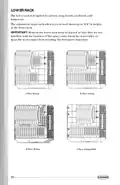
- Page 20: The lower rack is designed for plates, soup bowls, cookware, and bakeware. The adjustable upper rack allows you to load items up to 12.6” in height in the lower rack. Items in the lower rack must be placed so that they do not interfere with the rotation of the spray arms, block the water inlet, or keep the water spray from reaching the detergent dispenser.
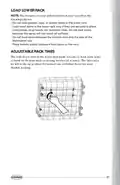
- Page 21: The features on your dishwasher rack may vary from the drawings shown. Do not load glasses, cups, or plastic items in the lower rack. Load small items in the lower rack only if they are secured in place. Load plates, soup bowls, etc. between tines. Do not nest bowls because the spray will not reach all surfaces. Do not load items between the bottom rack and the side of the dishwasher tub. Place heavily soiled cookware face down in the rack. The fold-down tines in the lower rack make it easier to load extra large or hard-to-fit items such as serving bowls and roasters. The tines may be left in the up position for normal use, or folded down for more flexible loading.
- Page 22: Do not load silver or silver-plated silverware with stainless steel. These metals can be damaged by contact with each other during washing. Some foods can pit or corrode silverware. Do not wash aluminum cookware in your dishwasher. The silverware basket consists of three separate sections. For optimum loading flexibility, the center section of the basket can be used individually, joined with one or both side sections, or removed. Lift handle to remove the silverware basket and set it on a counter or tabletop. Lift up on each side section to disengage the center section from the keyhole slots in the side sections. Either replace the section(s) in the bottom rack and load the silverware, or load the silverware while the section(s) are on the countertop and then replace the basket in the bottom rack.
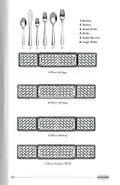
- Page 23: For best results: Load items with handles down, using the separators to prevent silverware from nesting. Place small items such as baby bottle caps, jar lids, corn cob holders, etc. in the section(s) with hinged cover(s). Close the cover to hold small items in place. Unload or remove the basket before unloading the racks to avoid water drops from falling on the silverware. When handles are up, mix items in each section of the basket with some pointing up and some down to avoid nesting. Spray cannot reach nested items. Always load sharp items (knives, skewers, etc.) pointing down. Be sure that nothing protrudes through the bottom of the basket or rack that may block the wash arm.
- Page 24: Spoons Knives Salad forks Forks Large spoons Large forks 8 place setting 10 place setting 12 place setting 8 place setting (DOE)
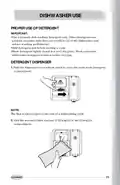
- Page 25: Proper use of detergent Use automatic dishwashing detergent only. Other detergents can produce excessive suds that can overflow out of the dishwasher and reduce washing performance. Add detergent just before starting a cycle. Store detergent tightly closed in a cool, dry place. Fresh automatic dishwasher detergent results in better cleaning. Detergent dispenser Push the dispenser cover release catch to open the main wash detergent compartment. The flap is always open at the end of a dishwashing cycle. Add the recommended amount of detergent to the detergent compartment.
- Page 26: Press down on the top of the cover to secure. The amount of detergent to use depends on the soil level of your load, the type of detergent used, and the hardness of your water. If you use too little detergent, dishes won’t be clean. If you have soft water and use too much detergent, glassware will etch. Water hardness varies depending on your water source. For the best results, your dishwasher is designed to operate with water that has a hardness of no more than 7 grains per gallon. Test kits are available from all major appliance parts retail outlets. Rinse aid prevents water from forming droplets that can dry as spots or streaks. A small amount of the rinse aid is released into the final rinse water. Your dishwasher is designed to use a liquid rinse aid. Do not use a solid or bar-type rinse aid.
- Page 27: To refill the rinse aid dispenser: Lift up the end tab of rinse aid. Fill the rinse aid dispenser with liquid rinse aid until full. Do not overfill. Use the viewing port when filling the rinse aid reservoir. Press the rinse aid cover down firmly to close. Do not fill the reservoir above the full level indicator. Excess rinse aid can overflow during the wash cycle. To adjust the rinse aid setting: Close the door and power on the dishwasher. Within 60 seconds, press the CYCLES button more than 3 seconds to enter the setting mode. Press the CYCLES button to select the proper setting according to your using habits. Complete the setting and exit the setting mode by pressing the Power button or leaving without operation for 5 seconds.
- Page 28: Washing special items If you have doubts about washing a particular item, check with the manufacturer to make sure it is dishwasher safe. Aluminum: High water temperature and detergents can affect the finish of anodized aluminum. Unfinished aluminum will be discolored. Do not wash disposable aluminum pans in the dishwasher. These might shift during washing and transfer black marks to dishes and other items. Wash bottles and cans by hand. Labels attached with glue can loosen and clog the spray arms or pump and reduce washing performance. Always check manufacturer’s recommendations before washing china or stoneware. Antique, hand-painted, or over-the-glaze patterns may fade. Check manufacturer’s recommendations before washing crystal. Some types of leaded crystal can etch with repeated washing. Gold-colored flatware will discolor. Milk glass yellows with repeated dishwasher washing. Handles of some hollow-handle knives are attached to the blade with adhesive that can loosen if washed in the dishwasher. Always check manufacturer’s recommendations before washing plastics. Load plastics in the top rack only.
- Page 29: Dishwasher care Run a rinse cycle if not washing immediately. Prolonged contact with food containing salt, acid, or sulfide can damage finish. Wash wooden ware by hand. Always check manufacturer’s instructions before washing. Regular use of a soft, damp cloth or sponge and a mild detergent is all that is necessary to clean outside of your dishwasher. Clean the stainless steel door and handle regularly with a clean, soft cloth to remove debris. Do not use appliance wax, polish, bleach, or products containing chlorine to clean the stainless steel door. The tub is made of stainless steel designed to resist rust and corrosion if the dishwasher is scratched or dented. Do not clean the dishwasher interior until it has cooled. Wear rubber gloves. Do not use any type of cleaner other than dishwasher detergent because it may cause foaming or create suds. Clean the steel inner door and tub with a clean, soft damp cloth.
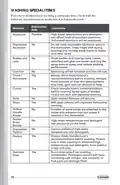
- Page 30: Control panel Clean the control panel gently with a lightly dampened cloth. Cleaning the filters Check and clean the filters regularly for best performance. Remove the lower dishwasher rack. Rotate the cylinder filter counterclockwise a quarter turn and lift up to remove. Empty the cylinder filter and rinse it under running water. Remove the fine filter. Remove the micro filter from the bottom of the tub. Inspect both the fine filter and the micro filter for debris, and then clean them by holding the filters under slow running water. A stiff, plastic bristle brush may be needed to remove some debris. Reinstall the filters in reverse order making sure the cylinder filter locks into place.
- Page 31: Check the drain air gap anytime your dishwasher isn’t draining well. Some state or local plumbing codes require the addition of a drain air gap between a built-in dishwasher and the home drain system. The drain air gap prevents water from backing up into the dishwasher. The drain air gap is usually located on top of the sink or countertop near the dishwasher. The warranty provided with your dishwasher does not cover service costs directly associated with the cleaning or repair of the external drain air gap. Clean the drain air gap periodically to ensure proper drainage of your dishwasher. Protect your dishwasher during the summer months by turning off the water supply and power supply to the dishwasher. If your dishwasher is left in a seasonal dwelling or could be exposed to near freezing temperatures, have your dishwasher winterized by authorized service personnel. Turn off electrical power to the dishwasher before preparing for storage. Disconnect the drain line from the pump and drain water into a pan.
- Page 32: Prepare for use: Reconnect the water, drain and electrical power supply. Turn on water and electrical power supply. Fill detergent cup and run the dishwasher through a heated wash cycle. Check the connections for leaks. Troubleshooting Dishwasher not operating properly Problem Dishwasher does not run or stops Possible cause There is no power to the dishwasher. The door is not closed tightly and latched. Solution Replace fuse or reset circuit breaker. Close and latch the door. Most cycles pause for 5 minutes near the start of a cycle to let the dishes soak. Certain cycles repeatedly pause for 15 to 65 seconds during the main wash. The Delay feature is selected. Dishwasher does not start a cycle Control Lock feature is activated. Dishwasher will not fill The water shutoff valve is not turned on. Water pressure is too low.
- Page 33: Problem: Unable to heat water properly. Possible cause: The water supplied to the dishwasher is not hot enough. Solution: Run the water in the adjacent sink until it gets hot before turning on the dishwasher. Problem: Water remains in the dishwasher. Possible cause: The cycle is not complete or it is in a pause. Solution: The water will drain when the cycle is completed. Possible cause: The drain hose is kinked. Solution: Straighten the drain hose. Possible cause: The knockout plug is still in the garbage disposal. Solution: Remove the knockout plug. Note: A small amount of clean water around the outlet in the bottom of the tub is normal. Possible cause: Drain is clogged. Solution: Check the air gap. Problem: Detergent remains in the dispenser. Possible cause: The cycle has not completed. Solution: Close the door and press START to complete the cycle. Possible cause: The detergent is damp or has clumped. Solution: Remove detergent and replace with fresh dry dishwasher detergent. Possible cause: An item was blocking the dispenser. Solution: Remove item and replace with fresh dry dishwasher detergent. Possible cause: The spray arm is blocked. Solution: Load the dishes in a manner that does not block the spray arm from rotating freely.
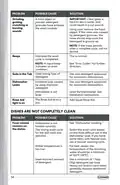
- Page 34: Problem: Grinding, grating, crunching or buzzing Possible cause: A hard object or powder detergent granules have entered the wash module. Solution: Using care, remove the hard object. If the noise was caused by detergent granules, the noise should stop once the detergent is ground up. Note: If the noise persists after a complete cycle, call for service. Beep: Indicates the wash cycle is completed. This is normal. Note: A rapid beep indicates an error condition. Problem: Dishes are not completely clean Possible cause: Food residue remains on the dishes. Solution: See “Dishwasher Loading.” The wrong wash cycle for the dish load was selected. Solution: Select the wash cycle based on the most difficult soil in the dishwasher load. Water temperature is too low. Solution: For best results, the temperature of the incoming water should be a minimum of 120°F (49°C). Used incorrect amount of detergent. Solution: Use a minimum of 1 Tbsp. (15g) detergent per load.
- Page 35: Food residue remains on the dishes. Detergent must be fresh to be effective. Store detergent in a cool, dry area. Do not allow detergent to sit for several hours in a wet dispenser. Clean dispenser and refill with fresh, dry detergent. Check pump and spray arm for labels and remove the labels. Water pressure should be 20 to 80 psi (138 to 552 kPa) for proper dishwasher fill. Use only detergent recommended for the dishwasher. Do not use soap or laundry detergents. Add a liquid rinse aid to the dispenser. Use a rinse aid and keep the dispenser filled to help eliminate spotting and filming. If your water hardness is 13 grains (223 ppm) or above, it is strongly recommended that you install a home water softener. Use a minimum of 1 Tbsp. (15g) of detergent per load. Heavy soil and/or hard water generally require extra detergent.
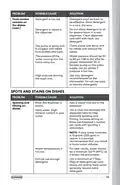
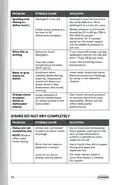
- Page 36: Problem: Spotting and filming on dishes Possible cause: Detergent is too old. Solution: Detergent must be fresh and dry to be effective. Problem: Home water pressure is too low to fill dishwasher properly. Solution: Water pressure to the home should be 20 to 80 psi for proper dishwasher fill. Problem: Using too much detergent. Solution: If you have soft water, use less detergent, but do not use less than 1 Tbsp. per load. Problem: The inlet water temperature exceeds 150°F. Solution: Lower the incoming water temperature. Problem: Hand wash aluminum items. Solution: Remove aluminum markings by using a mild abrasive cleaner. Problem: Rubbing dishes during washing. Solution: Disposable aluminum items can break down in the dishwasher and cause marking. Problem: Large amounts of tomato-based foods on dishes placed in the dishwasher. Solution: Use a stain removal product to remove stains from your dishwasher. Problem: Dishes are not completely dry. Solution: Do not overload dishwasher. Problem: Dishes are not loaded properly to allow water drainage. Solution: Use a liquid rinse aid to speed drying and keep the dispenser full. Problem: Used an air dry or energy-saving option. Solution: For dryer dishes, select a cycle that allows a Heated Dry option.
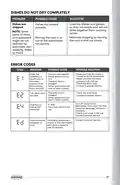
- Page 37: Dishes do not dry completely. Possible causes include improper loading of dishes and delicate china or glassware. Minimize chipping by moving the rack in and out slowly. If dishes are chipped, ensure they are stable and not striking together during washing. Error codes indicate issues such as insufficient water flow or high water pressure. Check that the faucet is opened and water pressure is within the recommended range. Inspect the drain hose for blockages. If the tub water level is too high, turn off the water and check the filter system for blockage. Contact customer service for persistent issues or if there is no water in the tub. Communication exceptions may occur if the display board cannot receive signals for over 20 seconds.
- Page 38: Limited warranty Warranty and service To receive warranty service, your product must be registered. To register and review full warranty details, visit the website. Customer support To chat with us live for assistance, visit the website.
- Page 39: Do not return this product to the store. If you have a problem with this product, please contact COSMO Customer Support. Dated proof of purchase, model number, and serial number required for warranty service. Correct disposal of this product: this marking indicates that this appliance should not be disposed with other household wastes. Recycle it responsibly to promote the sustainable reuse of material resources.
- Page 40: Page 40
- Page 41: Page 41
- Page 42: Cosmo is constantly making efforts to improve the quality and performance of our products. We may make changes to our appliances without updating this manual. Electronic version of this manual is available.

KitchenAid KDFE104KBL Front Control Dishwasher

Haier HDW15U3B1 Built Under Dishwasher

BOSCH SMH4ECX28E Dishwasher

GE APPLIANCES GD*650-670 Series Interior Dishwasher

LG LDTS5552D Smart Dishwasher

BOSCH SHE4AEM5N Dishwasher

dacor EDWH24S Dishwasher

IKEA TORSBODA Integrated Dishwasher

Whirlpool WFE 2B19 Home Appliances Dishwasher

FISHER PAYKEL DD24DV2T9-N Dishwasher