
Diamond WR-LV50-MPSC Dishwasher


01/2022
Mod: WR-LV50-MPSC
Production code: 919052


| General | Details |
|---|---|
| Name | Diamond WR-LV50-MPSC Dishwasher |
| Make | DIAMOND |
| Language | English |
| Filetype | PDF (Download) |
| File size | 0.34 MB |
 (1 votes, average: 5.00 out of 5)
 Loading...
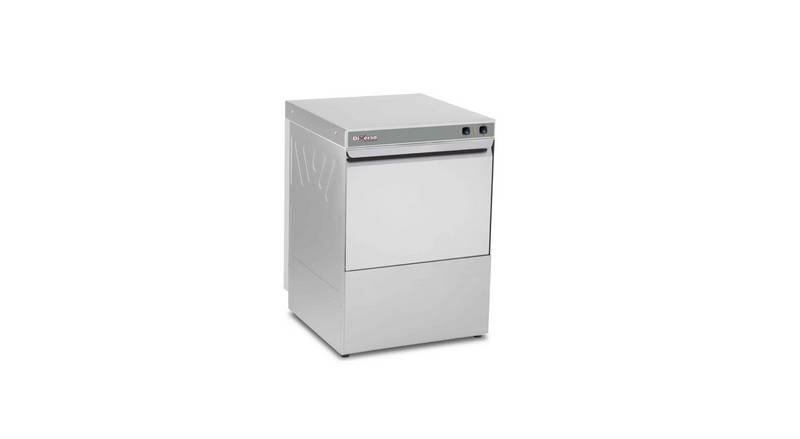
Diamond WR-LV50-MPSC Dishwasher Overview
Summary of Contents
- Page 1: Page 1
- Page 2: Instruction manual for dishwashers Translation from the original instructions Contents Risks and important warnings Normal operating conditions Preface Installation Unpacking Positioning Electrical connection Water circuit hookup Connection to the drain line Rinse aid and detergent Using the machine Key and symbols Switching the dishwasher on Filling the rack Start cycle Removing the integral filter Emptying the dishwasher End of shift Maintenance General rules Cleaning Cleaning the filter unit Cleaning the arms Scrapping Environment
- Page 3: Read the instruction manual carefully before starting the machine. The warnings contained in the manual provide important information on safety and installation, use and maintenance. This appliance is intended solely for the use for which it was designed. Any other use is improper and therefore hazardous. Only the manufacturer or an authorised service centre with qualified staff may work on the machine, even in case of malfunction, using only original spare parts. Always disconnect or isolate the machine from its power and water supplies before servicing, repairing or cleaning it. The machine may not be used by persons untrained in its use. Children must not play with the appliance. Cleaning and maintenance by the user must not be performed by unsupervised children. If the power cable is damaged, it must be replaced by the manufacturer or an authorised technical assistance service. Never open the machine quickly if it has not completed its cycle. Never use the machine to wash objects of any form, size or material not guaranteed to be machine-washable or not in good condition.
- Page 4: Instruction manual for dishwashers Never place your bare hands in the wash solution. If you notice any malfunction or fluid leak, immediately disconnect the power supply and shut off the water supply. Do not install the dishwasher in the vicinity of heat sources over 50°C. Never leave the dishwasher exposed to the weather. The dishwasher may not be installed outdoors without proper cover. Never start a wash programme without the overflow in the tub. The installer is responsible for checking that the grounding system is fully operational. At the end of testing, the installer must issue a written declaration stating that the machine has been installed and tested in accordance with established legislation and good practice. Do not clean the appliance with steam or water jets. Max inlet water temperature: 50°C.
- Page 5: Instruction manual for dishwashers Warnings: Keep all documentation in the vicinity of the appliance for technicians and operators. The operator must read and understand the manual before working with the appliance. The appliance is intended for professional heavy-duty dishwashing applications and must be installed, operated, and serviced by qualified persons. Warranty: The manufacturer is not liable for damage or injury from improper use. Failure to observe instructions may compromise safety and void the warranty. Storage: Transport and storage temperature range is -10°C to 55°C with peaks up to 70°C for no longer than 24 hours. Installation: Proper installation is essential for good operation. The appliance may only be installed by qualified persons. Unpacking: Check the condition of the packaging and report any damage. Do not install or operate if damage compromises safety. Positioning: Ensure no objects in the installation area may be damaged by steam. Set up electrical power, water supply, and drain connections before positioning. The floor must support the weight of the appliance, and it should be leveled with its four feet. The appliance is intended for fixed installation only. Remove the protective film from body panels before operating the dishwasher.
- Page 6: Instruction manual for dishwashers The power supply must be fitted with an omnipolar circuit breaker to break all contacts including neutral. The master power switch must be fitted to the power line in the vicinity of the installation. The mains voltage and frequency must match the nameplate ratings. The installation must include a grounding system conforming with established electrical safety legislation. This appliance conforms to EN/IEC 61000-3-11 certification if the system impedance is within specified limits. The power cable must be exclusively type H07RN-F with specified current capacities. The appliance must be connected to an equipotential system. The equipotential cable must have a cross section of 10 mm². Respect the polarities indicated in the wiring diagram. Do not use multi-sockets, adapters, or cables of inadequate cross section or type.
- Page 7: Instruction manual for dishwashers The appliance must be connected to its water supply with a flexible hose. A shut off valve must be installed between the water supply line and the appliance's solenoid valve. The water supply, temperature, and pressure must be compatible with the ratings shown on the technical data plate. Make sure that the water supply flow rate is no less than 20 l/min. If the water hardness is greater than 14 °f, we recommend using an internal water softener. The drain line must consist of a free drain sump with siphon suited to the flow capacity of the drain hose. The tub drains under gravity, so the drain sump must be lower than the machine's base. Always check that the drain works properly and is not blocked. The rinse aid and detergent are dispensed by the machine's integral dispenser. NEVER use chlorine or hypochlorite based detergents.
- Page 8: Instruction manual for dishwashers Using the machine Key and symbols The arrangement of buttons and LEDs may vary according to the machine type. Switching the dishwasher on Turn on the main power switch and open the external water tap. Press ON/OFF. The POWER LED comes on and filling begins automatically. Filling the rack Use a suitable rack, fill without overloading and without overlapping the dishes. Always wipe the dishes before placing in the dishwasher. Start cycle To start the programme press the START button, the CYCLE UNDERWAY LED lights up. When the cycle is completed the CYCLE UNDERWAY LED goes off.
- Page 9: Instruction manual for dishwashers Automatic start-up (hood) - Press the AUTO button for automatic start. - Lower the hood to start the cycle automatically. - The CYCLE UNDERWAY led lights up during the cycle. - The cycle completes when the CYCLE UNDERWAY led goes off. - Subsequent cycles start automatically on closing the hood. - For rapid drying, remove the rack as soon as the cycle finishes. - To stop a wash cycle early, press the AUTO button. Removing the integral filter - Move the washing and rinsing arms at right angles to the edge of the door. - Lift each semi-filter by the relative handle. Emptying the dishwasher - Switch the dishwasher off before emptying. - Remove the integral filter if present. - Pull up and remove the overflow pipe. - Wait for the tub to empty completely. - Extract the tub filter and clean if necessary. End of shift - Always drain the machine at the end of the day. - Disconnect the power supply and close the external water cock. - Perform routine maintenance and clean the machine. - Leave the door ajar to prevent bad odours. Maintenance - Drain all water and shut off the power supply before maintenance. - Do not use water under pressure to avoid damaging electrical equipment. - Wash the body panelling only when cold with products designed for steel. - Drain water from the boiler and wash pump if there is a risk of ice forming.
- Page 10: Instruction manual for dishwashers To keep the machine in good working order, it must be maintained regularly. We recommend periodically running a sanitising treatment with suitable non-corrosive commercial products. Run the cleaning procedure at the end of the day or when you see the filters are dirty. Remove and clean the baskets. Empty out the tub as explained in “Machine draining”. Remove and carefully clean all the filters. Do not use abrasive products to clean the tub. The wash and rinse arms are easily removed to clean their nozzles and prevent blockage. The mark applied to the product indicates that it must not be scrapped with domestic waste. Keep this product separate from other waste and recycle it to promote sustainable use of materials.
- Page 11: Instruction manual for dishwashers Respect for the environment Proper use of the dishwasher can improve its environmental footprint. Only wash full baskets. Switch the dishwasher off when not using it. Keep the machine closed when it is in standby. Use wash programmes suited to the amount of soiling. Supply the machine with hot water, if gas heated. Make sure the drains flow into a suitable sewer. Do not exceed the recommended dose of detergent. The manufacturer reserves the right to modify the electrical, technical and aesthetic features of this appliance.

SIEMENS SR25YW04ME Dishwasher

FISHER PAYKEL DD24SAX9 N DishDrawer Dishwasher

Whirlpool W11602471 Dishwasher

Whirlpool DU1014XTXQ Undercounter Dishwasher

Whirlpool WFC 3C26 Dishwasher

BOSCH SMS4EAI28E Free Standing Dishwasher

Hotpoint H2I HD526 UK Dishwasher

IKEA AA-2360858-2-1 RENGÖRA Dishwasher

BOSCH SHX53CM5N Dishwasher

FISHER AND PAYKEL DD60ST4NX9 Series 9 Contemporary Tall Dishwasher