
Home > Westinghouse > Westinghouse WSF6604WB Dishwasher
Westinghouse WSF6604WB Dishwasher
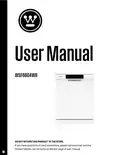






User Manual
WSF6604WB
DO NOT RETURN THIS PRODUCT TO THE STORE.
If you have questions or need assistance, please call customer service.
Contact details can be found on the last page of user manual.


| General | Details |
|---|---|
| Name | Westinghouse WSF6604WB Dishwasher |
| Make | Westinghouse |
| Language | English |
| Filetype | PDF (Download) |
| File size | 0.96 MB |
 (1 votes, average: 5.00 out of 5)
 Loading...

Westinghouse WSF6602XB 14 Place Dishwasher

Westinghouse WSF6606 Dishwasher

Westinghouse WSF6604WA Dishwasher

Westinghouse WSF6604XB Dishwasher

Westinghouse WSF6606XB Dishwasher

Westinghouse WSF6606KXB Dishwasher

Westinghouse WSU6608XB Dishwasher

Westinghouse WSF6608XB Dishwasher

Westinghouse WSF6608KXB Sensor Wash Dishwasher

Westinghouse WSF6602WB Dishwasher

Westinghouse WSF6604WB Dishwasher Overview
Summary of Contents
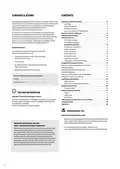
- Page 1: User manual for WSF6604WB. Do not return this product to the store. If you have questions or need assistance, please call customer service. Contact details can be found on the last page of the user manual.
- Page 2: Congratulations and thank you for choosing our product. We recommend you read through the whole user manual which provides important safety instructions. This appliance complies with the requirements of Australian Standard AS/NZ 60335.2.5. To make the best use of your new appliance, it is important that the appliance is installed correctly and that you read the safety instructions carefully to avoid misuse and hazards. This appliance is intended to be used in household and similar applications. Most of the packaging materials are recyclable. Adherence to the directions for use in this manual is extremely important for health and safety. Failure to strictly adhere to the requirements in this manual may result in personal injury, property damage, and affect your ability to make a claim under the manufacturer’s warranty. If you find the dishwasher is damaged or marked, you must report it within 7 days if you wish to claim for damage/marks under the manufacturer’s warranty. You may not be able to claim on the manufacturer’s warranty in the event that your product fault is due to failure to adhere to this manual.
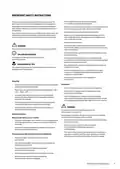
- Page 3: IMPORTANT SAFETY INSTRUCTIONS Check whether the indoor electrical fuse system is connected according to the regulations. These warnings have been provided in the interest of safety. You must read them carefully before installing or using the appliance. Make sure that the electrical information on the rating plate is the same as the power supply. Always use a correctly installed shockproof socket. Connect the mains plug to the mains socket only at the end of the installation. Do not pull the mains cable to disconnect the appliance. Always pull the mains plug. Pay special attention and make sure that the machine does not crush the power cord. Never use an extension cord or a multiple socket to make a connection. Only use detergents and rinse aids which are produced specifically for dishwashers. Check for any damage to your machine or to its packaging. Never start a damaged machine.
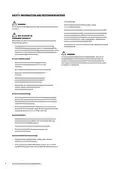
- Page 4: Safety information and recommendations Do not leave your dishwasher’s door open, this may lead to accidents and injury. Place knives and other sharp ended objects in the cutlery basket in the point down position. This appliance is not intended for use by persons with reduced physical, sensory or mental capabilities unless supervised. Some dishwasher detergents are strongly alkaline and can be extremely dangerous if swallowed. Keep children away from the machine while it is open because there may still be residues of cleaning substances inside. Any malfunction in the machine should be repaired by qualified persons. Prior to any repair work on the machine, be sure to unplug the dishwasher from the power supply. For energy and water saving, remove coarse residues on your dishes before placing them into the machine. Use the pre-wash program only whenever necessary. Items not suitable for dishwashing include cigarette ashes, chemical substances, and glued items.
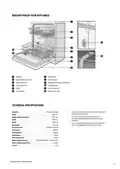
- Page 5: Description of your appliance includes various components such as the worktop, rating plate, upper basket with racks, upper spray arm, lower spray arm, filters, control panel, detergent and rinse-aid dispenser, cutlery basket, turbo drying unit, lower basket, and ceiling spray rose. Technical specifications detail the capacity of 14 place settings, height of 850 mm, and height without worktop of 820 mm. Width and depth are both 598 mm. Electrolux reserves the right to amend design and technical specifications. Do not use this appliance with power and temperature specifications different to those indicated. Do not change the specification of this appliance with counterweight and insulation removed. Net weight is 45.5 kg. Electricity input is 220-240 V, 50 Hz. Total power is 1900 W, with heating power at 1800 W. Water supply pressure ranges from 0.03 MPa (0.3 bar) to 1 MPa (10 bar) and water supply temperature is between 5 - 60°C.
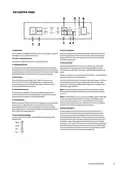
- Page 6: The control panel features various buttons and indicators for operation. The rinse aid indicator shows when to refill the rinse aid compartment. The on/off button controls the machine's power and indicates when it is on. Program selection is done using up/down buttons for different washing programs. The tablet option button activates the tablet detergent feature. The half load button reduces program duration and resource consumption for smaller loads. The delay button allows for setting a delay of 3, 6, or 9 hours before the program starts. The start/pause key initiates or pauses the selected washing program. Program monitoring lights indicate the current stage of the wash cycle: wash, rinse, dry, and end. The child lock feature prevents accidental changes to settings during operation.
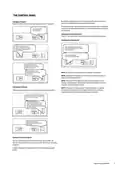
- Page 7: The control panel allows you to add suitable options for the wash using the option buttons. To change a program while in operation, press the “up” and “down” buttons together after completing your program and option selection to save your favourite program and option. Press the Start/Pause button to initiate the selected program. To select a favourite program, press the “Up” button for 3 seconds. After the program stops, select a new program using the program selection up/down buttons. When the End light illuminates, press the On/Off button to switch the machine off. Disconnect the plug and turn off the watertap after switching off the machine. Press the Start/Pause button to start the newly selected program, which will resume the course of the old program. Do not open the door before the program is complete. If the power is interrupted or the machine door is opened during the drying process, the program will terminate and the machine will be ready for a new program selection.
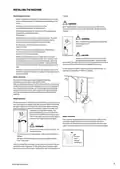
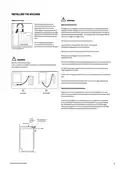
- Page 8: Installing the machine Positioning the machine Ensure there is adequate space to enable loading and unloading of the dishes. Do not put your machine in any location where the ambient temperature can fall below 5°C. Aquastop inlet hose has components using 240V. Do not cut Aquastop inlet hose. Position the machine close to a water tap and drain, considering that connections will not be altered once made. Make sure that the water inlet and outlet hoses do not get squeezed while positioning the machine. Always use new hoses when connecting the appliance to the water mains. Ensure that the indoor plumbing is suitable for installing a dishwasher and complies with AS/NZS 3500.1. Do not use the water inlet hose of your old machine; use the new water inlet hose supplied with your machine. If you connect the water drain hose to a trap spigot under the sink, remove the plastic membrane to avoid blockages.
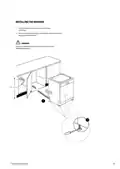
- Page 9: Installing the machine involves connecting the water drain hose either directly to the water drain hole or to the sink outlet spigot. The plug of the machine should be connected to an earthed outlet that supplies suitable voltage and current. If there is no earthing installation, a competent electrician should carry out an earthing installation. The indoor fuse current value should be between 10-16 A. The machine is designed for 220-240 V and should not be plugged in during installation. Maximum drain hose length is 4m; longer lengths will prevent correct draining and result in poor wash performance. For safety, always disconnect the plug when a wash program is finished and do not unplug with wet hands. When disconnecting from the mains supply, always pull from the plug, not the cord. If fitting the machine undercounter, ensure there is sufficient space and suitable wiring-plumbing. To ensure stability for an underbench installation, any gap between the dishwasher and the benchtop should be bridged with a packing piece.
- Page 10: Installing the machine involves adjusting the machine feet according to the slope of the floor. Fit the machine by pushing it under the counter without letting the hoses get crushed or bent. Ensure the opening for the dishwasher meets the specified dimensions of 850-870mm.
- Page 11: Preparing the machine for use involves several important steps. Check whether the electricity and water supply specifications match the installation instructions for the machine. Remove all packaging materials inside the machine and fill the rinse aid compartment. Use a detergent specifically designed for domestic dishwashers, available in powder, gel, and tablet forms. Detergent should be placed in the compartment before starting the machine, and it should be stored in a cool, dry place out of reach of children. Combined detergents may produce acceptable results under certain conditions and contain rinse aid in preset amounts. Always check the specifications of the product you will use, especially for combined products. When using tablet detergents, place them in the detergent compartment and not in the interior section or cutlery basket. Contact the detergent manufacturer if wash results are unsatisfactory after using combined detergents. For better results with combined detergents, consider adding rinse aid and adjusting the rinse aid setting.
- Page 12: Preparing the machine for use Fill the rinse aid compartments. Select a suitable rinse aid setting. Turn on the machine by pressing the On/Off button. Press the Up button for at least 3 seconds immediately after the machine is turned on. To fill the rinse aid compartment, open the rinse-aid compartment cap. If the dishes are not drying properly or are spotted, increase the rinse-aid level. Only use rinse aid suitable for automatic dishwashers. Remove the excess amount of rinse aid by wiping it with a cloth. Fill the compartment with rinse aid until MAX level and then close the cap. Be careful not to overfill the rinse aid compartment and wipe up any spills.
- Page 13: Loading guidelines contribute to energy and water savings. Manual pre-rinsing of tableware is not recommended as it increases water and energy consumption. Place cups, glasses, and small plates in the upper basket. Long glasses should not lean against one another to avoid damage. Lean long stem glasses against the basket edge or rack. Containers should be placed with the opening facing downwards to prevent water collection. Use the cutlery grid in the cutlery basket for best results. Place large and very dirty items in the lower rack. Dishes and cutlery should not be placed above each other. Ensure the rotation of spray arms is not obstructed and the detergent dispenser can open.
- Page 14: Tips and information about the upper basket knife holder indicate that it varies by model. It's important to ensure that dishware does not obstruct the spray arms. The knife holder allows for easy storage and washing of kitchen utensils. Height adjustment of the upper basket involves turning the rail stop clips to remove the basket and changing the wheel position. When the upper basket is higher, larger items can fit in the lower basket. The upper basket knife shelf can be removed by pulling it upwards when not in use. The movable cutlery basket can slide between the front and rear wires of the bottom basket. The upper basket racks have two positions for loading cups and long utensils.
- Page 15: Loading your dishwasher. Alternative modular basket position. Alternative basket loads. Lower basket. Top basket. Tips and information. Examples of incorrect loading.
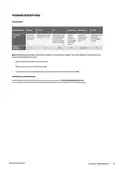
- Page 16: Program descriptions include various washing programs such as Prewash, Fast 30’, Eco, Timesave 50’, Sensorwash, and Hygiene. Prewash is for rinsing items that you plan to wash later. Fast 30’ is a quicker program for lightly to normally soiled items. Eco is a standard program with reduced energy and water consumption for normally soiled daily dishes. Timesave 50’ is suitable for heavily soiled dishes requiring hygienic washing. Sensorwash is an auto program for normally and heavily soiled dishes. Hygiene is designed for heavily soiled dishes requiring hygienic washing. Short programs do not include a drying step. To assist drying, it is recommended to partially open the door after the program has finished. Program duration may change according to the amount of dishes, tap water, ambient temperature, and selected additional functions.
- Page 17: Spray arms Make sure that the spray holes are not clogged and that no food waste or foreign object is stuck to the spray arms. If there is any clogging, remove the spray arms and clean them under water. Cleaning your dishwasher is important to maintain the machine’s service life. Oil and limescale may build up in your dishwasher over time. Clean the filters and spray arms at least once a week. Large food residues or foreign objects which were not captured by the filters may block the waste water pump. When cleaning the waste water pump, ensure that you do not injure yourself on pieces of broken glass or pointed implements. Never use your dishwasher without a filter. Incorrect fitting of the filter will reduce the washing effectiveness. Clean filters are necessary for proper running of the machine.
- Page 18: Failure codes and what to do in case of failure Possible fault What to do Water inlet system failure Make sure the water inlet tap is open and water is flowing. Separate the inlet hose from the tap and clean the filter of the hose. Pressure system failure Close the tap and contact for service. Inability to discharge water Cancel the program. Overflow Faulty heater sensor Unsuccessful heating The installation and repairing procedures should always be carried out by the Authorised Service Agent. Improper repairs or use of non-original spare parts may cause considerable damage and put the user at considerable risk. Function-relevant genuine spare parts can be obtained from Customer Service for a period of at least 10 years.
- Page 19: Troubleshooting If one of the program monitor lights is on and the start/pause light is flashing, your machine’s door is open, shut the door. If the program won’t start, check if the plug is connected, indoor fuses, and that the water inlet tap is turned on. If detergent residues are left in the detergent compartment, it may be due to detergent added when the compartment was wet or a large dish blocking the dispenser door. If water is left inside the machine at the end of the program, the water drain hose may be clogged or twisted, or the filters may be clogged. If the machine stops during a wash operation, it could be due to a power failure, water inlet failure, or the program being on standby mode. If shaking and hitting noises are heard during a wash operation, dishes may be placed incorrectly or the spray arm may be hitting the dishes. If there are partial food wastes left on the dishes, it may be due to incorrect placement, an overloaded basket, or a clogged spray arm. If there are whitish stains on the dishes, it may be due to a very small amount of detergent being used or rinse aid dosage set too low. If the dishes won’t dry up, a program without a dry operation may have been selected or dishes may have been unloaded too fast. If there are rust stains on the dishes, it may be due to insufficient stainless-steel quality or unhealthy mains grounding.
- Page 20: Warranty for sales in Australia and New Zealand outlines the terms and conditions for Westinghouse dishwashers. This document is important and should be kept with proof of purchase for future reference. The warranty is in addition to rights under the Australian Consumer Law. The warranty applies to new appliances purchased and used in Australia or New Zealand. The warranty period is 24 months from the date of original purchase. Electrolux is not liable under this warranty for damages caused by negligence, misuse, or improper servicing. To claim under this warranty, check operating instructions and have the model, serial number, and proof of purchase available. Electrolux will repair or replace defective parts at no extra charge during the warranty period. Proof of purchase is required to make a warranty claim. The warranty does not cover certain exclusions, including light globes and cosmetic damage that does not affect operation.
- Page 21: Page 21

BOSCH 500 Series Dishwasher

Kenmore 665.15822000 Undercounter Dishwasher
Westinghouse WSF6606XB Dishwasher

caple DI654 Dishwasher

FISHER AND PAYKEL DD24DT4NX9 Contemporary Tall Dishwasher

ASKO DFI544D Dishwasher

Omega ODWIF6015 Integrated Dishwasher

FISHER PAYKEL DD60SDFTB9 Sanitise Single DishDrawer Dishwasher

Home Connect SM01 Dishwasher

IKEA RÅGLANDA Dishwasher