
AEG FFB74707PM Dishwasher


















Questo manuale d’istruzione è fornito da trovaprezzi.it. Scopri tutte le offerte per AEG FFB74707PM o
cerca il tuo prodotto tra le migliori offerte di Lavastoviglie
EN User Manual
2
FFB74707PM
FFB74707PW
Dishwasher
ES
Manual de instrucciones
Lavavajillas
28
USER
MANUAL


| General | Details |
|---|---|
| Name | AEG FFB74707PM Dishwasher |
| Make | AEG |
| Language | English |
| Filetype | PDF (Download) |
| File size | 1.74 MB |
 (1 votes, average: 5.00 out of 5)
 Loading...

AEG FSK76748P Dishwasher

AEG FSK53617Za Dishwasher

AEG FSK74747P Dishwasher

AEG GS60AIM Dishwasher

AEG FSE73507P Dishwasher

AEG FSB73427Z Dishwasher

AEG FSE74737P Quickselect Dishwasher

AEG FFB73727PM Dishwasher

AEG F8642FI Tall Tub Dishwasher

AEG FFE83800PM Dishwasher

AEG FFB74707PM Dishwasher Overview
Summary of Contents
- Page 1: Questo manuale d’istruzione è fornito da trovaprezzi.it. Scopri tutte le offerte per AEG FFB74707PM. Cerca il tuo prodotto tra le migliori offerte di lavastoviglie. EN User Manual. FFB74707PM. FFB74707PW. Dishwasher. ES Manual de instrucciones. Lavavajillas. USER MANUAL.
- Page 2: SAFETY INFORMATION SAFETY INSTRUCTIONS PRODUCT DESCRIPTION CONTROL PANEL PROGRAMMES OPTIONS SETTINGS BEFORE FIRST USE DAILY USE HINTS AND TIPS CARE AND CLEANING Thank you for choosing this AEG product. We have created it to give you impeccable performance for many years, with innovative technologies that help make life simpler. Please spend a few minutes reading to get the very best from it. Always use original spare parts. When contacting our Authorised Service Centre, ensure that you have the following data available: Model, PNC, Serial Number. Warning / Caution-Safety information General information and tips Environmental information
- Page 3: responsible for any injuries or damage that are the result of incorrect installation or usage. Always keep the instructions in a safe and accessible location for future reference. This appliance can be used by children aged from 8 years and above and persons with reduced physical, sensory or mental capabilities or lack of experience and knowledge if they have been given supervision or instruction concerning the use of the appliance in a safe way and understand the hazards involved. Children between 3 and 8 years of age and persons with very extensive and complex disabilities shall be kept away from the appliance unless continuously supervised. Children of less than 3 years of age should be kept away from the appliance unless continuously supervised. Children should be supervised to ensure that they do not play with the appliance. Keep detergents away from children. Keep children and pets away from the appliance when the door is open. This appliance is for cleaning household-type dishes and tableware only. This appliance is designed for single household domestic use in an indoor environment. This appliance may be used in offices, hotel guest rooms, bed & breakfast guest rooms, farm guest houses and other similar accommodation where such use does not exceed (average) domestic usage levels.
- Page 4: Use Do not put flammable products or items that are wet with flammable products in, near or on the appliance. Dishwasher detergents are dangerous. Follow the safety instructions on the detergent packaging. Do not pull the mains cable to disconnect the appliance. Always pull the mains plug. Do not drink and play with the water in the appliance. This appliance is fitted with a 13 A mains plug. Do not remove the dishes from the appliance until the programme is complete. Do not store items or apply pressure on the open door of the appliance. The appliance can release hot steam if you open the door while a programme operates. Service To repair the appliance contact the Authorised Service Centre. Use original spare parts only. Ensure that there are no visible water leaks during and after the first use of the appliance.
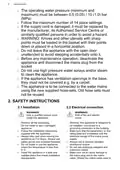
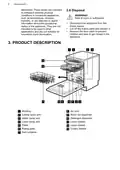
- Page 5: Disposal instructions emphasize the importance of disconnecting the appliance from the mains supply and cutting off the mains cable. Remove the door catch to prevent children and pets from getting closed in the appliance. The lamps are designed to withstand extreme physical conditions in household appliances. They are intended to signal information about the operational status of the appliance. The lamps are not suitable for household room illumination. The product description includes various components such as worktop, air vent, ceiling spray arm, upper spray arm, lower spray arm, filters, rating plate, salt container, rinse aid dispenser, detergent dispenser, lower basket, upper basket, and cutlery drawer.
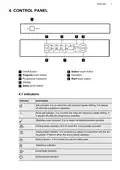
- Page 6: Control panel includes various buttons and indicators for operation. On/off button is used to power the device. Option touch button allows for additional settings. Start touch button initiates the selected program. Program touch button selects the desired washing program. Indicators provide important information about the machine's status. Salt indicator signals when the salt container needs refilling. Rinse aid indicator shows when the rinse aid dispenser needs refilling. Washing phase indicator indicates when the washing phase is in progress. Drying phase indicator flashes during the drying phase of the program.
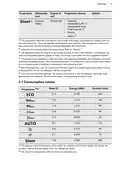
- Page 7: 5. Programmes The order of the programmes in the table may not reflect their sequence on the control panel. Crockery, cutlery, pots, pans Dishwashing 50 - 60 °C Cleaning the appliance interior ExtraPower GlassCare ExtraHygiene Prewash Intermediate rinse Final rinse
- Page 8: Programme dishwasher degree of programme phases includes options for load and soil. The standard programme for test institutes offers the most efficient use of water and energy consumption for crockery and cutlery with normal soil. The appliance automatically adjusts the temperature, quantity of water, energy consumption, and programme duration based on the degree of soil and quantity of items. A programme designed to clean the inside of the appliance effectively should be run at least once every 2 months with a descaler or cleaning product. A quick rinse programme prevents odours from forming in the appliance and should not use detergent. The most silent programme operates the wash pump at a very low speed, resulting in a longer duration. Consumption values for water and energy vary based on pressure, temperature, mains supply variations, options, quantity of dishes, and degree of soil. Values for programmes other than ECO are indicative only.
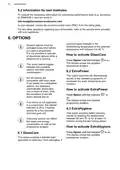
- Page 9: Information for test institutes includes a request for the product number code from the rating plate. Desired options must be activated every time before starting a programme. It is not possible to activate or deactivate options while a programme is running. The option button toggles between available options and their possible combinations. ExtraPower improves dishwashing results by increasing wash temperature and duration. Not all options are compatible with each other; incompatible options will be automatically deactivated. ExtraHygiene provides better cleaning results by maintaining a high temperature during the last rinsing phase. Activating options can affect water and energy consumption as well as programme duration. GlassCare protects delicate glassware from damage. The display shows the updated programme duration when an option is activated.
- Page 10: Settings Programme selection How to enter user mode Make sure the appliance is in programme selection mode. To enter user mode, press and hold simultaneously Delay and Option until the indicators flash and the display is blank. Settings available in the user mode include the level of water softener according to the water hardness, the level of rinse aid according to the required dosage, and activation or deactivation of the AirDry. The water softener removes minerals from the water supply, which would have a negative effect on the washing results and on the appliance. The higher the content of these minerals, the harder your water is. Water hardness is measured in equivalent scales. The water softener should be adjusted according to the hardness of the water in your area. Set the right level of the water softener to assure good washing results. After activation, the appliance is in programme selection mode by default.
- Page 11: Water softener levels should be set according to the hardness of the water. Do not use salt at the factory setting level. Set the proper water hardness level to keep the salt refill indicator active. Regeneration initiation has no impact on the cycle duration unless it occurs during or at the end of a short drying phase. Multi-tabs containing salt are not effective enough to soften hard water. The rinsing of the water softener lasts 5 minutes and increases total water consumption by 4 liters. The resin of the softener device needs to be regenerated regularly as part of normal dishwasher operation. A new regeneration process will be initiated after a prescribed quantity of water has been used. Each softener rinse may prolong the programme duration by an additional 5 minutes. All consumption values are determined under standard laboratory conditions with specific water hardness.
- Page 12: How to set the water softener level Make sure the appliance is in user mode. Press Program to change the setting. The display shows the current setting. Press the on/off button to confirm the setting. The rinse aid level The rinse aid helps to dry the dishes without streaks and stains. You can set the released quantity of rinse aid between level 1 and level 6. When the rinse aid chamber is empty, the rinse aid indicator is on. To deactivate the rinse aid dispenser and indicator, set the level of rinse aid to 0. How to deactivate AirDry If children have access to the appliance, we advise to deactivate AirDry. AirDry improves the drying results with less energy consumption.
- Page 13: Before first use Make sure that the current level of the water softener agrees with the hardness of the water supply. If not, adjust the level of the water softener. Fill the salt container. Fill the rinse aid dispenser. Open the water tap. Start a programme to remove any processing residuals that can still be inside the appliance. Do not use detergent and do not put dishes in the baskets. The salt container Use rough salt designed for dishwashers only. Fine salt increases the risk of corrosion. Water and salt can come out of the salt container when you fill it. After you fill the salt container, immediately start the shortest programme to prevent corrosion. The salt is used to recharge the resin in the water softener and to assure good washing results in daily use. How to fill the salt container Put 1 litre of water in the salt container (only for the first time).
- Page 14: How to fill the rinse aid dispenser Only use rinse aid designed specifically for dishwashers. Fill the dispenser until the rinse aid reaches the marking MAX. Remove the spilled rinse aid with an absorbent cloth to prevent excessive foam formation. Close the lid and ensure it locks into position. Fill the rinse aid dispenser when the indicator is clear. The compartment is for rinse aid only. Do not fill it with detergent. Daily use Open the water tap. Press the on/off button to activate the appliance. Make sure that the appliance is in programme selection mode.
- Page 15: When the countdown is completed, the programme starts and the indicator of the running phase is on. For information about the detergent dosage, refer to the manufacturer's instructions on the packaging of the product. Usually, 20 - 25 ml of gel detergent is adequate for washing a load with normal soil. The upper ends of the two vertical ribs inside the compartment indicate the maximum level for filling the dispenser with gel (max. 30ml). Opening the door while a programme is running stops the appliance and may affect the energy consumption and the programme duration. If the door is opened for more than 30 seconds during the drying phase, the running programme ends. Do not try to close the appliance door within 2 minutes after AirDry automatically opens it as this may cause damage to the appliance. Press the on/off button to activate the appliance and ensure it is in programme selection mode with the door closed. Make sure that there is detergent in the detergent dispenser before you start a new programme. Press Start to begin the countdown for a delayed start, with the remaining time counting down in hours.
- Page 16: End of the programme When the programme is complete, the Auto Off function switches the appliance off automatically. The Auto Off function This function decreases energy consumption by deactivating the appliance when it is not operating. Hints and tips Follow the hints below to ensure optimal cleaning and drying results in daily use and to protect the environment. Using salt, rinse aid and detergent Only use salt, rinse aid and detergent designed for dishwasher. Other products can cause damage to the appliance. Washing dishes in the dishwasher Washing dishes in the dishwasher usually consumes less water and energy than washing dishes by hand. Load the dishwasher to its full capacity Load the dishwasher to its full capacity to save water and energy. Detergent tablets Detergent tablets do not fully dissolve with short programmes. Do not pre-rinse dishes by hand It increases the water and energy consumption. Soak or slightly scour cookware Soak or slightly scour cookware with firmly cooked-on or baked-on food before washing it in the appliance. Select a programme according to the type of load Select a programme according to the type of load and the degree of soil for efficient use of water and energy consumption.
- Page 17: Make sure that glass items do not touch each other. Always use the correct quantity of rinse aid. Make sure that the water softener level is correct. Put cutlery and small items in the cutlery drawer. Make sure that the spray arms can move freely before you start a programme. Before you start the selected programme, make sure that the filters are clean and correctly installed. Start the shortest programme with a rinsing phase. Let the tableware cool down before you remove it from the appliance. Use the appliance to wash dishwasher-safe items only. Put hollow items with the opening facing downwards.
- Page 18: Care and cleaning Disassemble the filters system as instructed in this chapter. Remove any foreign objects manually. Reassemble the filters as instructed in this chapter. Before maintenance, deactivate the appliance and disconnect the mains plug from the main socket. Dirty filters and clogged spray arms negatively affect the washing results. Clean the appliance with a moist soft cloth. Only use neutral detergents. Do not use abrasive products, abrasive cleaning pads or solvents. The filter system is made of 3 parts. To maintain the performance of your appliance, use a cleaning product designed for dishwashers at least once every two months. Check the filters and the sump after each use of the dishwasher.
- Page 19: Remove the filter (C) out of filter (B). Remove the flat filter (A). Wash the filters. An incorrect position of the filters can cause bad washing results and damage to the appliance. We recommend to clean the lower spray arm regularly to prevent soil from clogging the holes. Clogged holes can cause unsatisfactory washing results. Make sure that there are no residues of food or soil in or around the edge of the sump. Put back in place the flat filter (A). To remove the lower spray arm, pull it upwards. Wash the spray arm under running water.
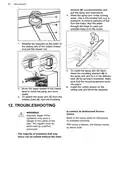
- Page 20: To install the spray arm back, press it downwards. To install the spray arm back, press the spray arm upwards and simultaneously turn it counterclockwise until it locks into place. We recommend cleaning the upper spray arm regularly to prevent soil from clogging the holes. Clogged holes can cause unsatisfactory washing results. We recommend cleaning the ceiling spray arm regularly to prevent soil from clogging the holes. To detach the spray arm from the basket, press the spray arm upwards and simultaneously turn it clockwise. The ceiling spray arm is placed on the ceiling of the appliance. The spray arm is installed in the delivery tube with the mounting element. Wash the spray arm under running water. Use a thin pointed tool to remove particles of soil from the holes.
- Page 21: Wash the spray arm under running water. Use a thin pointed tool to remove particles of soil from the holes. Run the water through the holes to wash soil particles away from the inside. Release the stoppers on the sides of the sliding rails of the cutlery drawer and pull the drawer out. To install the spray arm back, insert the mounting element in the spray arm and fix it in the delivery tube by turning it clockwise. Make sure that the mounting element locks into place. Install the cutlery drawer on the sliding rails and block the stoppers. Move the upper basket to the lowest level to reach the spray arm more easily. Improper repair of the appliance may pose a danger to the safety of the user. Any repairs must be performed by qualified personnel.
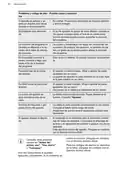
- Page 22: Problem and alarm code Possible cause and solution You cannot activate the appliance. Make sure that the mains plug is connected to the mains socket. Make sure that there is no damaged fuse in the fuse box. The programme does not start. Make sure that the appliance door is closed. Press the start button. If the delay start is set, cancel the setting or wait for the end of the countdown. The appliance does not fill with water. Make sure that the water tap is open. Make sure that the pressure of the water supply is not too low. The appliance does not drain the water. Make sure that the sink spigot is not clogged. The anti-flood device is on. Close the water tap. Make sure that the appliance is correctly installed.
- Page 23: Problem and alarm code Possible cause and solution The level of water inside the appliance is too high. Switch the appliance off and on. Make sure that the filters are clean. The appliance stops and starts more times during operation. It is normal. It provides optimal cleaning results and energy savings. The programme lasts too long. The displayed programme duration is different than the duration in the consumption values table. The remaining time in the display increases and skips nearly to the end of the programme duration. Small leak from the appliance door. The appliance is not levelled. The appliance door is difficult to close. Rattling or knocking sounds from the inside of the appliance. The appliance trips the circuit-beaker. Internal electrical fault of the appliance.
- Page 24: For alarm codes not described in the table, contact an Authorised Service Centre. We do not recommend using the appliance until the problem has been completely fixed. Unplug the appliance and do not plug it in again until you are certain that it operates correctly. The dishwashing and drying results are not satisfactory. Poor washing results may be due to improper loading or the need for a more intensive washing programme. Activate the ExtraPower option to improve the washing results of a selected programme. Clean spray arm jets and filter. Poor drying results can occur if tableware is left for too long inside the closed appliance. Activate the function AirDry to improve the drying performance. Ensure there is sufficient rinse aid and adjust the dosage if necessary. Always use rinse aid, even with multi-tablets. The quality of the rinse aid can affect results.
- Page 25: Problem Possible cause and solution Traces of rust on cutlery. There is too much salt in the water used for washing. Silver and stainless steel cutlery were placed together. There are residues of detergent in the dispenser at the end of the programme. The detergent tablet was stuck in the dispenser and was not washed away by water. Odours inside the appliance. Start the programme with a descaler or a cleaning product designed for dishwashers. Limescale deposits on the tableware, on the tub and on the inside of the door. Dull, discoloured or chipped tableware. Make sure that only dishwasher-safe items are washed in the appliance.
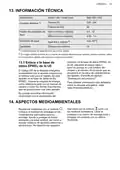
- Page 26: Voltage: 220 - 240 V Frequency: 50 Hz Water supply pressure: 0.5 - 10 bar (0.05 - 1.0 MPa) Maximum water temperature: 60 °C Capacity: 14 place settings Refer to the rating plate for other values. Use hot water supply from alternative energy sources to decrease energy consumption. The QR code on the energy label provides a link to the EU EPREL database. Recycle materials marked with the symbol and return the product to a local recycling facility. Help protect the environment by recycling waste of electrical and electronic appliances.
- Page 27: Información sobre seguridad Instrucciones de seguridad Descripción del producto Panel de mandos Programas Opciones Ajustes Antes del primer uso Uso diario Consejos Gracias por elegir este producto AEG. Lo hemos creado para brindarle un rendimiento impecable durante muchos años, con tecnologías innovadoras que lo ayudan a simplificar la vida. Dedique unos minutos a leer este documento para sacarle el máximo partido. Le recomendamos que utilice recambios originales. Cuando se ponga en contacto con nuestro Centro de servicio técnico, asegúrese de tener los siguientes datos disponibles: Modelo, código numérico del producto, número de serie. Advertencia / Precaución - Información sobre seguridad Información general y consejos Información relativa al medioambiente
- Page 28: Información sobre seguridad Antes de instalar y utilizar el aparato, lea atentamente las instrucciones facilitadas. El fabricante no se hace responsable de lesiones o daños producidos como resultado de una instalación o un uso incorrectos. Conserve siempre estas instrucciones en lugar seguro y accesible para futuras consultas. Seguridad de niños y personas vulnerables Este aparato puede ser utilizado por niños de 8 años en adelante y personas cuyas capacidades físicas, sensoriales o mentales estén disminuidas, siempre que cuenten con las instrucciones o la supervisión sobre el uso del electrodoméstico de forma segura. Es necesario mantener alejados del aparato a los niños de entre 3 y 8 años, así como a las personas con minusvalías importantes y complejas, salvo que estén bajo supervisión continua. Es necesario mantener alejados del aparato a los niños de menos de 3 años salvo que estén bajo supervisión continua. Es necesario vigilar a los niños para que no jueguen con el aparato. Mantenga los detergentes fuera del alcance de los niños. Mantenga a los niños y mascotas alejados del aparato cuando la puerta se encuentre abierta. La limpieza y mantenimiento de usuario del producto no podrán ser realizados por niños sin supervisión. Instrucciones generales de seguridad Este electrodoméstico está diseñado únicamente para limpiar vajilla y utensilios domésticos.
- Page 29: Este aparato está diseñado para uso doméstico en interiores. Este aparato se puede utilizar en oficinas, habitaciones de hotel, habitaciones de Bed&Breakfast, casas de campo y otros alojamientos similares donde dicho uso no exceda (en promedio) los niveles de uso doméstico. No cambie las especificaciones de este aparato. La presión del suministro de agua para el funcionamiento del aparato debe estar entre 0.5 / 10 bares. Coloque el máximo número de 14 cubiertos. Si el cable de alimentación sufre algún daño, el fabricante o un profesional tendrán que cambiarlo para evitar riesgos. Los cuchillos y otros utensilios con puntas afiladas deben colocarse en el cesto con las puntas hacia abajo o en posición horizontal. No deje la puerta del lavavajillas abierta ya que se podría tropezar con ella. Antes de realizar tareas de mantenimiento, apague el aparato y desenchúfelo de la toma de corriente. No instale ni utilice un aparato dañado.
- Page 30: Instale el aparato en un lugar seguro y adecuado que cumpla los requisitos de instalación. Asegúrese de que no haya fugas de agua visibles durante y después del primer uso del aparato. Advertencia: este aparato está diseñado para instalarse/conectarse a una toma de tierra del edificio. Utilice siempre una toma con aislamiento de conexión a tierra correctamente instalada. No utilice adaptadores de enchufes múltiples ni cables prolongadores. Si la manguera de entrada de agua está dañada, cierre la llave de agua y quite inmediatamente el enchufe de la toma de corriente. No coloque productos inflamables o artículos mojados con productos inflamables dentro, cerca o sobre el aparato. Los detergentes para lavavajillas son peligrosos. Siga las instrucciones de seguridad del envase del detergente. No retire la vajilla del aparato hasta que finalice el programa. Para reparar el aparato, póngase en contacto con el centro de servicio autorizado.
- Page 31: Tenga en cuenta que la reparación no profesional puede tener consecuencias de seguridad y podría anular la garantía. Las bombillas de este producto están destinadas a soportar condiciones físicas extremas en los aparatos domésticos. No están destinadas a utilizarse en otras aplicaciones y no son adecuadas para la iluminación de estancias domésticas. Las siguientes piezas de repuesto estarán disponibles durante 7 años después de que el modelo se haya retirado: motor, bomba de circulación y desagüe, calentadores y elementos de calentamiento. Algunas de estas piezas de recambio solo están disponibles para los reparadores profesionales. Los siguientes repuestos estarán disponibles durante 10 años después de que el modelo se haya retirado: bisagras y juntas de puertas. Desconecte el aparato de la red. Corte el cable de conexión a la red y deséchelo. Retire el pestillo de la puerta para evitar que los niños y las mascotas queden encerrados en el aparato. Existe riesgo de lesiones o asfixia.
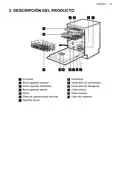
- Page 32: Descripción del producto Encimera Ventilación Brazo aspersor superior Brazo aspersor intermedio Brazo aspersor inferior Filtros Placa de características técnicas Depósito de sal Dosificador de abrillantador Dosificador de detergente
- Page 33: Panel de mandos Botón de encendido/apagado Program botón táctil Indicadores de programa Pantalla Option botón táctil Start botón táctil Delay botón táctil Indicador de sal. Se enciende cuando hay que rellenar el depósito de sal. Indicador de abrillantador. Se enciende cuando hay que rellenar el dosificador de abrillantador.
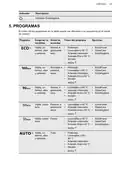
- Page 34: Indicador ExtraHygiene. El orden de los programas en la tabla puede ser diferente a su secuencia en el panel de control. Programa: Carga del lavavajillas. Grado de suciedad: Normal, ligero, pesado. Fases del programa: Prelavado, aclarado intermedio, aclarado final, secado. Opciones: ExtraPower, GlassCare, ExtraHygiene, AirDry. Vajilla, cubiertos, ollas y sartenes secos. Lavavajillas a 50 °C y 60 °C. Aclarado final a 45 °C y 55 °C.
- Page 35: Programa de lavavajillas Grado de suciedad Fases del programa Opciones Limpieza del interior del aparato Este es el programa estándar para institutos de pruebas. El aparato detecta el tipo de suciedad y la cantidad de objetos que hay en los cestos. Este programa se ha diseñado para limpiar el interior del aparato de forma eficiente y eficaz. Con este programa se puede aclarar la vajilla rápidamente para quitar los restos de comida. Es el programa más silencioso.
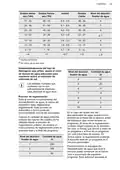
- Page 36: Agua (l) Energía (kWh) Duración (min) La presión y temperatura del agua, las variaciones del suministro de energía, las opciones, la cantidad de platos y el grado de suciedad pueden alterar los valores. Los valores de los programas distintos de ECO son solo indicativos. Para recibir toda la información necesaria para efectuar pruebas de rendimiento, envíe un correo electrónico. Cada vez que inicie un programa debe activar las opciones deseadas. La activación de opciones puede afectar al consumo de agua y energía y a la duración del programa. GlassCare protege contra daños la vajilla delicada, en particular las piezas de cristal. ExtraPower mejora los resultados de lavado del programa seleccionado.
- Page 37: ExtraHygiene option ensures better cleaning results by maintaining a temperature between 65 and 70 °C for at least 10 minutes during the final rinse phase. To activate ExtraHygiene, press the Option button until the indicator lights up. The display shows the updated duration of the current program. In program selection mode, it is possible to adjust a program and enter user mode. To access user mode, ensure the appliance is in program selection mode and press Delay and Option simultaneously. Available adjustments in user mode include water softener level based on water hardness, rinse aid level according to necessary dosage, and activation or deactivation of AirDry. The water softener removes minerals from the water supply that could negatively affect washing results and appliance operation. The water hardness should be adjusted according to the hardness of the water in your area. The local water supply company can inform you about the hardness of the water in your area. Adjust the appropriate level of the water softener to ensure good washing results.
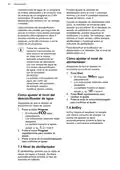
- Page 38: Ajustes de fábrica. Independientemente del tipo de detergente que utilice, ajuste el nivel de dureza de agua adecuado para mantener activo el indicador de rellenado de sal. Las tabletas múltiples que contienen sal no son suficientemente efectivas para ablandar el agua dura. Para el correcto funcionamiento del descalcificador de agua, la resina del dispositivo debe regenerarse regularmente. Este proceso es automático y forma parte del funcionamiento normal del lavavajillas. El inicio de la regeneración no tiene ningún impacto en la duración del ciclo, a menos que ocurra a mitad de un programa. La regeneración prolonga la duración total de un programa en 5 minutos adicionales. Cuando la cantidad de agua prescrita se ha utilizado desde el proceso de regeneración anterior, se iniciará un nuevo proceso de regeneración. El enjuague del descalcificador de agua que dura 5 minutos puede comenzar en el mismo ciclo o al principio del siguiente programa. Esta actividad aumenta el rendimiento del descalcificador.
- Page 39: consumo total de agua de un programa puede ajustarse en 4 litros adicionales y el consumo total de energía en 2 Wh adicionales. El aclarado del abrillantador se puede ajustar entre el nivel 1 (cantidad mínima) y el nivel 6 (cantidad máxima). Cuando el depósito de abrillantador está vacío, el indicador se enciende para solicitar que se rellene. Para obtener el mejor secado, utilice siempre abrillantador y mantenga activo el indicador de abrillantador. Cada aclarado del descalcificador puede prolongar la duración del programa en otros 5 minutos. Para desactivar el dosificador de abrillantador y el indicador, fije el nivel de abrillantador en 0. Todos los valores de consumo mencionados se determinan en condiciones de laboratorio con una dureza del agua de 2,5 mmol/l. AirDry mejora el resultado de secado con menos consumo de energía. La puerta del aparato se abre automáticamente durante la fase de secado y permanece entreabierta. El abrillantador permite que la vajilla se seque sin rayas ni franjas.
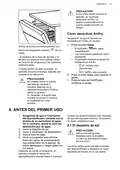
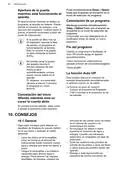
- Page 40: Precaución: Si los niños tienen acceso al aparato, se aconseja desactivar AirDry. Cómo desactivar AirDry: Asegúrese de que el aparato se encuentra en modo de usuario. AirDry se activa automáticamente con el indicador parpadeando. La duración de la fase de secado y el tiempo de apertura de la puerta varían en función del programa y las opciones seleccionadas. No intente cerrar la puerta del aparato durante 2 minutos después de la apertura automática. Asegúrese de que el nivel actual del descalcificador coincide con la dureza de su suministro de agua. Llene el depósito de sal y el dosificador de abrillantador. Utilice solo sal gruesa diseñada para lavavajillas. Inicie un programa para eliminar todos los restos de procesamiento que pueda haber en el aparato. La sal se utiliza para recargar la resina del descalcificador y asegurar un buen resultado de lavado en el uso diario.
- Page 41: Llenado del depósito de sal Llenado del dosificador de abrillantador Gire la tapa del depósito de sal hacia la izquierda y retírela. Vierta 1 litro de agua en el depósito de sal (solo la primera vez). Llene el depósito de sal con sal para lavavajillas (hasta que esté lleno). El compartimento es solo para abrillantador. No lo llene con detergente. Utilice exclusivamente abrillantador diseñado específicamente para lavavajillas. Llene el dosificador hasta que el abrillantador llegue a la marca MAX. Limpie el abrillantador con un paño absorbente para evitar que se forme demasiada espuma. Llene el depósito del abrillantador cuando el indicador sea transparente.
- Page 42: Si el indicador de sal está encendido, llene el depósito de sal. Los extremos superiores de las dos nervaduras verticales dentro del compartimento indica el nivel máximo para llenar el dosificador con gel. Si el indicador de abrillantador está encendido, llene el dosificador de abrillantador. Cargue los cestos. Añada el detergente. Ajuste e inicie un programa adecuado para el tipo de carga. Pulse la tecla de encendido/apagado para encender el aparato. Asegúrese de que el aparato se encuentra en modo de selección de programa y que la puerta está cerrada. Utilice exclusivamente detergente diseñado específicamente para lavavajillas. Para obtener más información sobre la dosis de detergente, consulte las instrucciones del fabricante del envase del producto.
- Page 43: Pulse simultáneamente Delay y Option hasta que el aparato se encuentre en el modo de selección de programa. Si abre la puerta mientras se realiza un programa, el aparato se detiene. Cuando cierre la puerta, el aparato continuará a partir del punto de interrupción. Si la puerta se abre más de 30 segundos durante la fase de secado, el programa en funcionamiento se termina. Cuando el programa ha finalizado, la función Auto Off apaga el aparato automáticamente. La función Auto Off reduce el consumo de energía desactivando automáticamente el aparato cuando no se utiliza. Si cancela el inicio diferido, debe volver a ajustar el programa y las opciones. No enjuague los platos a mano, ya que aumenta el consumo de agua y energía. Quite los residuos más grandes de comida de los platos antes de ponerlos dentro del aparato. Lavar los platos en el lavavajillas suele consumir menos agua y energía que lavar los platos a mano.
- Page 44: Utilice únicamente sal, abrillantador y detergente diseñados para lavavajillas. Asegúrese de que los objetos de los cestos no se tocan entre sí ni se cubren unos a otros. Use siempre la cantidad correcta de abrillantador. Ajuste la cantidad de detergente en función de la dureza del agua. Seleccione un programa según el tipo de carga y el grado de suelo. Rellene el depósito de sal siempre que sea necesario. Las pastillas de detergente no se disuelven completamente con programas cortos. No lave en el aparato utensilios de madera, marfil, aluminio, estaño ni cobre. Coloque los recipientes huecos boca abajo. Utilice el aparato exclusivamente para el lavado de utensilios del hogar aptos para lavavajillas.
- Page 45: Asegúrese de que las piezas de cristalería no estén en contacto. Coloque los objetos ligeros en el cesto superior. La disposición de los utensilios en los cestos es correcta. Coloque los cubiertos y los objetos pequeños en el cajón de cubiertos. Antes de iniciar un programa, compruebe que el brazo aspersor gira sin obstrucción. Deje enfriar la vajilla y cristalería antes de retirarla del aparato. Vacíe primero el cesto inferior y a continuación el superior. Antes de iniciar el programa seleccionado, asegúrese de que los filtros están limpios e instalados correctamente. Utilice el programa de limpieza automática para obtener resultados óptimos. Limpie el interior del aparato con un paño suave humedecido.
- Page 46: Precaución: Si no puede retirar los cuerpos extraños, póngase en contacto con un centro de servicio técnico autorizado. Desmonte el sistema de filtros como se indica en este capítulo. Extraiga el filtro (C) del filtro (B). Extraiga el filtro plano (A). Retire manualmente cualquier cuerpo extraño. Vuelva a montar los filtros como se indica en este capítulo. Limpie el aparato con un paño suave humedecido. Utilice solo detergentes neutros. No utilice productos abrasivos, estropajos duros ni disolventes. El sistema de filtro está hecho de 3 piezas. Asegúrese de que no haya restos de comida ni suciedad alrededor del borde del sumidero.
- Page 47: Vuelva a colocar el filtro en el filtro plano. Gírelo hacia la derecha hasta que encaje. Para instalar el brazo aspersor de vuelta, presiónelo hacia abajo. Una posición incorrecta de los filtros puede dañar el aparato. Recomendamos limpiar periódicamente el brazo aspersor inferior. Recomendamos limpiar periódicamente el brazo aspersor superior. Unos orificios obstruidos pueden provocar resultados de lavado insatisfactorios. Para quitar el brazo aspersor inferior, tire hacia arriba. Extraiga el cesto superior. Lave el brazo aspersor bajo el agua corriente.
- Page 48: Lave el brazo aspersor bajo el agua corriente. Retire las partículas de suciedad de los orificios mediante un objeto afilado, como un palillo. Suelte los topes de los lados de los carriles deslizantes del cajón de cubiertos y extraiga el cajón. Mueva el cesto superior al nivel más bajo para alcanzar el brazo aspersor con más facilidad. Para separar el brazo aspersor del tubo de descarga, gire el elemento de montaje hacia la izquierda y tire del brazo aspersor hacia abajo. Haga pasar el agua a través de los orificios para eliminar las partículas de suciedad del interior. Recomendamos limpiar periódicamente el brazo aspersor de techo para que la suciedad no obstruya los orificios. Unos orificios obstruidos pueden provocar resultados de lavado insatisfactorios. El brazo aspersor de techo está en el techo del aparato. El brazo aspersor está instalado en el tubo de descarga con el elemento de montaje.
- Page 49: Para instalar el brazo aspersor, inserte el elemento de montaje en el brazo aspersor y fíjelo en el tubo de descarga girándolo hacia la izquierda. Asegúrese de que el elemento de montaje encaje en su sitio. Instale el cajón de cubiertos en los carriles deslizantes y bloquee los topes. Una reparación inadecuada del aparato puede suponer un riesgo para la seguridad del usuario. Si tiene alguna duda, consulte la tabla siguiente. Con algunos problemas, la pantalla muestra un código de alarma. La mayoría de los problemas que pueden surgir se resuelven sin necesidad de ponerse en contacto con el Centro de servicio técnico. Asegúrese de que el enchufe está conectado a la toma de corriente. Asegúrese de que no haya fusibles dañados en la caja de fusibles. Asegúrese de que la puerta del aparato esté cerrada.
- Page 50: Problema y código de alarma El aparato no carga agua. La pantalla muestra i10 o i11. Compruebe que el grifo esté abierto. Asegúrese de que la presión del suministro de agua no es demasiado baja. El aparato no desagua. La pantalla muestra i20. Asegúrese de que el desagüe no está obstruido. El dispositivo contra inundación se ha activado. La pantalla muestra i30. Fallo técnico del aparato.
- Page 51: Problema y código de alarma El aparato se detiene y se pone en marcha más veces durante el funcionamiento. Es normal. Proporciona resultados de limpieza óptimos y ahorra energía. El programa dura demasiado. Si se ha ajustado la opción de inicio diferido, cancele dicho ajuste o espere hasta el final de la cuenta atrás. La duración del programa en la pantalla es diferente a la duración de la tabla de valores de consumo. Pequeña fuga de la puerta del aparato. El aparato no está nivelado. Afloje o apriete las patas ajustables. Es difícil cerrar la puerta del aparato. La AirDry función está activada. Puede desactivar la función. El aparato dispara el disyuntor.
- Page 52: Advertencia: No recomendamos usar el aparato hasta que el problema se haya solucionado por completo. Desenchufe el aparato y no lo vuelva a conectar hasta que esté seguro de que funciona correctamente. Los resultados del lavado y el secado no son satisfactorios. Mal resultado de lavado: Consulte Uso diario, Consejos y el folleto sobre cómo cargar el cesto. Utilice un programa de lavado más intenso. Active la opción ExtraPower para mejorar el resultado de lavado del programa seleccionado. Limpie las boquillas del brazo aspersor y el filtro. Malos resultados de secado: Se ha dejado la vajilla demasiado tiempo dentro del aparato cerrado. Active la función AirDry para ajustar la apertura automática de la puerta y mejorar el rendimiento de secado. No hay abrillantador o la dosificación del abrillantador es insuficiente. La calidad del abrillantador puede ser la causa. Utilice siempre abrillantador, incluso con pastillas multiusos. Los objetos de plástico pueden tener que secarse con un paño. El programa no tiene la fase de secado. Hay rayas o capas azuladas en vasos y platos: La dosificación del abrillantador es demasiado alta. La cantidad de detergente es demasiada. Hay manchas y gotas de agua en vasos y platos: La cantidad de abrillantador es insuficiente. La calidad del abrillantador puede ser la causa. El interior del aparato está mojado: Esto no es un defecto del aparato. La humedad se condensa en las paredes del aparato.
- Page 53: Problema Espuma inusual durante el lavado. Utilice detergente diseñado específicamente para lavavajillas. No preenjuague los platos bajo el agua corriente. Rastros de óxido en los cubiertos. Hay demasiada sal en el agua que se utiliza para lavar. No coloque juntos los cubiertos de plata y acero inoxidable. Quedan restos de detergente en el dosificador al final del programa. La pastilla de detergente se ha quedado pegada en el dosificador y no se ha disuelto en el agua. Asegúrese de que los objetos de los cestos no impidan que se abra la tapa del dosificador de detergente. Olores en el interior del aparato. Active el programa con un descalcificador o producto de limpieza diseñado para lavavajillas. Depósitos calcáreos en la vajilla, la cuba y el interior de la puerta. El nivel de sal es bajo, consulte el indicador de rellenado. Utilice agua y ajuste la regeneración del descalcificador de agua aunque use pastillas multiusos. Vajilla mate, descolorida o agrietada. Asegúrese de lavar en el aparato únicamente elementos aptos para lavavajillas. Coloque los objetos delicados en el cesto superior.
- Page 54: Información técnica Dimensiones: ancho, alto, fondo (mm) 598/850/603 Tensión (V): 220 - 240 Frecuencia (Hz): 50 Presión del suministro de agua (mínima y máxima): 0.5 - 10 MPa Suministro de agua: agua fría o caliente Consulte la placa de datos técnicos para otros valores. Utilice la toma de agua caliente para reducir el consumo de energía. Enlace a la base de datos EPREL de la UE. Guarde la etiqueta de energía como referencia junto con el manual de usuario. Recicle los materiales con el símbolo correspondiente.
- Page 55: Page 55

BOSCH SBT4ECX10E Dishwasher

BOSCH SMS6ECI11E-01 Free-standing Dishwasher

FISHER and PAYKEL DD60ST4HNB9 Contemporary Tall Dishwasher

Omega ODWIF6015 Integrated Dishwasher

Electrolux ESL63010 Dishwasher

BOSCH SMS4EMC06E Dishwasher

SIEMENS SN65ZX00AE Dishwasher

BOSCH SMV4HBX19E Dishwasher

SAMSUNG DW8700B 2023 Bespoke Dishwasher

AEG FSK76738P Dishwasher