
ggmgastro GLOZ50 Undercounter Dishwasher
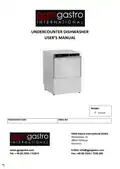
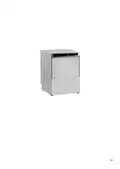


UNDERCOUNTER DISHWASHER
USER’S MANUAL
Model:
GLOZ50
PRODUCTION YEAR :
SERIAL NO :


| General | Details |
|---|---|
| Name | ggmgastro GLOZ50 Undercounter Dishwasher |
| Make | ggmgastro |
| Language | English |
| Filetype | PDF (Download) |
| File size | 0.76 MB |
 (1 votes, average: 5.00 out of 5)
 Loading...

ggmgastro DSHI1080WD Dishwasher

ggmgastro GLOZ50 Undercounter Dishwasher Overview
Summary of Contents
- Page 1: Undercounter dishwasher User’s manual Model: GLOZ50
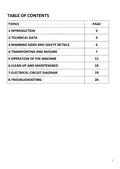
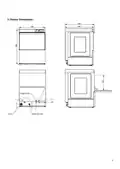
- Page 2: Introduction Technical data Warning signs and safety details Transporting and moving Operation of the machine Clean-up and maintenance Electrical circuit diagram Troubleshooting
- Page 3: Introduction Thank you for purchasing our device and for your reliance upon our company. Our devices have been used within our customers' kitchens in 100 countries. Important notice: Please read or ensure that the users read this user’s manual to achieve the desired performance and to use your device for long years. Please read and ensure that your operation personnel also reads this user’s manual carefully before installing and using the device. If the device is operated without reading the user’s manual, the device will not be covered by the guarantee. The manual contains information about installation, usage, and maintenance of our product. Please ensure that power supply connections to the device are installed by qualified personnel according to local legislation. If you are confused or don’t have enough information, please get in touch with authorized service. Keep in mind that if the service personnel is delayed at your site, related expenses and delay costs will be charged to you on an hourly basis. We hope that you will get the best performance from our product.
- Page 4: Page 4
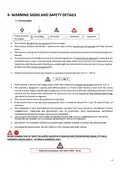
- Page 5: Warning signs and safety details are crucial for the safe operation of the machine. The machine should never be exposed to direct sunlight or left in water. It must not be cleaned with high-pressure water. Only trained personnel should operate the machine according to the manual. Installation must comply with effective regulations and be in well-ventilated areas. Ambient humidity should not exceed 65%, and the operating temperature should be between +5 °C and +40 °C. Water inlet temperature should not exceed +50 °C when using hot supply water. The machine should operate with softened water at a French hardness level of 0-10. Daily maintenance is essential to prevent damage and ensure performance. Low-quality detergents may harm the machine, and cleaning chemicals containing certain substances should be avoided.
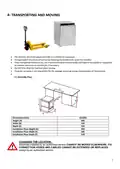
- Page 6: Transporting and moving The machine should be placed vertically on a palette by manpower. Transportation should be carried out by inserting the forklift forks under the machine. If the transported distance is far, the machine should be moved slowly and fixed to the palette or supported by another personnel to prevent jolt, if necessary. Do not hit or drop the machine when moving. Producer company is not responsible for the damage occurring during transportation of the machine. Machines installed by an authorized service cannot be moved elsewhere, its connection hoses and cables cannot be extended or replaced except by an authorized service.
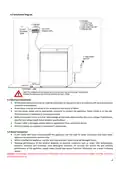
- Page 7: Installation diagram Electrical connections must be made by authorized service personnel in accordance with local and national standards and directives. All products must be connected to the residual current device of 30mA. Use the power socket and an appropriate connector to connect the appliance. Before connection, make sure that rated voltage on the name plate matches the mains voltage. If the power cable is damaged, please obtain a replacement from authorized service. A 3/4” water inlet hose is provided with the appliance. When installing the appliance, use the new hose provided. Washing performance depends on external conditions such as water inlet temperature, pressure, hardness, and chemicals used. To increase the service life and washing performance, supply water should have proper hardness. Any damage resulting from the use of hard water will void the product warranty.
- Page 8: Limits in water connection: Water inlet temperature: 4-50°C. Inlet pressure of flowing water: A rinsing pump is needed if pressure is 0-2 bars. A pressure of 2-4 bars is appropriate. If pressure exceeds 4 bars, adjust the pressure using the pressure regulator. If these conditions cannot be satisfied, appliance’s washing performance would decline. Models without a drain pump: Waste water is transferred to the drain vent by gravity. Drain hose should run to the drain vent with a downward slope. Drain vent height should be max. 30 mm. Allow an adequately long drain hose for servicing. Models with a drain pump: If drain vent is below the appliance’s drain outlet, attach the hose to the drain vent with a downward slope. The Ø28 mm (3/4ʺ) drain vent should not be below the appliance base.
- Page 9: Loading detergents and rinse-aid involves chemical pumps located on the back side of the front panel. Disconnect the appliance before removing any panel. A plastic hose is available for each chemical pump, with hose outlets on the back side of the appliance. Always ensure to attach the detergent hose to the detergent drum and the rinse aid hose to the rinse aid drum. Only use chemicals suitable for industrial washing or glass washing, with rinse aid suitable for temperatures below 40°C. Detergent and rinse aid pump dosage is set in the factory but can be re-set based on actual water hardness using the touch screen adjustment menu. At start-up, bleed excess air in the hoses and do not wash without chemicals. Water temperatures can be adjusted, with specific temperature values set during production. The rinsing water temperature should not exceed 85°C, and the washing water temperature should not exceed 55°C.
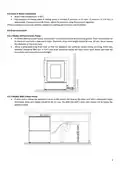
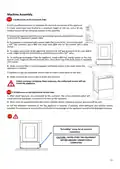
- Page 10: Machine assembly Call a qualified electrician to complete the electrical connection of the appliance. A V-type automated fuse and a 30 mA residual current device should be installed. Ground the appliance with the mains ground lead securely attached to the ground terminal. The appliance is delivered with a power cable, an inlet hose, and a drain hose. Install a new 1/2” piping system to supply clean water at a minimum height of 200 mm. Install a Ø50 PVC piping system to discharge wastewater at a maximum height of 100 mm. Ensure there is a hood-equipped ventilation system in the installation room. Adjust the appliance’s legs to create a level plane on the floor. Make sure the room is free of steam and moisture. The authorized service will not install the appliance unless the customer completes these measures.
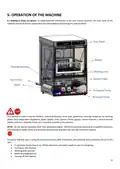
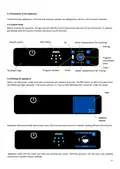
- Page 11: Operation of the machine Getting to know our device: The main parts of the machine should be known for understanding the user manual correctly. This product is used in tourism facilities, industrial kitchens, work sites, patisseries, and catering companies for washing dishes. Only preparation equipment and service utensils should be washed in the machine. Do not use for purposes other than mentioned above. The machine should be operated by qualified personnel informed about safety terms and technical specifications. It is important to show the user how to cut off the electricity and water supply in case of emergency. Instructions should include turning on the machine, working with the machine, water discharge process, and turning off the machine.
- Page 12: Description of the appliance Industrial dish and glass washers are designed for almost uninterrupted operation. Control panel Familiarize yourself with the control buttons and symbols on the front panel, as well as the location of power and water cut-off switches. Starting the appliance Ensure that power, water, and drain connections are installed. Press the On-Off Switch on the front panel when the white backlight is activated. The LCD screen will turn on. Press the ‘Washing Start’ switch to intake water. The appliance will automatically start to take water. Once the set water amount is reached, heating will start automatically. The appliance heats the boiler first and then the washing tank water. Washing operation will not start until the washing temperature reaches factory settings.
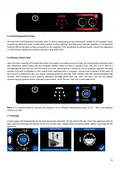
- Page 13: Initial preparation for use involves waiting 25-30 minutes for the water to warm up. The appliance functions efficiently when proper temperatures are reached. To start a wash cycle, open the door, load the basket, and ensure the arms turn freely. Select a program using the Program Selection Key and press the Washing Start button. The washing process time will countdown on the LCD screen. If the door is opened during operation, the washing will stop and resume once closed. After the washing operation, a warning sound will ring. It is recommended to operate the appliance at an ambient temperature range of 5°C - 40°C and moisture of 65%. Excess water will automatically be drained during operation. At the end of the day, leave the appliance door open for draining and drying. Always bleed the boiler water before switching off the appliance.
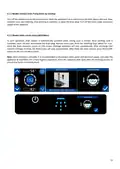
- Page 14: Models without drain pump require draining by gravity. To drain, turn off the appliance, open the door, and remove the drain plug. After draining, replace the drain plug and turn off the mains water and power supply. Models with a drain pump have an automatic drain system activated during the rinsing cycle. After the washing cycle, open the door and remove the drain plug and drain pipe. Press the 'Washing Stop' switch for 3 seconds to start the drainage operation. The drain pump will stop automatically after the discharge time is complete. It is recommended to disconnect the mains water and electrical supply after draining. For hygiene, leave the appliance door open after draining to allow natural drying. Cleaning the appliance as described is advised for better maintenance.
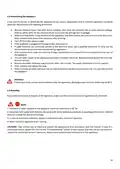
- Page 15: Deactivating the appliance requires observing local or national regulations. Remove chemical hoses carefully and close container lids to prevent spillage. Ensure water is fully drained and remove the drain hose from the vent. Wipe and dry any moist areas after draining. Turn off the mains power supply and disconnect the appliance if plugged in. Call a qualified electrician for disconnection if cable terminals are connected directly to the electrical panel. Remove the voltage/ground wire from its housing after disconnection. Turn off the water supply and isolate the water inlet hose, drying out any leaks. Drain water from the boiler into a vessel with a 6-litre capacity and replace the plug securely. Observe local and national regulations when recycling or disposing of the appliance.
- Page 16: Use of detergents and rinse aid in the dishwasher Remove the plug on the rear part of the appliance and connect the hose from the detergent dosing unit to the wash tank using a proper coupling. Dirt level of dishes and detergent characteristics should be considered to assess water hardness and consumption in the dishwasher. User should never modify the detergent dosing rate set by authorized members of the detergent company. If detergent dose supplied to the appliance is increased through unauthorized intervention, excess foam would be produced. Rinse aid pump is automatically set according to rinse water consumption and water hardness. Excessive rinse aid feed and excessive foam production in the washing system is avoided. Another harmful effect of excess rinse aid in the rinse water is the occurrence of a higher acidic effect. The detergent and rinse aid used should be health-friendly. It is recommended to use non-effervescent detergents and rinse aids designed for dishwashers.
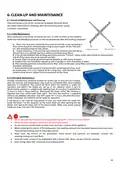
- Page 17: Clean-up and maintenance Daily maintenance should be carried out by people informed about the safety instructions after disconnecting power supply and water connections. Daily maintenance should be carried by the user. Wash and rinse arms should be disconnected and cleaned using pressure water, brush, or fine wire. Scraps remaining in the washing tank should be removed and cleaned up. If the period between two washing operations exceeds five hours, the water outlet pipe should be disconnected and drained. Suction filter should be disconnected and cleaned with plenty of water. Inside of the tank should be cleaned with a sponge or cloth and plenty of water. Periodic maintenance should be carried out by the user at least once a month. After adding decalcination substance to the washing tank, the machine should be operated for half an hour. Never use cleaning chemicals containing bleaching agents, chlorine, or hypochloride.
- Page 18: Page 18
- Page 19: Troubleshooting Check the electrical supply to the appliance. Ensure mains water and electrical connection is active. The electrical supply should be 220-240 V NPE/50 Hz. If the appliance does not run when the start button is pressed, ensure the door is securely closed. If the appliance fails to heat the wash water, the thermostat may be faulty. Check the inlet water temperature, as it may affect the heating process. For poor washing performance, check detergent levels and clean water outlet parts. Excessive water intake must be addressed as described in the manual. Check and clean all filters inside the device. If the appliance cannot be switched off, disconnect the mains electrical supply.
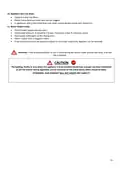
- Page 20: Appliance does not drain. Check and clean the filters. Check if drain hose and drain vent are not clogged. In appliances with a motorized drain unit, drain system should comply with section 4.6. Water intake is slow. Check if water supply taps are open. Check water pressure. It should be 2-4 bars. If pressure is low, fit a booster pump. Clean water outlet parts on the rinsing arms. Check if water hose is clogged or bent. Attention: If any wrong installation or use is found during the service under product warranty, a service fee is charged. Caution: The building, facility or area where the appliance is to be installed should have a proper electrical installation as per the interior wiring regulation.
- Page 21: Page 21

BOSCH SMH4ITX12E Dishwasher

AEG FSK76738P Dishwasher

BLACK Plus DECKER BDW200M Dishwasher

UNIQUE Classic Retro Dishwasher

EQUATOR 1840 WB 18 Inch Dishwasher

BOSCH SPI2HKS58E Dishwasher

BOSCH SMU6ECW70S Dishwasher

Miele PFD 101 ProfiLine Dishwasher

CMA DISHMACHINES 180UC-3 Under Counter Dishwasher

FISHER PAYKEL DD60D4ZB9 Dishwasher