
Kenmore 263.1460 Dishwasher













263.1460#
#


| General | Details |
|---|---|
| Name | Kenmore 263.1460 Dishwasher |
| Make | Kenmore |
| Language | English |
| Filetype | PDF (Download) |
| File size | 4.66 MB |
 (1 votes, average: 5.00 out of 5)
 Loading...

Kenmore 14041 Automatic Dishwasher

Kenmore 665.15822000 Undercounter Dishwasher

Kenmore 665.1605 Ultra Wash Dishwasher

Kenmore 665.15632 Ultra Wash Dishwasher

Kenmore 665.15624000 Undercounter Dishwasher

Kenmore 665.15824000 Undercounter Dishwasher

Kenmore 587.141500 Dishwasher

Kenmore W10898468B Ultra WashTMHE Dishwasher
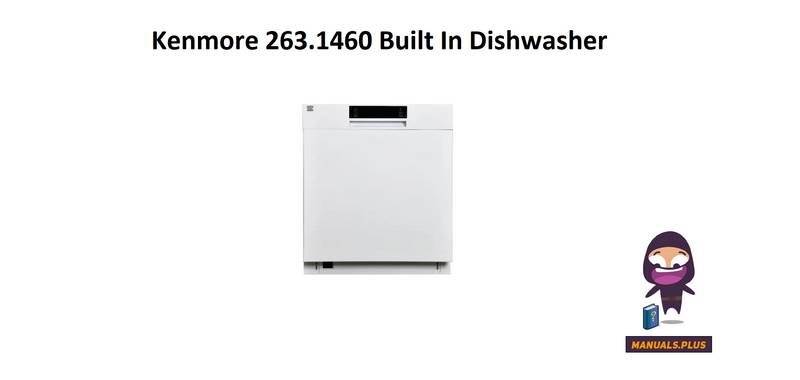
Kenmore 263.1460 Dishwasher Overview
Summary of Contents
- Page 1: Page 1
- Page 2: Warranty Important safety instructions Installation Technical specifications Before using the appliance Loading your dishwasher Cycles and options table The control panel Maintenance and cleaning Troubleshooting Practical information
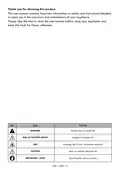
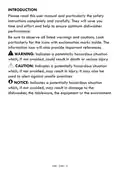
- Page 3: Introduction Please read this user manual and particularly the safety instructions completely and carefully. Be sure to observe all listed warnings and cautions. Look particularly for the icons with exclamation marks inside. WARNING: Indicates a potentially hazardous situation which, if not avoided, could result in death or serious injury. CAUTION: Indicates a potentially hazardous situation which, if not avoided, may result in injury. NOTICE: Indicates a potentially hazardous situation which, if not avoided, may result in damage to the dishwasher, the tableware, the equipment or the environment.
- Page 4: Important safety instructions include following basic precautions and reading all instructions before use. The dishwasher is intended for normal household use only. The manufacturer disclaims responsibility for damage or injury caused by improper use. The user manual must be followed to minimize risks of fire, explosion, property damage, personal injury, or loss of life. Only use recommended detergents or rinse aids and keep them out of children's reach. When loading items, locate sharp items to avoid damaging the door seal and load sharp knives with handles up. Do not wash plastic items unless marked dishwasher safe. Ensure all enclosure panels are properly in place before operating the dishwasher. Do not tamper with controls.
- Page 5: Do not drink and play with the water in the appliance as harmful residues could be present. To reduce the risk of injury, do not allow children to play in or on a dishwasher. When children become old enough to operate the appliance, it is the responsibility of the parents/legal guardians to ensure the children are instructed in safe practices by qualified persons. Do not leave the appliance with the open door unattended to avoid stepping accidentally onto it. Before any maintenance operation, deactivate the appliance and disconnect the machine from the electrical supply. Do not use high pressure water sprays and/or steam to clean the appliance. Ensure that there are no visible water leaks during and after the first use of the appliance. To avoid floor damage and possible mold growth, do not allow wet areas to remain around or under the dishwasher. To avoid dishwasher damage, do not allow water to remain in your dishwasher systems through extended periods of freezing. To avoid risk of injury, always use caution when opening the door during or following a wash cycle as hot water or steam may escape.
- Page 6: Under certain conditions, hydrogen gas may be produced in a hot water system that has not been used for two weeks or more. Hydrogen gas is explosive. Before using the dishwasher, turn on all hot water faucets and let the water flow from each for several minutes to release any accumulated hydrogen gas. Please check the water supply line periodically as it is susceptible to breakage. Replace it immediately when it is torn, cut, swollen, or there is water leakage. Please keep the dishwasher packaging out of the reach of children after unpacking it. Risk of injury or suffocation! Ensure that any plastic wrappings, bags, small pieces, etc. are disposed of safely and kept out of the reach of children.
- Page 7: Electrical supply conductors shall be a minimum of #16 AWG copper wire rated at 90 °C (194 °F) or higher. These requirements must be met to prevent injury and machine damage. Consult a qualified electrician if in doubt. Do not use any extension cord or portable outlet device to connect the dishwasher to a power supply.
- Page 8: Using detergent pacs should follow the manufacturer’s instructions. Never put detergent pacs into the interior section or the cutlery basket. Detergent pacs contain detergent, rinse aid, salt replacement substances, and additional components. It is recommended not to use detergent pacs in short cycles; use powder or liquid detergents instead. Preparing your dishwasher for first use includes ensuring electricity and water supply specifications match the installation instructions and removing all packaging material inside the machine. Fill the rinse aid compartment before use. Only use detergents specifically designed for domestic dishwashers and store them out of reach of children. The amount of detergent needed depends on the cycle, load size, and soil level of dishes. Rinse aid helps to dry dishes without streaks and stains and is automatically released during the hot rinse phase. If the rinse aid setting is too low, whitish stains may remain on dishes. Do not overfill the detergent compartment, as using too much can cause discoloration and machine damage. Conversely, using too little detergent can result in poor cleaning. To fill the rinse aid compartment, open the cap and fill to the MAX level, being careful not to overfill. To fill the detergent, push the latch to open the dispenser, pour in the detergent, and close the lid securely.
- Page 9: The factory setting is “4”. If the dishes are not drying properly or are spotted, increase the level. If blue stains form on your dishes, decrease the level. Rinse-aid not dispensed is indicated by r:1 on the display. 1 dose is dispensed, indicated by r:2 on the display. 2 doses are dispensed, indicated by r:3 on the display. 3 doses are dispensed, indicated by r:4 on the display. 4 doses are dispensed, indicated by r:5 on the display.
- Page 10: Loading your dishwasher requires attention to manufacturer instructions regarding suitable dishes for optimal washing results. Proper loading helps the dishwasher run efficiently with the best washing and drying performance. The lower rack accommodates large items like pots, plates, and cutlery sets, while the upper rack is designed for dessert plates, cups, and glasses. Long stem glasses should be leaned against the basket edge or glass supporter wire, not against other items. Thin and narrow items are best placed in the middle sections of the racks, and spoons should be placed in separate openings of the silverware basket. High temperature water and dishwasher detergent can damage certain items. Sharp items should be loaded with handles up to reduce the risk of injury. Before loading, remove coarse food leftovers from tableware and load the dishwasher carefully. Dishes should be placed in a way that does not obstruct the spray arms from spinning. Containers should be loaded with openings facing downwards to prevent water collection.
- Page 11: Upper rack should be loaded with dessert plates, cups, and glasses. Large knives and sharp utensils must be placed horizontally or with sharp side down. Ensure large items do not interfere with spray arms or detergent dispenser. The third rack can hold knives, spoons, forks, and serving spoons. Lower rack is for round and deep items like pots and plates. Avoid placing small items like cups or wine glasses in the lower rack. Load patterns are provided for 8 place settings.
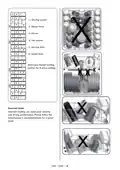
- Page 12: Serving spoons Dinner forks Knives Tea spoons Serving forks Salad forks Silverware basket loading pattern for 8 place settings. Incorrect loading can cause poor washing and drying performance. Please follow the manufacturer’s recommendations for a good result.
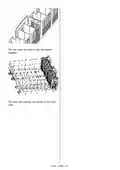
- Page 13: Upper rack with cup shelf Lower rack folding tines The tines can be folded down to allow for easier loading of large items such as pots and pans. Each of the two tine sections can be folded down separately or all of them can be folded together to create a larger loading area. These shelves are designed to increase the capacity of the upper rack. Use the adjustment feature to accommodate different size items. Place long knives, forks, and spoons on these shelves horizontally for them not to block the movement of spray arms. Cup shelf open position Cup shelf closed position
- Page 14: Upper rack height setting - When rack is empty In certain models, the height setting of the upper rack may be changed using the wheels which are present at two height levels. Bringing the wires to the horizontal position by holding them from the tips may cause them to bend. It will be appropriate to bring the wires in the middle to horizontal or vertical position by holding them from their stems and pushing. Push the latches back into the correct position. Release the latches on both the right and left tracks of the upper rack by turning them to the outside. There are two silverware baskets in the dishwasher. The two baskets can be assembled together or used separately. Follow the steps below to assemble. Push the baskets together with the tab on one basket aligning with the slot on the other basket.
- Page 15: The tab is slid into place to join the baskets together. The silverware baskets are placed in the lower rack.
- Page 16: Cycles and options table Standard cycle for daily, regular or typical use to completely wash a load of normally soiled dishes. This cycle automatically adjusts the temperature and the quantity of water, the energy consumption and the cycle duration. Suitable for heavily soiled dishes. Suitable for lightly soiled delicate dishes. Suitable for normally soiled daily dishes when fast results are needed. For rinsing dishes that will be washed later. Options include delay start, accela wash, quiet wash, half load, sani rinse, high temp, and extra dry.
- Page 17: The cycle duration may change according to the amount of dishes, the water temperature, the ambient temperature and selected additional functions. The energy-usage label is based on the “Normal” cycle, which is the most efficient for cleaning normally soiled dishes. The Energy Guide Label is based on the normal soil detection cycle. In this cycle, the dishwasher was tested without any rinse aid in the rinse aid dispenser. For cycles with prewash, a dose of detergent can be added on the inside of the cabinet door. We recommend that the rack position for crockery loads be set to the highest position as in the energy certificate test. Only use powder or liquid detergent for short cycles. Short cycles do not include drying. To assist drying, we recommend slightly opening the door after a cycle is complete.
- Page 18: The control panel features various buttons for operation. The power button is used to turn the machine on. The cycles button allows selection of a suitable washing cycle. The delay hours button can set a delay for the cycle start from 1 to 24 hours. The start/pause button begins or pauses the washing cycle. The remaining time indicator shows the time left in the cycle. Options can be selected using the option select button. The high temp option increases water temperature and washing time. The sani rinse option raises water temperature during the final rinse. If the door is opened during the cycle, it will pause and can resume if closed within four seconds.
- Page 19: Half load option indicators provide a feature to direct cleaning to a specific rack when the dishwasher is not fully loaded. To save a cycle as a favorite, press the Cycles and Delay Hours buttons simultaneously. The half load option has three modes and reduces energy and water consumption when both upper and lower half load indicators are selected together. To cancel a running cycle, press the Start/Pause button for 3 seconds, and the machine will discharge water in about 30 seconds. The Extra Drying function increases water temperature during the final rinse and extends drying time for drier dishes. Switch off the machine with the Power button after the cycle ends and the End indicator turns on. The Accela Wash option decreases cycle duration by raising water temperature and pressure. The Quiet Wash option reduces sound levels by lowering water pressure during washing. The rinse aid indicator turns on when the rinse aid level is low, indicating the need for a refill. The sanitized indicator lights up at the end of a cycle if the Sani Rinse option successfully sanitizes the load.
- Page 20: Save Power Mode To activate or deactivate save power mode, follow the below steps: Press Cycles and Option Select buttons simultaneously for 3 seconds. After 3 seconds, the machine will display last setting, “IL1” or “IL0”. When Save Power Mode is activated, “IL1” will be displayed. In this mode, the machine will turn off after 15 minutes of no activity in order to save energy. When Save Power Mode is deactivated “IL0” will be displayed. If Save Power Mode is deactivated, the machine will always be on unless it is turned off by the user. To save the selected setting, turn off the machine. In factory setting, Save Power Mode is active.
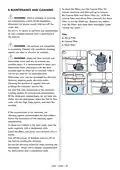
- Page 21: To clean the filters, turn the Coarse Filter counter clockwise and then pull up to remove the Coarse Filter and Micro Filter. With the Coarse Filter and Micro Filter removed, the Mesh Filter can be lifted out. Remove any debris from the filters and clean them thoroughly under running tap water. Before cleaning or carrying out maintenance, switch off the appliance, disconnect the power supply and turn off the water tap. Do not try to repair or perform any maintenance on your machine beyond what is described in this manual. All surfaces are susceptible to scratching. Keep the floor around your dishwasher clean and dry to prevent any possible injury. Cleaning the machine in regular intervals prolongs the machine’s service life. Oil and lime may accumulate in the machine’s washing section. Clean the filters and spray arms at least once a month.
- Page 22: Spray arms Check clogging situations on all holes on lower and upper spray arms. If there is any clogging, remove the spray arms and clean them under running tap water. The lower spray arm can be removed by pulling it upwards. To remove the upper spray arm, rotate the retaining nut counter-clockwise. Properly tighten the nut when re-installing the upper spray arm.
- Page 23: What should not be washed in your dishwasher? All items to be placed in the dishwasher should be dishwasher safe. Only plastics with “dishwasher safe” or equivalent label can be used in dishwashers. Any dishes made out of wood or made with wooden parts are not suitable for washing in dishwashers. Silver items without dishwasher safe label should not be washed in the dishwasher. Dishwasher safe silver items and stainless steel items should not come into contact. Porcelains and glassware with decorations and hand-painted utensils may lose their color and patterns. Do not wash sponges or dish cloths in the dishwasher. Glued dishes or cutlery are not suitable for machine washing. If in doubt, wash by hand or follow the instructions from the manufacturer. It is not advisable to open the door while the dishwasher is in operation.
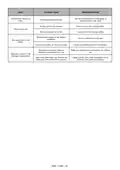
- Page 24: Troubleshooting Dishwasher is not switched on. Check indoor fuses. The cycle does not start. Turn on the water inlet tap. Close the dishwasher door. Check the water inlet hose and machine filters. Check the drain hose, then either clean or untwist it. Clean the filters. It is normal to have some water remain in the machine below the filters. Use the correct amount of detergent, as instructed in the cycle table.
- Page 25: Whitish stains remain on dishes. Use the correct amount of detergent, as instructed in the cycle table. Not enough detergent used. Drying option is not selected. Rinse aid dosage set too low. Dishes do not dry. Use only dishwasher-proof sets. Rust stains form on the dishes. Improper grounding of electrical supply. Consult a qualified electrician immediately.
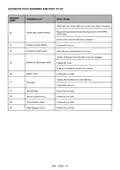
- Page 26: Automatic fault warnings and what to do Possible fault What to do Water inlet system failure Make sure the water inlet tap is open and water is flowing. Separate the inlet hose from the tap and clean the filter of the hose. Contact for service if the error continues. Pressure system failure Close the tap and contact for service. Water discharge hose and filters may be clogged. Inability to discharge water Cancel the cycle. Heater error Unplug the machine and close the tap. Overflow Contact for service. Overheating Divisor position error Faulty heater sensor High voltage failure
- Page 27: When the machine isn’t in operation, disconnect the electrical supply and close the tap. Leave the door slightly open to prevent odor formation. Select the dry option to remove water droplets. Place dishes in the machine properly to achieve the best energy consumption, washing and drying performance. Rinse dirty dishes before placing them in the dishwasher. Only use the Rinse cycle when necessary. Do not place the machine near a refrigerator because it will reach high temperatures. If the machine is located in an area that is at risk of freezing, close the tap, disconnect the inlet hose from the tap and drain the water inside the hose and the machine completely.

FISHER PAYKEL DD24ST4NX9 Dishwasher

Electrolux LSV48400L Dishwasher

FISHER PAYKEL DD60ST4HZB9 Dishwasher
Haier HDW15U3S1 Built Under Dishwasher

FISHER PAYKEL DD24DTX6HI1 Sanitize Dishwasher

BOSCH SPV6YMX11E Dishwasher

BOSCH SMS4EKI02E-30 Dishwasher

SIEMENS SN95Z802CE Dishwasher

FISHER PAYKEL DD60DDFX9 Dishwasher
BOSCH SHE4AEM2N Dishwasher