
Omega ODWIF6015 Dishwasher







@omegaappliances_aus
omegaappliances.com.au
Designed to Enhance
ES T. 1981


| General | Details |
|---|---|
| Name | Omega ODWIF6015 Dishwasher |
| Make | Omega |
| Language | English |
| Filetype | PDF (Download) |
| File size | 5.59 MB |
 (1 votes, average: 5.00 out of 5)
 Loading...

omega ODWIS6015X Dishwasher

Omega ODW300XN Slimline Dishwasher

omega ODWF6015BXCOM Dishwasher

Omega ODWF6014BX Dishwasher

omega OFI101X Dishwasher

Omega ODWF4510X 45cm Compact Dishwasher

Omega ODW702X DishWasher

Omega ODWF6015X Dishwasher

omega ODD614X Drawer Dishwasher

Omega ODWF6014X Dishwasher

Omega ODWIF6015 Dishwasher Overview
Summary of Contents
- Page 1: Designed to enhance.
- Page 2: Welcome Safety information Your integrated dishwasher Installation instructions Operating instructions Preparing & loading dishes Rinse aid & detergent Cleaning & maintenance Troubleshooting Purchase details
- Page 3: Welcome Congratulations on purchasing your Integrated Dishwasher. Please refer to the warranty chapter at the rear of this manual for information regarding your product’s parts and labour warranty. Here at Residentia Group, we are customer obsessed and our Support Team are there to ensure you get the most out of your appliance. It is important that you read through the following user manual thoroughly, in order to familiarise yourself with the installation and operation requirements of your appliance. Thank you for choosing an Omega appliance. We strongly encourage the use of authentic spare parts to guarantee the best results. When contacting our spare parts team, please ensure that you have the model and serial numbers on hand.
- Page 4: Safety information is crucial when using your dishwasher. This appliance must be earthed to reduce the risk of electric shock. Installation and repair should only be carried out by a qualified technician. The appliance is intended for indoor use only within a domestic environment. Children should be supervised to ensure they do not play with the appliance. Improper connection of the earthing conductor can result in electric shock. Do not modify the plug provided with the appliance. If the power cord is damaged, it must be replaced by a qualified electrician. Do not operate the dishwasher unless all enclosure panels are properly in place. Some dishwasher detergents can be extremely dangerous if swallowed.
- Page 5: Safety information includes guidelines for unpacking and disposal of the appliance. Use only recommended detergent and rinse agents for automatic dishwashers. Never use soap, laundry detergent, or hand washing detergent in your dishwasher. Keep packaging materials out of reach of children during unpacking. The door should not be left open to avoid tripping hazards. If the supply cord is damaged, it must be replaced by a qualified person. Dispose of packaging and the appliance at a recycling center. Old hose sets should not be reused when connecting to the main water valve. Correct disposal helps prevent negative consequences for the environment and human health. Do not dispose of this product as unsorted municipal waste.
- Page 6: Your dishwasher Key Inner pipe Dispenser Top spray arm Filter assembly Cup rack Upper spray arm Lower spray arm Cutlery drawer Upper basket Lower basket
- Page 7: Your dishwasher (continued) Product specifications Model: ODWIF6015 Standard place settings: 15 Installation: Built-in Dimensions (W × D × H mm): 598 × 550 × 815 Weight (Net): 32.2 kg Energy efficiency rating (MEPS): 4 Stars Water consumption rating (WELS): 5 Stars Energy consumption of standard cleaning cycle: 0.664 kWh Water consumption of standard cleaning cycle: 12 Litre
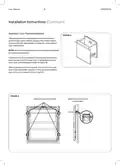
- Page 8: User manual Installation instructions Prior to installing appliance Water supply and drain Warning: electrical shock hazard Disconnect electrical power before installing dishwasher. Cold water connection Connect the cold water supply hose to a threaded 3/4 inch connector. Let the water run to make sure that the water is clear. The installation of the pipes and electrical equipment should be done by professionals. Warning: for your personal safety Do not use an extension cord or an adapter plug with this appliance. Safety supply hose consists of double walls. Electrical requirements Ensure the voltage and frequency of the power corresponds to those on the rating plate.
- Page 9: Installation instructions Connection of drain hoses Insert the drain hose into a drain pipe with a minimum diameter of 4 cm, or let it run into the sink, making sure to avoid bending or crimping it. The height of the drain pipe must be less than 1000mm. The free end of the hose must not be immersed in water to avoid backflow. Connect the water drain hose to avoid leaks. If you need a drain hose extension, make sure to use a similar hose no longer than 4 meters. Ensure that the drain hose is securely fixed in either position A or position B. If the sink is 1000mm higher from the floor, excess water cannot be drained directly into the sink. The waste connection must be at a height less than 100 cm from the bottom of the dish. The water drain hose should be fixed.
- Page 10: Installation instructions for positioning the appliance include ensuring the back rests against the wall and the sides align with adjacent cabinets. The dishwasher has water supply and drain hoses that can be positioned on either side for proper installation. Begin by affixing the condensation strip under the work surface of the cabinet. Connect the inlet hose to the cold water supply and the drain hose. The installation position should be near existing inlet and drain hoses and power cord. Level the dishwasher by adjusting the rear feet and front feet as needed. Install the aesthetic door panel onto the outer door of the dishwasher. Adjust the tension of the door springs using an Allen key to prevent damage. Secure the dishwasher in place using appropriate methods for different work surfaces. Maintain less than 5 mm space between the top of the dishwasher and the cabinet for proper alignment.
- Page 11: Installation instructions for the dishwasher include levelling and adjusting the door spring tension. To ensure optimal dish rack operation and wash performance, the dishwasher must be perfectly level. Use a spirit level on the door and rack track inside the tub to verify levelness. Adjust the door spring tension by rotating the adjusting screw to tighten or loosen the steel cable. The correct door spring tension allows the door to remain horizontal when fully opened and close with a slight lift. Levelling can be achieved by manipulating the three levelling legs individually. Caution is advised while levelling to prevent the dishwasher from tipping over. The maximum adjustment height of the levelling feet is 50 mm.
- Page 12: Installation instructions for the aesthetic door panel are provided. The appliance is fully integrated and does not include an aesthetic door panel. Contact a kitchen cabinetmaker to organize a door panel in your chosen finish. Refer to the aesthetic door panel installation template for panel measurements. Install the hook on the aesthetic wooden panel and put the hook into the slot of the outer door of the dishwasher. Secure the door panel onto the outer door of the dishwasher using the 4 long screws provided. Remove the 4 short screws before applying the 4 long screws. Ensure proper positioning of the door panel before securing it. Refer to figures for guidance on installation steps. Follow the instructions carefully for a successful installation.
- Page 13: Operation Instructions Control Panel Press this button to turn your dishwasher on or off. Auto Wash: This auto sensing program adjusts the cycle based on water clarity detected by a sensor. Intensive: For heaviest soiled crockery, such as pots, pans, and casserole dishes. Heavy: For heavily soiled loads, such as pots, plates, glasses, and lightly soiled pans. ECO: This program is for normally soiled loads at rated capacity. Glass: Suitable for lightly soiled delicate glassware. 90 min: A fast 90 minute daily program for lightly soiled dishes. Rapid: A quick 30 minute wash suitable for lightly soiled dishes. The display will show remaining program time, delay time, and any error codes. This indicates that the dishwasher is low on dishwasher rinse aid and requires a refill.
- Page 14: Operation instructions Programs & additional functions Press these buttons to wash items in only the upper basket, or only the lower basket. When the dishwasher is only at half capacity, you can choose this function to save energy and water. For dishes that are particularly dirty or hard to clean, you can activate the Extra Clean function. This cycle will increase the main wash, rinse and drying times for a better cleaning result. Reduce the program time by reducing the wash & rinse cycles whilst increasing the dishwasher's power to get lightly soiled dishes clean in a shorter time frame. The rinse cycle will perform at a higher temperature for a better drying result. Press this button to increase the Delay Start time in 1 hour increments up to 24 hours. At the end of the program wash cycle, this function will automatically open the dishwasher door achieving better drying results. Press this button to start the selected washing program.
- Page 15: Operation instructions Program functions table The table shows which programs are best for the levels of food residue and how much detergent is needed. It also shows various information about the programs. Detergent (Prewash/Main Wash) Rinse aid used in last rinse cycle Washing cycle steps Default time Energy water usage Additional functions Note: The parameters in this table are only for user's reference. Actual parameters may differ.
- Page 16: Operation instructions for the dishwasher include changing the program mid-cycle and adding a dish mid-cycle. A wash cycle can only be changed if it has been running for a short time; otherwise, the detergent may have already been released. To reset the dishwasher, open the door slightly to pause the washing, then press the program button for more than 3 seconds to cancel the program. Pre-rinsing tableware items is not recommended as it increases water and energy consumption. Utilizing a household dishwasher according to the provided instructions typically results in lower energy and water consumption compared to hand dishwashing. A forgotten dish can be added any time before the detergent dispenser opens. To add a dish mid-cycle, pause the washing, wait 5 seconds, and then open the door to add the forgotten dishes. Ensure the water supply is turned on to full pressure before starting a wash cycle. It is dangerous to open the door mid-cycle due to hot steam. Select a program and press the Start/Cancel button to begin the wash cycle.
- Page 17: Preparing & loading dishes Washing considerations To prevent water dripping from the upper basket into the lower basket, we recommend that you empty the lower basket first, followed by the upper basket. For delicate items, select a program with the lowest possible temperature. WARNING: Items will be hot! To prevent damage, do not take glass and cutlery out of the dishwasher for around 15 minutes after the program has ended. Scrape off any large amounts of leftover food. Soften remnants of burnt food in pans. It is not necessary to rinse the dishes under running water. For best performance of the dishwasher, follow these loading guidelines. Curved items, or ones with recesses, should be loaded aslant so that water can run off. Load hollow items such as cups, glasses, pans etc. with the opening facing downwards so that water cannot collect. The upper basket is designed to hold more delicate and lighter dishware such as glasses, coffee and tea cups. Please do not overload your dishwasher. This is important for good results and for reasonable consumption of energy.
- Page 18: Preparing & loading dishes Adjusting the upper basket height The height of the upper basket can be easily adjusted to accommodate taller dishes. To raise the upper basket, lift it at the center of each side until it locks into place. To lower the upper basket, lift the adjust handles on each side and lower it. Folding the cup shelves back allows for taller items in the upper basket. You can lean tall glasses against the raised cup rack or remove it when not in use. The pronges on the lower basket hold plates and platters. Lowering the pronges creates more room for large items like pots and pans.
- Page 19: Preparing & loading dishes Loading recommendations For the best washing results, please load the baskets according to AS/NZS 2007.1 demonstrated in this section. The upper basket is designed to hold more delicate and lighter dishware such as glasses, coffee and tea cups, and saucers. Position the dishes and cookware so that they will not get moved by the spray of water. We suggest that you place large and difficult to clean items into the lower basket. It is preferable to place serving dishes and lids on the side of the racks to avoid blocking the rotation of the top spray arm. The maximum diameter advised for plates in front of the detergent dispenser is 19 cm.
- Page 20: Preparing & loading dishes Loading the cutlery drawer Cutlery should be placed in the cutlery rack separate from each other in the appropriate positions. Avoid nesting of the cutlery to prevent insufficient cleaning performance. You can lift the right side of the cutlery drawer up so both left and right sides are flat. You can move the right side to the left side so both sides are overlapping. You can remove the right basket from the drawer, to allow room for taller items in the upper basket.
- Page 21: Rinse aid is released during the final rinse to prevent water from forming droplets on dishes, which can leave spots and streaks. It also improves drying by allowing water to roll off the dishes. Your dishwasher is designed to use liquid rinse aids. Only use branded rinse aid for dishwashers. Never fill the rinse aid dispenser with any other substances, as this would damage the appliance. The regularity of the dispenser needing to be refilled depends on how often dishes are washed and the rinse aid setting used. The Low Rinse Aid indicator will appear in the display when more rinse aid is needed. The chemical ingredients in detergent are necessary to remove, crush, and dispense all dirt out of the dishwasher. Use only detergent specifically made for dishwasher use. Keep your detergent fresh and dry. Don’t put powdered detergent into the dispenser until you are ready to wash dishes. Dishwasher detergent is corrosive; keep it out of the reach of children.
- Page 22: Rinse aid & detergent Adjusting the rinse aid compartment Filling the detergent dispenser To achieve a better drying performance with limited rinse aid, the dishwasher is designed to adjust the consumption by user. Open the cap by sliding the release catch. Close the door and switch on the appliance. Press the Rapid button for more than 5 seconds to enter the set model. Press the Rapid button again to select the proper set according to your usage habits. The higher the number, the more rinse aid the dishwasher will use. Press the Power button to complete the setup and exit the settings mode.
- Page 23: Rinse aid and detergent instructions are provided. Add detergent into the larger cavity for the main wash cycle. For better cleaning results, pour a small amount of detergent onto the door for very dirty items. Close the flap by sliding it to the front and pressing it down. Be aware that settings may vary depending on water soiling. Observe the manufacturer’s recommendations on the detergent packaging.
- Page 24: Cleaning & Maintenance Hold the coarse filter and rotate it anticlockwise to unlock the filter. Lift the filter upwards and out of the dishwasher. Clean the door seals regularly with a soft damp cloth to remove food deposits. The control panel should be wiped with a soft damp cloth only. Larger food remnants can be cleaned by rinsing the filter under running water. The filtering system in the base of the wash cabinet retains coarse debris from the washing cycle. Check the condition of the filters regularly and clean them if necessary under running water. Reassemble the filters in the reverse order of the disassembly. Do not over tighten the filters. Never use the dishwasher without filters in place. Improper replacement of the filter may reduce the performance level of the appliance and damage dishes and utensils.
- Page 25: Cleaning & maintenance It is necessary to clean the spray arms regularly for hard water chemicals will clog the spray arm jets and bearings. Please take frost protection measures on the dishwasher in winter. After every wash, turn off the water supply to the appliance and leave the door slightly open so that moisture and odors are not trapped inside. Before cleaning or performing maintenance, always remove the plug from the socket. To clean the exterior and rubber parts of the dishwasher, do not use solvents or abrasive cleaning products. It is recommended that you run a wash cycle with the dishwasher empty after prolonged inactivity. Food can remain trapped in the seals which can cause odors. Periodic cleaning with a damp sponge will prevent this from occurring.
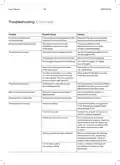
- Page 26: Troubleshooting In the event of an emergency, switch off the appliance using the power button and unplug it. Some minor faults can be fixed by referring to the instructions in the troubleshooting section. If your appliance appears to be operating incorrectly, disconnect it from the electrical supply and contact after sales support. Do not attempt to repair the appliance yourself. If overflow occurs, turn off the main water supply before calling a service. If there is water in the base pan due to an overfill or small leak, remove the water before restarting the dishwasher. The appliance must be accessible for the engineer to perform any necessary repair. Error Codes include E1 for long inlet time, E3 for not reaching required temperature, and E4 for overflow. Possible causes for error codes include restricted water intake, malfunctioning heating elements, and leaks. Please refer to the conditions that appear on the warranty card at the rear of this user manual.
- Page 27: Troubleshooting Dishwasher doesn't start Possible causes include a blown fuse or tripped circuit breaker, and the power supply not being turned on. Water not pumped from dishwasher Check for a twisted or trapped drain hose, a clogged filter, or a clogged kitchen sink. Suds in the tub Use only special dishwasher detergent to avoid suds. If suds occur, let them evaporate and drain the water. Stained tub interior Ensure that the detergent used does not contain colorant. White film on inside surface Hard water minerals may cause this issue; clean the interior with a damp sponge and dishwasher detergent. Rust stains on cutlery Ensure that affected items are corrosion resistant.
- Page 28: Troubleshooting Knocking or rattling noise in the dishwasher can be caused by a spray arm knocking against an item or loose crockery. Interrupt the program and rearrange the items obstructing the spray arm. The dishes are not clean due to incorrect loading, insufficient program intensity, inadequate detergent, or items blocking the spray arms. Refer to the Preparing & Loading Dishes section for guidance. Cloudiness on glassware may result from a combination of soft water and excessive detergent. Use less detergent and select a shorter cycle for cleaning glassware. Black or grey marks on dishes can occur from detergent left in the dispenser or aluminium utensils rubbing against dishes. Use a mild abrasive cleaner to eliminate these marks. Dishes may not dry properly if they block the detergent dispenser or if too little rinse-aid is used. Reload the dishes properly and increase the rinse-aid amount. Dishes should not be removed too soon after washing. Open the door slightly to allow steam to escape and wait until the inside temperature is safe to touch. Selecting the wrong program can decrease cleaning performance. Choose a program with a longer washing time for better results. Low-quality coated cutlery or dishes are not suitable for washing in the dishwasher.
- Page 29: Purchase details should be recorded for future reference. Information can be found on the rating plate and sales invoice. Store details include store name, address, and telephone. Record the purchase date. Product details include model number and serial number. There is a section to attach your receipt.
- Page 30: Warranty information outlines the terms and conditions for product warranties for Residentia Group Appliances. It is important to keep this document with proof of purchase for future reference. Definitions include 'acceptable quality,' 'ACL,' 'Appliance,' 'ASR,' 'Residentia Group,' 'major failure,' and 'Warranty Period.' The warranty applies only to Appliances purchased and used in Australia. It does not exclude or modify any non-excludable statutory warranties in Australia. During the Warranty Period, Residentia Group or its ASR will repair or replace defective parts at no extra charge. Remanufactured parts may be used for repairs. Replaced Appliances or parts become the property of Residentia Group. The warranty does not cover light globes, batteries, seals, filters, or similar perishable parts. Parts and Appliances not supplied by Residentia Group are not covered by this warranty.
- Page 31: Warranty Information You will bear the cost of transportation, travel and delivery of the appliance to and from Residentia Group or its ASR. For appliances and services provided by Residentia Group in Australia, the appliances come with a guarantee that cannot be excluded under the Australian Consumer Law. You are entitled to a replacement or refund for a major failure and for compensation for any other reasonably foreseeable loss or damage. Proof of purchase is required before you can make a claim under this warranty. Residentia Group shall, at its discretion, determine whether repair, replacement or refund will apply if an appliance has a valid warranty claim. You may not make a claim under this warranty unless the defect claimed is due to faulty or defective parts or workmanship. Missing parts are not covered by warranty, and any parts not reported missing in the first week after purchase will not be provided free of charge. To inquire about claiming under this warranty, carefully check the operating instructions, user manual and the terms of this warranty. You accept that if you make a warranty claim, Residentia Group and its ASR may exchange information in relation to you. To the extent permitted by law, Residentia Group excludes all warranties and liabilities, including liability for any loss or damage arising from your purchase, use or non-use of the appliance.
- Page 32: Designed to enhance. Omega is proudly owned, designed and engineered in Australia by Residentia Group Pty. Ltd.

FISHER and PAYKEL DW24U2I1 Dishwasher

CAFE CDD220P4WW2 Smart Drawer Dishwasher

Fisher and Paykel DD24DCHTX9 N Dishwasher

FISHER AND PAYKEL DD60DTX6HI1 Tall Dishwasher

Midea MDC22P1AWW Dishwasher

BOSCH SBV4HB802E-01 Fully Integrated Dishwasher

Whirlpool W11602471 Dishwasher

Samsung DW80CB5450 Series Dishwasher

CMA DISHMACHINES CMA-180UC Under Counter Dishwasher

FISHER PAYKEL DD24DT4NX9 Dishwasher