
Midea MDC17P0ABB Dishwasher








1
2
[密级]机密
本文件含美的集团保密信息,禁止任何人未
经授权以任何形式使用(包含不限于全部或
部分地泄露、复制或散发)
A
A
B
B
技术要求:
C
C
1. 印刷颜色为黑色
2. 文档大小为 A5, 按 A5 规格输出菲林和印刷
3. 请供应商根据实际排版需求增加空白页
4. 需要符合 QMWD-J03.092-2021 产品说明书技术条件;
5. 说明书纸张材料、装订用书钉、印刷油墨及光油,须符合欧盟 REACH 法规、
PAHs 指令及 RoHS 指令等环保指令要求 , 详见 QMWD-J15.001 洗碗机公司
产品及零部件绿色 设计通则。
6720603074
用户手册
MDC17P0ABB(2601C-US)
MIDEA美国
D
D
80g双胶纸
处数 分区
标记
签 名
会 签
日 期
比例
阶段标记
REV.
更改文件号
曹霞银
00
1:1
设 计
佛山市顺德区美的
数
共
审 批
日 期
量
认 证
校 对
洗涤电器制造有限公司
2023.05.06
1 张
1 张
第


| General | Details |
|---|---|
| Name | Midea MDC17P0ABB Dishwasher |
| Make | Midea |
| Language | English |
| Filetype | PDF (Download) |
| File size | 1.5 MB |
 (1 votes, average: 5.00 out of 5)
 Loading...

Midea MDW-14D8-OD Dishwasher

Midea MDWPF1233F W WG,MDWPF1233F W WG Dishwasher

Midea WQP12-5201C Dishwasher

Midea MDF18A1A Series Dishwasher

Midea MDF24P2B Dishwasher

Midea WQP4-2605 Tabletop Dishwasher

Midea MDT24X2APR Dishwasher

Midea MDC17P2BWW Dishwasher

Midea MDF24P1BST Dishwasher

Midea MDC22P1AWW Dishwasher

Midea MDC17P0ABB Dishwasher Overview
Summary of Contents
- Page 1: 本文件含美的集团保密信息,禁止任何人未经授权以任何形式使用。 技术要求: 印刷颜色为黑色。 文档大小为A5,按A5规格输出菲林和印刷。 请供应商根据实际排版需求增加空白页。 需要符合QMWD-J03.092-2021产品说明书技术条件。 说明书纸张材料、装订用书钉、印刷油墨及光油,须符合欧盟REACH法规、PAHs指令及RoHS指令等环保指令要求。 用户手册。 MDC17P0ABB(2601C-US)。 洗涤电器制造有限公司。 设计。
- Page 2: Please keep the manual for future reference.
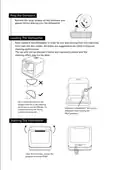
- Page 3: Quick start guide Please read the entire manual for detailed operating instructions. The power required is 120VAC 60Hz, 10Amp circuit. Place the end of the drain hose into a sink or bucket. The clamp must be tightened by a screwdriver. Fix the drain pipe with suction cups. Before adding water, you need to press the power button to turn on the dishwasher. There are two ways to add water into the tank: Add water into the tank automatically by connecting inlet hose to the tap. Open the cap and slowly add water into the tank manually by using a water container. The water tap symbol will be on if there is not enough water in the tank.
- Page 4: Prep the dishware by removing large residue before placing it into the dishwasher. Place dishes in the dishwasher by size, starting from the ends and loading into the middle. Tilt all dishes to improve cleaning performance. Improper placement may block the top arm and affect cleaning effectiveness. Do not place dishes upright as it may impact cleaning performance. Leave the dirty side facing towards the spray arm. Do not use detergent when running the FRUIT program. Close the front door, choose the program, and press START.
- Page 5: Please carefully read this manual before using the dishwasher, it will help you use and maintain the dishwasher properly. Important safety instructions. Getting to know your appliance. Dishwasher features. Control panel. Using your dishwasher. Loading the dishwasher baskets. Loading the detergent. Wash cycle selection. Maintenance and cleaning.
- Page 6: Important safety instructions When using your dishwasher, follow the precautions listed below. Do not allow children to play with the appliance. Cleaning and user maintenance shall be made by children without supervision. This appliance is not intended for use by children or persons with reduced physical, sensory or mental capabilities. This appliance is for indoor use only, for household use only. To protect against the risk of electrical shock, do not immerse the unit, cord or plug in water or other liquid. Please unplug before cleaning and maintaining the appliance. This appliance must be grounded. Improper connection of the equipment-earthing conductor can result in the risk of an electric shock.
- Page 7: General use Do not abuse, sit on, or stand on the door or dish rack of the dishwasher. Do not operate your dishwasher unless all enclosure panels are properly in place. Open the door very carefully if the dishwasher is operating, there is a risk of water squirting out. Do not place any heavy objects on or stand on the door when it is open. When loading items to be washed, locate sharp items so that they are not likely to damage the door seal. Knives and other utensils with sharp points must be loaded in the basket with their points down or placed in a horizontal position. Do not wash plastic items unless they are marked dishwasher safe or the equivalent. Use only detergent additives designed for an automatic dishwasher. Children should be supervised to ensure that they do not play with the appliance. Under certain conditions, hydrogen gas might be produced in a hot-water system that has not been used for two weeks or more.
- Page 8: Disposal For disposing of the package and the appliance, please go to a recycling centre. Cut off the power supply cable and make the door closing device unusable. Cardboard packaging is manufactured from recycled paper and should be disposed of in the waste paper collection for recycling. By ensuring this product is disposed of correctly, you will help prevent potential negative consequences for the environment and human health. For more detailed information about recycling of this product, please contact your local city office and your household waste disposal service. Do not dispose of this product as unsorted municipal waste. Collection of such waste separately for special treatment is necessary.
- Page 9: Getting to know your appliance Important: Before using this dishwasher for the first time and to get the best performance, read these instructions. Dishwasher features Handle Control panel Upper spray arm Water tank cap Lower spray arm Filter Detergent dispenser Tableware basket Water filling guide
- Page 10: Control panel To turn on and off. Program button: Press the button to select wash cycles. Hygiene: Use to remove bacteria from your dishes and glassware. Glass: Suitable for washing delicate ware with light soiled. Fruit: Suitable for washing hard surface fruit. Air refresh function helps to improve the dry performance or prevent odors. The Delay Time feature allows you to program the dishwasher to begin the selected wash cycle between 1 to 24 hours later. Display the program time, error code, etc. If the water level indicator is lit, the water level in the internal tank is low and needs to be refilled. Press and hold START for 3 seconds to cancel a cycle when the dishwasher is running.
- Page 11: Using your dishwasher Loading the dishwasher All items to be washed should be marked dishwasher safe. Use only dish detergent designed for automatic dishwashers. For delicate items, select a program with lower temperatures. Do not take glass and cutlery out of the dishwasher immediately after the program has ended. Some glasses can become dull after a large number of washes. Not suitable for use: cutlery with wooden, horn, china or mother-of-pearl handles. Scrape off any large food particles before loading. Items such as cups, glasses, pots/pans, etc. should load face downwards. All utensils should be stacked securely and cannot tip over.
- Page 12: All utensils are placed in a way that the spray arms can rotate freely during washing. Very small items should not be washed in the dishwasher as they could easily fall out of the basket. Place cups, deep bowls, and pans face down. Load items so that the dirty surface faces the center of the dishwasher. Position items to avoid collecting water or having puddles on top. Load long and/or sharp cutlery horizontally on the cutlery tray. Avoid nesting dishes for best results. Ensure items do not touch or move in the basket to prevent damage. Do not allow items to extend below the dishwasher rack. Do not overload your dishwasher to ensure proper wash results.
- Page 13: Recommended loading layout with 1 serving bowl and 2 settings personal tableware. Dinner plates (10in), bread and butter plates (6.7in), dessert bowls (5in), cups, saucers (5.5in), glasses (12.5OZ), dinner forks, salad forks, knives, and teaspoons are included. The tines are used for holding plates and platters. They can be lowered to make more room for large items, such as large tableware, the fruit basket, or the baby bottle rack. The rack shelves can be raised upwards or folded downwards.
- Page 14: Loading the detergent This product does not support rinse aid. Only add detergent. Only use detergent specifically for dishwashers. Never use any other rinse aid and detergents. Dishwasher detergent is corrosive. Keep dishwasher detergent out of the reach of children. Detergent tablets of different brands dissolve at different speeds. Use long programs when using detergent tablets to ensure complete dissolution. The detergent must be refilled before the start of each wash cycle. Your dishwasher uses less detergent than conventional dishwashers. Always add the detergent just before starting the dishwasher.
- Page 15: Adding detergent is an important step in the washing process. The detergent cup is where the detergent is placed for optimal cleaning.
- Page 16: Wash cycle selection provides various programs based on food residue levels and detergent needs. The normal program is suitable for cleaning normally soiled tableware and is efficient in energy and water consumption. The rapid program is a shorter wash for lightly soiled loads and quick cleaning. The hygiene program is designed to remove bacteria from dishes and glassware. The fruit program is for washing hard surface fruit, requiring manual cold water addition. The glass program is suitable for delicate ware with light soil. Each program includes specific wash and rinse temperatures. Detergent amounts vary by program, with normal, rapid, and glass programs requiring 8.4g. Time durations for each cycle are specified, ranging from 40 to 130 minutes. The document includes a table summarizing cycle selection information.
- Page 17: Turning on the appliance involves several steps, including drawing out the basket and pouring in the detergent. Insert the plug into the socket, ensuring the power supply is 120VAC 60Hz. Press the power button to turn on the appliance. Connect the inlet hose to the tap and ensure the water supply is turned on to full pressure. Select a suitable program according to the wash cycle table. If a program is selected, the response light will illuminate. Press the Start/Cancel button to begin the wash cycle. A wash cycle can only be changed if it has been running for a short time. To reset the dishwasher, press and hold Start/Cancel for more than 3 seconds. After resetting, select the desired program and press the Start/Cancel button to start.
- Page 18: If the door is opened during washing, the machine will pause. To resume, press the Start/Cancel button; the machine will resume after 10 seconds. A forgotten dish can be added within the first 10 minutes of the cycle. Open the door a little to stop the washing. After the spray arms stop moving, you can open the door completely. Add forgotten dishes. Close the door. Press the Start/Cancel button; the dishwasher will run 10 seconds later.
- Page 19: End of wash cycle When the cycle has finished, the buzzer of the dishwasher will sound for 8 seconds, then stop. Turn off the appliance using the ON/OFF button, shut off the water supply, and open the door of the dishwasher. Wait a few minutes before unloading the dishwasher to avoid scalding; the dishes and utensils are still hot. Switch off the dishwasher Switch off the dishwasher by pressing the ON/OFF button. Turn off the water tap. Open the door carefully Open the dishwasher's door and leave it ajar to improve drying. The dishes should be allowed to cool down for around 15 minutes before removing them from the appliance. WARNING Open the door carefully when the dishwasher is washing to avoid scalding. Forced tank draining operation In standby mode, you can press and hold the NORMAL button + RAPID button for 3 seconds simultaneously to drain the water tank.
- Page 20: Maintenance and cleaning are essential for optimal performance. Never use the dishwasher without filters. Make sure the filter is properly assembled to avoid damage to dishes and utensils. The filter efficiently removes food particles from the wash water. For best performance, the filter assembly must be cleaned regularly. Remove larger food particles from the filter after each wash cycle. The fine filter traps small soil particles for effective cleaning. The main filter directs food and soil particles to the drain. Steps for cleaning the filter assembly include turning it clockwise and lifting it up. Clean all filter elements under running water to remove food soils.
- Page 21: To re-install the filter system, complete Step 2 to Step 1. The entire filter assembly should be cleaned once a week. Inspect the filters for blockages after every time the dishwasher has been used. By unscrewing the coarse filter, you can remove the filter system. When cleaning the filters, don't knock on them. The control panel and exterior can be cleaned by using a lightly dampened cloth. After cleaning, make sure to dry it thoroughly. To clean the edge around the door, you should use only a soft warm, damp cloth. Never use a spray cleaner to clean the door panel as it may damage the door lock and electrical components. Abrasive agents or rough paper towel should not be used because of the risk of scratching or leaving spots on the stainless steel surface.
- Page 22: Protect against freezing Protect the dishwasher from freezing temperatures. In standby mode, press and hold NORMAL button + RAPID button for 3 seconds simultaneously to drain the water tank. Cut off electrical power to the dishwasher. Turn off the water supply and disconnect the water inlet pipe from the back of the dishwasher. Drain water from the inlet pipe and dishwasher. Disconnect drain hose, and drain water from hose and back of dishwasher. Reconnect the water inlet pipe and drain hose to the back of the dishwasher. Remove the filter at the bottom of the tub and use a sponge to soak up water in the sump. Damage due to freezing is not covered under the warranty. Cleaning the spray arms The spray arms can be easily removed for periodic cleaning of the nozzles to remove possible clogging.
- Page 23: Dishwasher maintenance is essential for optimal performance. Before cleaning or performing maintenance, always unplug the dishwasher to remove power. After every wash, turn off the water supply and leave the door slightly open to prevent moisture and odors. To clean the exterior and rubber parts, use a cloth with warm soapy water; avoid solvents or abrasive products. For stains in the interior, use a cloth dampened with water and vinegar or a dishwasher-specific cleaning product. When left unused, run a wash cycle with the dishwasher empty, unplug, turn off the water supply, and leave the door slightly open. If moving the appliance, keep it in a vertical position to prevent water drainage. For long-distance transport, drain water from the interior tank and hoses. To drain the water tank, press and hold the NORMAL and RAPID buttons for 3 seconds in standby mode. Disconnect water inlet and drain hoses carefully to avoid spills.
- Page 24: Installation warnings highlight the risk of electrical shock if power is not disconnected before installation. Professional installation of pipes and electrical equipment is recommended. The dishwasher should be installed near the existing water inlet tap, drain outlet, and power socket. One side of the cabinet sink should be selected to ease the connection of drain hoses. The appliance has water supply and drain hoses that can be positioned to the right or left for proper installation.
- Page 25: About power connection For personal safety, do not use an extension cord or an adapter plug with this appliance. Do not cut or remove the ground connection from the power cord. Please look at the rating label to know the rating voltage and connect the dishwasher to the appropriate power supply. Use the required 10 amp fuse or circuit breaker recommended and provide a separate circuit serving only this appliance. Ensure the voltage and frequency of the power being supplied corresponds to those on the rating plate. Only insert the plug into an electrical socket that is properly grounded. Take the existing aerator off your faucet. Screw the faucet adapter onto the faucet tap and check for leaks. Attach the quick connect onto the faucet adapter by pulling down the locking collar. Slowly open the hot water line and check for any sign of water leaks at all hose connections.
- Page 26: Connection of drain hoses The clamps must be tightened with a screwdriver. Fix the drain pipe with suction cups. Remove the rubber stopper. Fix the drain pipe with the back pipe of the machine. Place the free end of the drain hose into a sink or bucket. No portion of the dishwasher drain hose should be installed higher than 39 1/4 (1m) to prevent performance issues. If the drain hose is routed above the dishwasher, it will hold water and will need to be drained to be moved or relocated. Do not extend the dishwasher hose more than 13 or 33cm to prevent performance issues. The drain hose must be correctly fitted to avoid water leaks. Ensure that the water drain hose is not kinked or crushed.
- Page 27: Troubleshooting tips Before calling for service, reviewing the charts may save you from calling for service. Possible causes for the dishwasher not starting include a blown fuse or tripped circuit breaker. Ensure the power supply is turned on and the dishwasher door is closed securely. Check that the water supply is connected properly and the water is turned on. Make sure to close the door properly and latch it. Inspect the drain hose for kinks or crushes. A clogged filter may prevent water from being pumped from the dishwasher. Check the kitchen sink to ensure it is draining well. If the kitchen sink is not draining, you may need a plumber rather than a serviceman for dishwashers. Consider raising the dishwasher to reduce the height it must lift the water.
- Page 28: Problem: Suds in the tub Possible Causes: Incorrect detergent/soap, spilled rinse-aid What to do: Remove all dishes, scoop out suds, add olive oil or vinegar, run a normal wash, force a drain, repeat as necessary. Problem: Stained tub interior Possible Causes: Detergent with colorant What to do: Ensure detergent has no colorant. Problem: White film on inside surface Possible Causes: Hard water minerals What to do: Clean the interior with a damp sponge and dishwasher detergent. Problem: Rust stains on cutlery Possible Causes: Affected items are not corrosion resistant What to do: Avoid washing non-corrosion resistant items in the dishwasher. Problem: Knocking noise in the dishwasher Possible Causes: Spray arm obstructed What to do: Interrupt the program and rearrange obstructing items. Problem: Rattling noise in the dishwasher Possible Causes: Loose crockery What to do: Interrupt the program and rearrange dishware. Problem: Knocking noise in the water pipes Possible Causes: Water hammer in household piping What to do: This has no influence on dishwasher function; consult a plumber if in doubt. Problem: Dishes are not clean Possible Causes: Incorrect loading, insufficient program intensity What to do: Refer to loading instructions and select a more intensive program.
- Page 29: Problem: The dishes are not clean. Possible causes include insufficient detergent, items blocking spray arms, and a dirty or incorrectly fitted filter. To resolve, use more detergent or try a different brand, rearrange items for spray arm movement, and clean or fit the filter correctly. Cloudiness on glassware may be caused by soft water and too much detergent. Use less detergent and select a shorter cycle for cleaning glassware. White spots on dishes and glasses can result from hard water or aluminum utensils rubbing against dishes. Add more detergent or use a mild abrasive cleaner to remove marks. Black or grey marks on dishes may occur if dishes block the detergent cup area. Adjust loading to prevent blocking the detergent dispenser. The dishes are not drying if removed too soon. Do not empty the dishwasher immediately; open the door slightly to release steam and wait until the inside temperature is safe to touch.
- Page 30: Error codes indicate malfunctions in the dishwasher's systems. The unit may not be receiving enough water. Check that the water supply is connected properly and turned on. The dishwasher may not be reaching the required temperature. Contact customer service for a qualified technician to repair the dishwasher. Overflow is a serious issue. If overflow occurs, turn off the main water supply before calling for service. Remove any water in the base pan due to overfill or small leaks before restarting the dishwasher.
- Page 31: Technical information includes dimensions such as height, width, and depth. The height is 17 1/4 (438mm), width is 17 1/8 (435mm), and depth is 16 9/16 (420mm). Water pressure ranges from 0.04 to 1.0MPa. The power supply details can be found on the rating label. The capacity is noted as 2 place settings (AHAM).
- Page 32: Year limited warranty This is the only express warranty for the product. This product is warranted to be free from defects in material and workmanship for a period of one year from the date of original purchase. Your exclusive remedy is repair or replacement of this product or any component found to be defective. You are responsible for all costs associated with returning the product. This warranty does not cover wear from normal use or damages resulting from accident, alteration, abuse, or misuse. This warranty extends only to the original consumer purchaser or gift recipient. Keep the original sales receipt, as proof of purchase is required to make a warranty claim. This warranty is void if the product is used for other than single-family household use. All liability is limited to the amount of the purchase price. This warranty gives you specific legal rights.

BOSCH SMS2ITW00I Free Standing Dishwasher

Electrolux LSV48400L Dishwasher

Hisense HS693C60XAD Dishwasher

BOSCH SHP87P Dishwasher

FISHER AND PAYKEL DD60D2HNX9 Dishwasher

beko BDUN Dishwasher

BOSCH SMS4HAW40G Dishwasher

FISHER PAYKEL DD24STX6PX1 Sanitize Tall DishDrawer Dishwasher

FISHER PAYKEL DD24DCTX9 N Double Dishwasher

MAYTAG MDB4949SD Series Undercounter Dishwasher