
edesa EHDB-6930-I Dishwasher








































EHDB-6930-I
Manual de instrucciones
Instruction manual
Manual de instruçoes
FR Manuel d’instructions
DE Bedienungsanleitung


| General | Details |
|---|---|
| Name | edesa EHDB-6930-I Dishwasher |
| Make | edesa |
| Language | English |
| Filetype | PDF (Download) |
| File size | 13.56 MB |
 (1 votes, average: 5.00 out of 5)
 Loading...

edesa 3706588 Dishwasher

edesa EHDB-6930-I Dishwasher Overview
Summary of Contents
- Page 1: Instruction manual Manual de instrucciones Manuel d’instructions Bedienungsanleitung
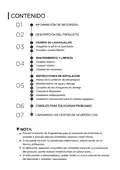
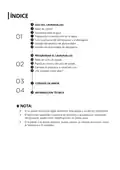
- Page 2: Safety information Product overview Using your dishwasher Loading the salt into the softener Maintenance and cleaning Installation instruction About power connection Water supply and drain Troubleshooting tips Availability of spare parts
- Page 3: Safety information is crucial when using your dishwasher. Installation and repair should only be performed by a qualified technician. The appliance is designed for household and similar applications. It can be used in staff kitchen areas, farmhouses, hotels, motels, and bed and breakfast environments. Children aged 8 and above can use the appliance if supervised and instructed properly. Persons with reduced physical, sensory, or mental capabilities may use the appliance with proper supervision. Children should not play with the appliance. Cleaning and maintenance should not be performed by children without supervision. The appliance is not intended for use by individuals with reduced physical or sensory capabilities.
- Page 4: This appliance is for indoor household use only. To protect against the risk of electrical shock, do not immerse the unit, cord or plug in water or other liquid. Please unplug before cleaning and performing maintenance on the appliance. Use a soft cloth moistened with mild soap, and then use a dry cloth to wipe it again. This appliance must be earthed. In the event of a malfunction or breakdown, earthing will reduce the risk of an electric shock. The appliance is equipped with an earthing conductor plug. The plug must be plugged into an appropriate outlet that is installed and earthed in accordance with all local codes and ordinances. Improper connection of the equipment-earthing conductor can result in the risk of an electric shock. Check with a qualified electrician or service representative if you are in doubt whether the appliance is properly grounded.
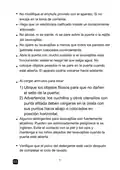
- Page 5: Do not modify the plug provided with the appliance; if it does not fit the outlet, have a proper outlet installed by a qualified electrician. Do not abuse, sit on, or stand on the door or dish rack of the dishwasher. Do not operate your dishwasher unless all enclosure panels are properly in place. Open the door very carefully if the dishwasher is operating; there is a risk of water squirting out. Do not place any heavy objects on or stand on the door when it is open; the appliance could tip forward. When loading items to be washed, locate sharp items so that they are not likely to damage the door seal. Knives and other utensils with sharp points must be loaded in the basket with their points facing down or placed in a horizontal position. Some dishwasher detergents are strongly alkaline and can be extremely dangerous if swallowed. Avoid contact with the skin and eyes and keep children away from the dishwasher when the door is open. Check that the detergent powder is empty after completion of the wash cycle.
- Page 6: Do not wash plastic items unless they are marked “dishwasher safe” or the equivalent. Use only detergent and rinse agents recommended for use in an automatic dishwasher. Never use soap, laundry detergent, or hand washing detergent in your dishwasher. The door should not be left open, since this could increase the risk of tripping. If the supply cord is damaged, it must be replaced by the manufacturer or its service agent. During installation, the power supply must not be excessively or dangerously bent or flattened. The appliance needs to be connected to the main water valve using new hose sets. To save energy, in standby mode, the appliance will switch off automatically while there is no operation in 15 minutes. The maximum number of place settings to be washed is 13. The maximum permissible inlet water pressure is 1MPa.
- Page 7: Disposal For disposing of the package and the appliance, please go to a recycling center. Cut off the power supply cable and make the door closing device unusable. Cardboard packaging is manufactured from recycled paper and should be disposed of in the waste paper collection for recycling. By ensuring this product is disposed of correctly, you will help prevent potential negative consequences for the environment and human health. For more detailed information about recycling of this product, please contact your local city office and your household waste disposal service. Do not dispose of this product as unsorted municipal waste. Collection of such waste separately for special treatment is necessary.
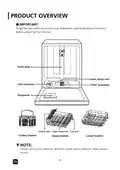
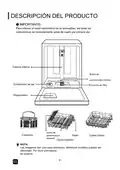
- Page 8: Product overview To get the best performance from your dishwasher, read all operating instructions before using it for the first time. Inner pipe Lower spray arm Salt container Dispenser Filter assembly Upper spray arm Cutlery rack Cup rack Lower basket Upper basket Note: Pictures are only for reference, different models may be different. Please prevail in kind.
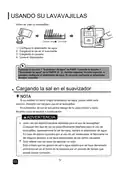
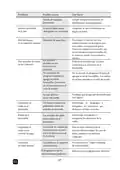
- Page 9: Using your dishwasher Before using your dishwasher Set the water softener Loading the salt into the softener Always use salt intended for dishwasher use. The salt container is located beneath the lower basket. Only use salt specifically designed for dishwashers. Every other type of salt will damage the water softener. In case of damages caused by unsuitable salt, the manufacturer does not give any warranty. Only fill with salt before running a cycle.
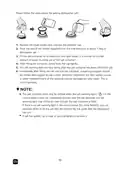
- Page 10: Please follow the steps below for adding dishwasher salt: Remove the lower basket and unscrew the reservoir cap. Place the end of the funnel into the hole and pour in about 1.5kg of dishwasher salt. Fill the salt container to its maximum limit with water. After filling the container, screw back the cap tightly. The salt warning light will stop being after the salt container has been filled with salt. Immediately after filling the salt into the salt container, a washing program should be started. The salt container must only be refilled when the salt warning light in the control panel comes on. If there is no salt warning light in the control panel, you can estimate when to fill the salt into the softener by the cycles that the dishwasher has run. If salt has spilled, run a soak or quick program to remove it.
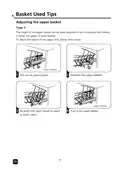
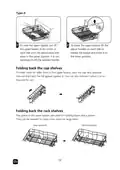
- Page 11: Basket used tips The height of the upper basket can be easily adjusted to accommodate taller dishes in either the upper or lower basket. To adjust the height of the upper rack, follow these steps: Remove the upper basket. Pull out the upper basket. Push in the upper basket. Re-attach the upper basket to upper or lower rollers.
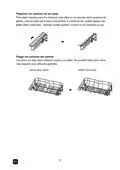
- Page 12: To raise the upper basket, just lift the upper basket at the center of each side until the basket locks into place in the upper position. To lower the upper basket, lift the adjust handles on each side to release the basket and lower it to the lower position. To make room for taller items in the upper basket, raise the cup rack upwards. You can lean tall glasses against the raised cup rack or remove it when not in use. The spikes of the lower basket are used for holding plates and a platter. They can be lowered to make more room for large items. Raise upwards. Fold backwards.
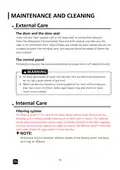
- Page 13: Maintenance and cleaning External care Clean the door seals regularly with a soft damp cloth to remove food deposits. Food and drink residues may drip onto the sides of the dishwasher door. These surfaces are outside the wash cabinet and are not accessed by water from the spray arms. The control panel should be wiped with a soft damp cloth only. To avoid penetration of water into the door lock and electrical components, do not use a spray cleaner of any kind. Never use abrasive cleaners or scouring pads on the outer surfaces. Internal care The filtering system in the base of the wash cabinet retains coarse debris from the washing cycle. Check the condition of the filters regularly and clean the parts of the filtering system if necessary with water. Pictures are only for reference; different models of the filtering system and spray arms may be different.
- Page 14: Coarse filter Main filter Fine filter Hold the coarse filter and rotate it anticlockwise to unlock the filter. Lift the filter upwards and out of the dishwasher. The fine filter can be pulled off the bottom of the filter assembly. Larger food remnants can be cleaned by rinsing the filter under running water. Reassemble the filters in the reverse order of the disassembly. For a more thorough clean, use a soft cleaning brush. Do not over tighten the filters. Never use the dishwasher without filters in place. Improper replacement of the filter may reduce the performance level of the appliance.
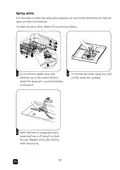
- Page 15: Spray arms It is necessary to clean the spray arms regularly for hard water chemicals will clog the spray arm jets and bearings. To clean the spray arms, follow the instructions below: To remove the upper spray arm, hold the nut in the center still and rotate the spray arm counterclockwise to remove it. To remove the lower spray arm, pull out the spray arm upward. Wash the arms in soapy and warm water and use a soft brush to clean the jets. Replace them after rinsing them thoroughly.
- Page 16: Caring for the dishwasher involves taking frost protection measures in winter. After every wash, turn off the water supply and leave the door slightly open to prevent moisture and odors. Always remove the plug from the socket before cleaning or performing maintenance. Do not use solvents or abrasive cleaning products on the exterior and rubber parts; use a cloth with warm soapy water instead. For spots or stains in the interior, use a cloth dampened with water and a little vinegar or a dishwasher-specific cleaning product. When not in use for a long time, run a wash cycle with the dishwasher empty, then remove the plug, turn off the water supply, and leave the door slightly open. If the appliance must be moved, keep it in a vertical position; it can be positioned on its back if necessary. Food trapped in the seals can cause odors; periodic cleaning with a damp sponge will help prevent this.
- Page 17: Installation instruction Electrical shock hazard Disconnect electrical power before installing dishwasher. The installation of the pipes and electrical equipment should be done by professionals. Do not use an extension cord or an adapter plug with this appliance. Do not cut or remove the earthing connection from the power cord. Please look at the rating label to know the rating voltage and connect the dishwasher to the appropriate power supply. Use the required fuse 10A/13A/16A, time delay fuse or circuit breaker recommended. Ensure the voltage and frequency of the power being corresponds to those on the rating plate. Only insert the plug into an electrical socket which is earthed properly.
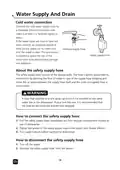
- Page 18: Water supply and drain Cold water connection Connect the cold water supply hose to a threaded 3/4(inch) connector and make sure that it is fastened tightly in place. Let the water run to make sure that the water is clear if the water pipes are new or have not been used for an extended period of time. The safety supply hose consists of double walls and guarantees intervention by blocking the flow of water in case of a break. A hose that attaches to a sink spray can burst if installed on the same water line as the dishwasher. Pull the safety supply hoses completely out from the storage compartment located at the rear of the dishwasher. Tighten the screws of the safety supply hose to the faucet with thread 3/4inch. Turn water fully on before starting the dishwasher. Turn off the water before disconnecting the safety supply hose. Unscrew the safety supply hose from the faucet.
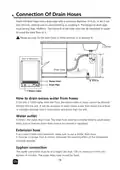
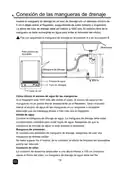
- Page 19: Connection of drain hoses requires inserting the hose into a drain pipe with a minimum diameter of 4 cm or letting it run into the sink. The height of the drain pipe must be less than 1000mm, and the free end of the hose must not be immersed in water to avoid backflow. Securely fix the drain hose in either position A or position B. If the sink is 1000mm higher from the floor, excess water in hoses cannot be drained directly into the sink. Instead, drain excess water into a bowl or suitable container held outside and lower than the sink. The water drain hose must be correctly fitted to avoid leaks and should not be kinked or squashed. For a drain hose extension, use a similar drain hose that is no longer than 4 meters to maintain cleaning effectiveness. The waste connection must be at a height less than 100 cm from the bottom of the dish, and the water drain hose should be fixed.
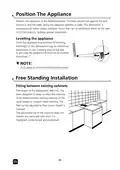
- Page 20: Position the appliance in the desired location with the back against the wall and sides along adjacent cabinets or walls. The dishwasher is equipped with water supply and drain hoses that can be positioned to the right or left sides for proper installation. The height of the dishwasher may be altered by adjusting the screwing level of the feet. The appliance should not be inclined more than 2°. The height of the dishwasher, 845 mm, allows it to be fitted between existing cabinets of the same height in modern kitchens. The feet can be adjusted to reach the correct height. The laminated top of the machine is heatproof, scratchproof, and stainproof.
- Page 21: Underneath existing work top In most modern fitted kitchens, there is only one single work top under which cabinets and electrical appliances are fitted. Remove the work top of the dishwasher by unscrewing the screws under the rear edge of the top. After removing the work top, the screws must be screwed again under the rear edge of the top. The height will then be reduced to 815 mm, as scheduled by the International Regulations (ISO), and the dishwasher will fit perfectly under the kitchen working top. Built-In Installation (for the integrated model) The installation position of the dishwasher should be near the existing inlet and drain hoses and power cord. Less than 5 mm between the top of the dishwasher and cabinet and the outer door aligned to cabinet. Illustrations of cabinet dimensions and installation position of the dishwasher. Space between cabinet bottom and floor: 600 mm for 60cm model, 450 mm for 45cm model.
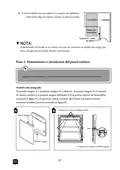
- Page 22: If the dishwasher is installed at the corner of the cabinet, there should be some space when the door is opened. Minimum space of 50mm is required. Depending on where your electrical outlet is, you may need to cut a hole in the opposite cabinet side. The aesthetic wooden panel could be processed according to the installation drawings. Magical paster A and magical paster B should be disjoined, with magical paster A on the aesthetic wooden panel and felted magical paster B on the outer door of the dishwasher. After positioning the panel, fix it onto the outer door by screws and bolts. Take away the four short screws. Pin up the four long screws.
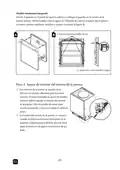
- Page 23: Full-integrated model Install the hook on the aesthetic wooden panel and put the hook into the slot of the outer door of the dishwasher. After positioning of the panel, fix the panel onto the outer door by screws and bolts. The door springs are set at the factory to the proper tension for the outer door. If aesthetic wooden panels are installed, you will have to adjust the door spring tension. Rotate the adjusting screw to drive the adjustor to strain or relax the steel cable. Door spring tension is correct when the door remains horizontal in the fully opened position. The door should rise to a close with the slight lift of a finger.
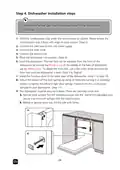
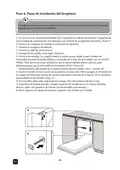
- Page 24: Step 4. Dishwasher installation steps Affix the condensation strip under the work surface of cabinet. Connect the inlet hose to the cold water supply. Connect the drain hose. Connect the power cord. Level the dishwasher. Install the furniture door to the outer door of the dishwasher. Adjust the tension of the door springs. The dishwasher must be secured in place.
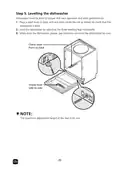
- Page 25: Step 5. Levelling the dishwasher Dishwasher must be level for proper dish rack operation and wash performance. Place a spirit level on door and rack track inside the tub to check that the dishwasher is level. Level the dishwasher by adjusting the three levelling legs individually. When level, pay attention not to let the dishwasher tip over. Check level front to back. Check level side to side. The maximum adjustment height of the feet is 50 mm.
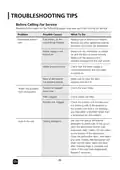
- Page 26: Troubleshooting tips Before calling for service, reviewing the charts may save you from calling for service. Possible causes for the dishwasher not starting include a blown fuse or tripped circuit breaker. Make sure the dishwasher is turned on and the door is closed securely. Check that the water supply is connected properly and the water is turned on. Ensure the door of the dishwasher is properly closed and latched. Inspect the drain hose for twists or traps. If water is not pumped from the dishwasher, check the coarse filter. A clogged kitchen sink may require a plumber rather than a serviceman for dishwashers. Use only special dishwasher detergent to avoid suds. If suds occur, open the dishwasher to let them evaporate and add cold water to the bottom.
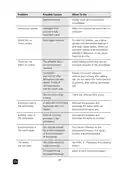
- Page 27: Problem Possible causes What to do Spilled rinse-aid. Always wipe up rinse-aid spills immediately. Stained tub interior Detergent with colourant may have been used. Make sure that the detergent has no colourant. White film on inside surface Hard water minerals. To clean the interior, use a damp sponge with dishwasher detergent and wear rubber gloves. Rust stains on cutlery The affected items are not corrosion resistant. Avoid washing items that are not corrosion resistant in the dishwasher. A program was not run after dishwasher salt was added. Always run a wash program without any crockery after adding salt. The lid of the softener is loose. Check the softener lid is secure. A spray arm is knocking against an item in a basket. Interrupt the program and rearrange the items which are obstructing the spray arm. Rattling noise in the dishwasher Items of crockery are loose in the dishwasher. Interrupt the program and rearrange the items of crockery. Knocking noise in the water pipes This may be caused by on-site installation or the cross-section of the piping. The dishes are not clean The dishes were not loaded correctly. See PART II “Preparing And Loading Dishes”.
- Page 28: Problem: The dishes are not clean. Possible Causes: Not enough detergent was dispensed. What To Do: Use more detergent, or change your detergent. Possible Causes: Items are blocking the movement of the spray arms. What To Do: Rearrange the items so that the spray can rotate freely. Possible Causes: The filter combination is not clean or is not correctly fitted in the base of the wash cabinet. What To Do: Clean and/or fit the filter correctly. Clean the spray arm jets. Possible Causes: Combination of soft water and too much detergent. What To Do: Use less detergent if you have soft water and select a shorter cycle to wash the glassware. Problem: Cloudiness on glassware. Possible Causes: Hard water area can cause limescale deposits. What To Do: Add more detergent. Problem: White spots appear on dishes and glasses. Possible Causes: Aluminium utensils have rubbed against dishes. What To Do: Use a mild abrasive cleaner to eliminate those marks. Problem: Black or grey marks on dishes. What To Do: Re-load the dishes properly. Problem: Detergent left in dispenser. Problem: The dishes aren't drying. Possible Causes: Improper loading. What To Do: Load the dishwasher as suggested in the directions. Problem: Dishes are removed too soon. What To Do: Do not empty your dishwasher immediately after washing. Open the door slightly so that the steam can come out.
- Page 29: The dishes aren't drying. Wrong program has been selected. Choose a program with a long washing time. Use of cutlery with a low-quality coating. Self-repair or non-professional repair may cause serious risks to the safety of the user. Availability of spare parts for seven years after placing the last unit of the model on the market. Parts include motor, circulation and drain pump, heaters, and heating elements. Availability of spare parts for ten years after placing the last unit of the model on the market. Parts include door hinge and seals, spray arms, and drain filters. Structural and interior parts related to door assemblies are included.
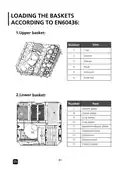
- Page 30: Loading the baskets according to EN60436. Upper basket includes cups, saucers, glasses, mugs, oven pot, and small pot. Lower basket includes dessert plates, dinner plates, soup plates, oval platter, melamine dessert plates, melamine bowls, glass bowl, dessert bowls, and cutlery basket.
- Page 31: Cutlery rack: Please place the light flat wares on the shelf. The total weight is less than 1.5kg. Cutlery basket: Item: Soup spoons, Forks, Knives, Tea spoons, Dessert spoons, Serving spoons, Serving fork, Gravy ladle. Information for comparability tests in accordance with EN60436. Capacity: 13 place settings. Position of the upper basket: lower position. Program: ECO. Rinse aid setting: Max. Softener setting: H3.
- Page 32: Using your dishwasher Control panel Water softener Preparing and loading dishes Function of the rinse aid and detergent Filling the rinse aid reservoir Filling the detergent dispenser Programming the dishwasher Error codes Technical information
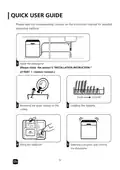
- Page 33: Quick user guide Please read the corresponding content on the instruction manual for detailed operating method. Install the dishwasher. Loading the baskets. Removing the larger residue on the cutlery. Filling the dispenser. Selecting a program and running the dishwasher.
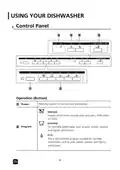
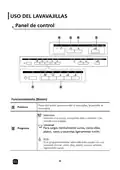
- Page 34: Using your dishwasher Control panel Operation (Button) Press this button to turn on your dishwasher. Power Intensive Heavily soiled items include pots and pans with dried on food. Universal program For normally soiled loads, such as pots, plates, glasses and lightly soiled pans. ECO This is the standard program suitable for normally soiled loads, such as pots, plates, glasses and lightly soiled pans.
- Page 35: For normally soiled loads that need quick wash. A shorter wash for lightly soiled loads that do not need drying. Press this button to improve the drying efficiency. When you have about or less than half of full place setting dishware to wash, you can choose this function to save energy and water. Press the button to set the delay time (3h/6h/9h). If the rinse aid indicator is lit, it means the dishwasher is low on dishwasher rinse aid and requires a refill. If the salt indicator is lit, it means the dishwasher is low on dishwasher salt and needs to be refilled.
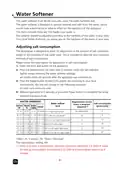
- Page 36: Water softener must be set manually using the water hardness dial. The water softener is designed to remove minerals and salts from the water. The softener should be adjusted according to the hardness of the water in your area. Your local Water Authority can advise you on the hardness of the water in your area. The dishwasher allows for adjustment in the amount of salt consumed based on water hardness. Please follow the steps below for adjustment in salt consumption. Press the Rapid button for more than 5 seconds to enter the water softener settings. Regeneration occurs every X program. The manufactory setting is H4. Every cycle with a regeneration operation consumes additional 2.0 litres of water.
- Page 37: Please check section 3 “Loading the salt into the softener” of part I: Generic version, if your dishwasher lacks salt. If your model does not have any water softener, you may skip this section. The hardness of the water varies from place to place. If hard water is used in the dishwasher, deposits will form on the dishes and utensils. The appliance is equipped with a special softener that uses a salt container specifically designed to eliminate lime and minerals from the water. Consider buying utensils which are identified as dishwasher-proof. For particular items, select a program with the lowest possible temperature. To prevent damage, do not take glass and cutlery out of the dishwasher immediately after the program has ended. Cutlery with wooden, horn china or mother-of-pearl handles are not suitable. Some types of glasses can become dull after a large number of washes.
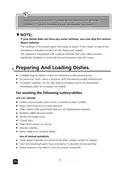
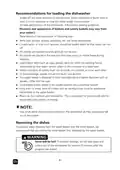
- Page 38: Recommendations for loading the dishwasher Scrape off any large amounts of leftover food. For best performance of the dishwasher, follow these loading guidelines. Place objects in the dishwasher in the following way: items such as cups, glasses, pots/pans, etc. are faced downwards. All utensils are stacked securely and cannot tip over. Load hollow items such as cups, glasses, pans etc. with the opening facing downwards. Dishes and items of cutlery must not lie inside one another, or cover each other. The upper basket is designed to hold more delicate and lighter dishware such as glasses, coffee and tea cups. Long bladed knives stored in an upright position are a potential hazard. Please do not overload your dishwasher. To prevent water dripping from the upper basket into the lower basket, we recommend that you empty the lower basket first.
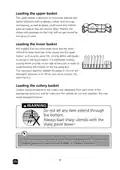
- Page 39: Loading the upper basket is designed for delicate and lighter dishware. Position dishes and cookware to avoid movement by the spray of water. The lower basket should hold large and difficult-to-clean items like pots and pans. Place serving dishes and lids on the side to avoid blocking the spray arm. The maximum diameter for plates in front of the detergent dispenser is 19 cm to ensure it opens properly. Cutlery should be placed separately in the cutlery rack to avoid nesting, which can affect performance. Always load sharp utensils with the sharp point down. For the best washing effect, refer to standard loading options in the manual.
- Page 40: Function of the rinse aid and detergent The rinse aid is released during the final rinse to prevent water from forming droplets on your dishes, which can leave spots and streaks. It also improves drying by allowing water to roll off the dishes. Your dishwasher is designed to use liquid rinse aids. Only use branded rinse aid for dishwasher. Never fill the rinse aid dispenser with any other substances. The regularity of the dispenser needing to be refilled depends on how often dishes are washed. The Low Rinse Aid indicator will be lit when more rinse aid is needed. The chemical ingredients that compose the detergent are necessary to remove, crush and dispense all dirt out of the dishwasher. Use only detergent specifically made for dishwashers use. Dishwasher detergent is corrosive; keep it out of the reach of children.
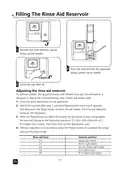
- Page 41: Filling the rinse aid reservoir involves removing the cap, pouring in the rinse aid, and closing the cap. To adjust the rinse aid reservoir for better drying performance, the dishwasher allows user-controlled consumption. Steps include closing the door, switching on the appliance, and pressing the Rapid button followed by the Delay button to enter the set model. The rinse aid indication will blink at a frequency of 1Hz. Users can select the proper set according to their habits, with settings changing in a specific sequence. The higher the number selected, the more rinse aid the dishwasher will use. Setup can be completed by either waiting 5 seconds without operation or pressing the Power button. The rinse aid level can be adjusted based on user preference. Different settings include D1 through D5, with each number indicating varying levels of rinse aid usage. The document includes indicators for different modes such as Rapid and ECO.
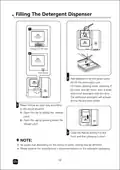
- Page 42: Filling the detergent dispenser involves sliding it to the right and pressing down. Add detergent into the larger cavity for the main wash cycle. For better cleaning results, pour a small amount of detergent onto the door for very dirty items. The additional detergent will activate during the pre-wash phase. Open the cap by sliding the release catch or by pressing down the release catch. Close the flap by sliding it to the front and then pressing it down. Be aware that settings may vary depending on the soiling of water. Observe the manufacturer's recommendations on the detergent packaging.
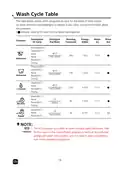
- Page 43: Wash cycle table provides information on programs for different levels of food residue and detergent requirements. The table includes energy consumption, water usage, and running time for each cycle. Prewash and wash cycles are specified for various temperatures. Rinse aid is required for certain programs. The ECO program is designed for normally soiled tableware and is the most efficient in energy and water consumption. Compliance with EU ecodesign legislation is assessed using the ECO program. Different programs are suitable for varying amounts of tableware. Descriptions of cycles include intensive, universal, and rapid options. The table outlines the necessary detergent for each wash cycle. Rinse temperatures vary across different programs.
- Page 44: Saving energy Pre-rinsing of tableware items leads to increased water and energy consumption and is not recommended. Washing tableware in a household dishwasher usually consumes less energy and water in the use phase than hand dishwashing when the household dishwasher is used according to the instructions. Starting a cycle wash Draw out the lower and upper basket, load the dishes and push them back. It is commended to load the lower basket first, then the upper one. Pour in the detergent. Insert the plug into the socket. Make sure that the water supply is turned on to full pressure. Open the door, press the power button, and the On/Off light will turn on. Choose a program, the response light will turn on. Then close the door, the dishwasher will start its cycle. Changing the program mid-cycle A wash cycle can only be changed if it has been running for a short time; otherwise, the detergent may have already been released and the dishwasher may have already drained the wash water. To reset the dishwasher, follow the instructions below: Open the door a little to stop the dishwasher, after the spray arm stops working, you can open the door completely. Press any program button for more than three seconds; the machine will be in standby state.
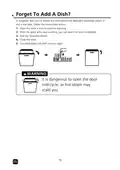
- Page 45: Forget to add a dish? A forgotten dish can be added any time before the detergent dispenser opens. Open the door a little to stop the washing. After the spray arms stop working, you can open the door completely. Add the forgotten dishes. Close the door. The dishwasher will start running again. It is dangerous to open the door mid-cycle, as hot steam may scald you.
- Page 46: Error codes indicate malfunctions in the dishwasher. Longer inlet time may be due to the faucet not being opened, restricted water intake, or low water pressure. The Rapid light flickers fleetly when there is a malfunction of the heating element or if some element of the dishwasher leaks. The ECO light flickers fleetly indicating an overflow. Failure of communication can occur with an open circuit or break in wiring between the main PCB and display PCB. If overflow occurs, turn off the main water supply before calling for service. Water in the base pan due to overfill or a small leak should be removed before restarting the dishwasher.
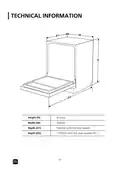
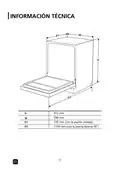
- Page 47: Height (H) is 815mm. Width (W) is 598mm. Depth (D1) is 550mm with the door closed. Depth (D2) is 1150mm with the door opened 90°.
- Page 48: Product information sheet (EN60436) Supplier's name or trade mark: Edesa Model identifier: EHDB-6930-I General product parameters: Height: 82 cm Width: 60 cm Depth: 55 cm Energy efficiency class: E Cleaning performance index: 1,125 Drying performance index: 1,065 Energy consumption in kWh [per cycle]: 0,937 Water consumption in litres [per cycle]: 11,0 Program duration (h:min): 3:40 Type: Built-in
- Page 49: Instruction manual
- Page 50: Información de seguridad Descripción del producto Usando su lavavajillas Cargando la sal en el suavizador Mantenimiento y limpieza Cuidado externo Cuidado interno Instrucciones de instalación Consejos para solucionar problemas El fabricante puede realizar modificaciones sin previo aviso.
- Page 51: Información de seguridad Advertencia Cuando use su lavavajillas, siga las precauciones que se detallan a continuación. Este dispositivo está destinado a ser utilizado en aplicaciones domésticas y similares. Este aparato puede ser utilizado por niños a partir de 8 años y personas con capacidades físicas, sensoriales o mentales reducidas si se les ha supervisado o instruido sobre el uso del artefacto de una manera segura. Los niños no deben jugar con el aparato. La limpieza y el mantenimiento por parte del usuario no deben ser realizados por niños sin supervisión. Este aparato no debe ser utilizado por personas con capacidades físicas, sensoriales o mentales reducidas, o falta de experiencia y conocimiento, a menos que se les haya dado.
- Page 52: Supervisión o instrucciones sobre el uso del electrodoméstico por una persona responsable de su seguridad. El material de embalaje puede ser peligroso para los niños. Este electrodoméstico es solo para uso doméstico. Para protegerse contra el riesgo de una descarga eléctrica, no sumerja la unidad, el cable o el enchufe en agua u otro líquido. Desconecte antes de limpiar y realizar tareas de mantenimiento en el aparato. Este aparato debe estar conectado a tierra. En caso de un mal funcionamiento o avería, la conexión a tierra reducirá el riesgo de una descarga eléctrica. Este electrodoméstico está equipado con un enchufe de conductor de puesta a tierra. La conexión incorrecta del conductor de puesta a tierra del equipo puede provocar el riesgo de una descarga eléctrica. Consulte con un electricista o representante de servicio calificado si tiene dudas sobre si el artefacto está correctamente conectado a tierra.
- Page 53: No modifique el enchufe provisto con el aparato. Haga que un electricista calificado instale un tomacorriente adecuado. No abuse, ni se siente, ni se pare sobre la puerta o la rejilla del lavavajillas. No opere su lavavajillas a menos que todos los paneles del gabinete estén colocados correctamente. Abra la puerta con mucho cuidado si el lavavajillas está funcionando. No coloque objetos pesados ni se pare en la puerta cuando esté abierta. Ubique los objetos filosos para que no dañen el sello de la puerta. Los cuchillos y otros utensilios con punta afilada deben cargarse en la cesta con sus puntos hacia abajo. Algunos detergentes para lavavajillas son fuertemente alcalinos y peligrosos si se ingieren. Verifique que el polvo del detergente esté vacío después de completar el ciclo de lavado.
- Page 54: No lave artículos de plástico a menos que estén marcados como aptos para lavavajillas o su equivalente. Use solo detergentes y agentes de enjuague recomendados para su uso en un lavaplatos automático. Nunca use jabón, detergente para la ropa o detergente para el lavado de manos en su lavavajillas. La puerta no debe dejarse abierta, ya que esto podría aumentar el riesgo de tropezarse. Si el cable de alimentación está dañado, debe ser reemplazado por el fabricante o su agente de servicio. Durante la instalación, la fuente de alimentación no debe doblarse o aplanarse de forma excesiva o peligrosa. No altere los controles. El electrodoméstico debe estar conectado a la válvula principal de agua con nuevos juegos de mangueras. Para ahorrar energía, en el modo de espera, el aparato se apagará automáticamente mientras no haya ninguna operación.
- Page 55: Disposición Para desechar el paquete y el electrodoméstico, por favor vaya a un centro de reciclaje. Corte el cable de alimentación y haga que el dispositivo de cierre de la puerta inutilizable. Los envases de cartón se fabrican con papel reciclado y deben desecharse en la recolección de papel usado para reciclar. Al asegurarse de que este producto se elimine correctamente, ayudará a evitar posibles consecuencias negativas para el medio ambiente y la salud humana. Para obtener información más detallada sobre el reciclaje de este producto, comuníquese con la oficina local de su ciudad y su servicio de eliminación de desechos domésticos. No deseche este producto como desecho municipal sin clasificar. La recolección de tales desechos por separado para un tratamiento especial es necesaria.
- Page 56: Descripción del producto Para obtener el mejor rendimiento de su lavavajillas, lea todas las instrucciones de funcionamiento antes de usarlo por primera vez. Las imágenes son solo para referencia, diferentes modelos pueden ser diferentes. Por favor prevalezca en especie.
- Page 57: Usando su lavavajillas Antes de usar su lavavajillas Configure el ablandador de agua Cargando la sal en el suavizante Cargando la canasta Llene el dispensador Consulte la sección 1 Suavizador de agua de PART. Si su modelo no tiene ningún ablandador de agua, puede omitir esta sección. ¡Solo use sal específicamente diseñada para el uso de lavavajillas! Solo rellene con sal antes de ejecutar un ciclo.
- Page 58: Siga los pasos a continuación para agregar sal lavavajillas. Retire la cesta inferior y desatornille la tapa del depósito. Vierta aproximadamente 1,5 kg de sal de lavavajillas. Llene el contenedor de sal hasta su límite máximo con agua. La luz de advertencia de sal dejará de estar después de que el contenedor de sal se haya llenado. Inmediatamente después de llenar la sal, se debe iniciar un programa de lavado. El contenedor de sal solo debe rellenarse cuando la luz de advertencia de sal se enciende. Si no hay luz de advertencia de sal, puede estimar cuándo se debe llenar la sal por los ciclos que ha funcionado el lavavajillas. Si la sal se ha derramado, ejecute un remojo o un programa rápido para eliminarla.
- Page 59: Consejos para usar la cesta. Ajuste de la cesta superior. La altura de la canasta superior se puede ajustar fácilmente para acomodar platos más altos en la canasta superior o inferior. Para ajustar la altura del estante superior, siga estos pasos. Retire la cesta superior. Empuje en la canasta superior. Vuelva a colocar la canasta superior en los rodillos superiores o inferiores. Para elevar la parrilla a la posición. Para bajar el estante, empuje hacia abajo el asa y suéltelo. El estante se asegurará en su lugar.
- Page 60: Plegando los estantes de las tazas Para dejar espacio para los artículos más altos en la canasta de la lavadora de platos, suba la rejilla de la taza hacia arriba. También puede quitarlo cuando no se requiera su uso. Plegar los estantes del estante Los picos se usan para sostener platos y un plato. Se pueden bajar para hacer más espacio para artículos grandes.
- Page 61: Mantenimiento y limpieza Cuidado externo Limpie los sellos de la puerta regularmente con un paño suave y húmedo para eliminar los depósitos de alimentos. Cualquier depósito debe limpiarse antes de que se cierre la puerta. Si se requiere limpieza, el panel de control debe limpiarse solamente con un paño suave y húmedo. Para evitar la penetración de agua en la cerradura de la puerta y los componentes eléctricos, no use un limpiador en aerosol de ningún tipo. Nunca use limpiadores abrasivos o estropajos en las superficies externas porque pueden rayar el acabado. Cuidado interno Sistema de filtrado El sistema de filtración ubicado en la base interior de la máquina retiene los restos de comida y otros objetos de mayores dimensiones durante el ciclo de lavado. Compruebe periódicamente el estado de los filtros y límpielos con agua corriente cuando sea necesario.
- Page 62: Coarse filter Main filter Fine filter El filtro fino se puede sacar de la parte inferior del conjunto del filtro. Sostenga el filtro grueso y gírelo en sentido antihorario para desbloquear el filtro. Levante el filtro hacia arriba y fuera del lavavajillas. Los restos de alimentos más grandes se pueden limpiar enjuagando el filtro con agua corriente. Vuelva a ensamblar los filtros en el orden inverso al de la dispersión. Para una limpieza más completa, use un cepillo de limpieza suave. No apriete demasiado los filtros. Nunca use el lavavajillas sin filtros en su lugar. El reemplazo incorrecto del filtro puede reducir el nivel de rendimiento del electrodoméstico.
- Page 63: Brazos de pulverización Es necesario limpiar los brazos de rociado regularmente para productos químicos de agua dura que obstruirán los chorros y los cojinetes del brazo rociador. Para limpiar los brazos rociadores, siga las instrucciones a continuación. Para quitar el brazo rociador superior, sostenga la tuerca en el centro de la rueda y gire el brazo rociador en el sentido contrario a las agujas del reloj para quitarlo. Para quitar el brazo rociador inferior, saque el brazo rociador hacia arriba. Lave los brazos en agua jabonosa y tibia y use un cepillo suave para limpiar los chorros. Reemplácelos después de enjuagarlos completamente.
- Page 64: Cuidado del lavaplatos Precaución de helada Tome medidas de protección contra heladas en el lavavajillas en invierno. Después de cada lavado, cierre el suministro de agua al aparato y deje la puerta ligeramente abierta para que la humedad y los olores no queden atrapados en el interior. Antes de limpiar o realizar tareas de mantenimiento, siempre quite el enchufe del zócalo. Para limpiar el exterior y las piezas de goma del lavavajillas, no use disolventes ni productos de limpieza abrasivos. Se recomienda que ejecute un ciclo de lavado con el lavavajillas vacío y luego retire el enchufe de la toma. Si el electrodoméstico debe moverse, intente mantenerlo en posición vertical.
- Page 65: Instrucciones de instalación Peligro de choque eléctrico Desconecte la energía eléctrica antes de instalar el lavavajillas. La instalación de las tuberías y los equipos eléctricos debe ser realizada por profesionales. No use un cable de extensión o un enchufe adaptador con este electrodoméstico. Bajo ninguna circunstancia, corte o retire la conexión a tierra del cable de alimentación. Consulte la etiqueta de clasificación para conocer el voltaje nominal y conecte el lavavajillas a la fuente de alimentación adecuada. Utilice el fusible 10A / 13A / 16A requerido y proporcione un circuito separado que sirva solo a este electrodoméstico. Asegúrese de que el voltaje y la frecuencia de la corriente correspondan a los de la placa de características. Solo inserte el enchufe en una toma de corriente que esté conectada a tierra correctamente. Asegúrese de que exista una correcta conexión a tierra antes del uso.
- Page 66: Abastecimiento de agua y drenaje Conexión de agua fría Conecte la manguera de suministro de agua fría a un conector roscado de 3/4 pulgadas y asegúrese de que esté bien sujeta en su lugar. Si las tuberías de agua son nuevas o no se han utilizado durante un período prolongado de tiempo, deje correr el agua para asegurarse de que el agua esté limpia. La manguera de suministro de seguridad consiste en las paredes dobles. El sistema de la manguera garantiza su intervención bloqueando el flujo de agua en caso de que se rompa la manguera de suministro. Una manguera que se conecta al fregadero puede explotar si está instalada en la misma línea de agua que el lavavajillas. Cómo conectar la manguera de suministro de seguridad. Ajuste los tornillos de la manguera de suministro de seguridad al grifo con rosca de 3/4 pulg. Encienda completamente el agua antes de encender el lavavajillas. Cómo desconectar la manguera de suministro de seguridad. Apaga el agua.
- Page 67: Conexión de las mangueras de drenaje Inserta la manguera de drenaje en un tubo de drenaje con un diámetro mínimo de 4 cm o déjalo entrar al fregadero, asegurándote de evitar doblarlo o engarzarlo. La altura del tubo de drenaje debe ser inferior a 1000 mm. El extremo libre de la manguera no debe sumergirse en agua para evitar el retroceso del mismo. Fije con seguridad la manguera de drenaje en la posición A o en la posición B. Si el fregadero está 1000 más alto desde el suelo, el exceso de agua en las mangueras no se puede drenar directamente en el fregadero. Será necesario drenar el exceso de agua de las mangueras en un recipiente adecuado que se mantenga afuera y más bajo que el fregadero. La manguera de drenaje debe estar correctamente instalada para evitar fugas de agua. Asegúrese de que la manguera de drenaje de agua no esté doblada ni aplastada. Si necesita una extensión de manguera de drenaje, asegúrese de usar una manguera de drenaje similar. La conexión de desechos debe estar a una altura inferior a 100 cm desde el fondo del plato.
- Page 68: Coloque el aparato en la ubicación deseada. La parte posterior debe descansar contra la pared detrás de ella y los lados, a lo largo de los gabinetes o paredes adyacentes. El lavavajillas está equipado con un suministro de agua y mangueras de drenaje que se pueden colocar a la derecha o a la izquierda para facilitar la instalación. Una vez que el electrodoméstico está posicionado para la nivelación, la altura del lavavajillas puede ser alterada a través del ajuste del nivel de atornillado de los pies. La altura del lavavajillas, 845 mm, se ha diseñado para permitir que la máquina se instale entre gabinetes existentes de la misma altura en cocinas modernas instaladas. Los pies se pueden ajustar para alcanzar la altura correcta. La parte superior laminada de la máquina no requiere ningún cuidado especial, ya que es resistente al calor, a prueba de arañazos y a prueba de manchas.
- Page 69: Debajo del trabajo existente arriba, cuando se ajusta debajo de un tablero de trabajo. En la mayoría de las cocinas modernas instaladas, solo hay una sola encimera debajo de la cual se instalan armarios y electrodomésticos. Quite la parte superior de trabajo del lavavajillas desenroscando los tornillos debajo del borde posterior de la parte superior. Después de retirar la parte superior de la pieza de trabajo, los tornillos deben volver a atornillarse debajo del borde posterior de la parte superior. La altura se reducirá a 815 mm, según lo previsto por el Reglamento Internacional (ISO) y el lavavajillas se ajustará perfectamente debajo de la cocina. La posición de instalación del lavavajillas debe estar cerca de las mangueras de entrada y drenaje existentes y del cable de alimentación. Ilustraciones de las dimensiones del gabinete y la posición de instalación del lavavajillas. Menos de 5 mm entre la parte superior del lavavajillas y el gabinete y la puerta exterior alineado al gabinete. Espacio entre el fondo del armario y el fondo del piso: 600 mm para el modelo de 60 cm y 450 mm para el modelo de 45 cm. Espacio entre la parte inferior del gabinete y el piso inferior.
- Page 70: Si el lavavajillas está atascado en la esquina del gabinete, debe haber algo de espacio cuando se abra la puerta. Espacio mínimo de 50mm. Dependiendo de dónde se encuentre su toma de corriente, es posible que tenga que hacer un agujero en el lado opuesto del armario. El panel de madera estético podría procesarse de acuerdo con los planos de instalación. El pasador mágico A y el pasador mágico B se dislocan, el pasador mágico A en el panel de madera estético y el pasador mágico afieltrado B de la puerta exterior del lavavajillas. Después de colocar el panel, fije el panel a la puerta exterior mediante tornillos y pernos. Tome los cuatro tornillos cortos. Aprieta los cuatro tornillos largos.
- Page 71: Modelo totalmente integrado Instale el gancho en el panel de madera estético y coloque el gancho en la ranura de la puerta exterior del lavavajillas. Después de colocar el panel, fije el panel a la puerta exterior mediante tornillos y pernos. Tome los cuatro tornillos cortos. Apriete los cuatro tornillos largos. Los resortes de la puerta se ajustan en la fábrica a la tensión adecuada para la puerta exterior. Si tiene instalado un panel de madera estético, deberá ajustar la tensión del resorte de la puerta. Gire el tornillo de ajuste para mover el ajustador y tensar o relajar el cable de acero. La tensión del resorte de la puerta es correcta cuando la puerta permanece horizontal en la posición completamente abierta.
- Page 72: Paso 4. Pasos de instalación del lavaplatos Consulte los pasos de instalación especificados en la instalación. Fije la banda de condensación debajo de la superficie de trabajo del armario. Conecte la manguera de entrada al suministro de agua fría. Conecte la manguera de drenaje. Conecte el cable de alimentación. Coloque el lavavajillas en su lugar. Nivele el lavavajillas. Instale la puerta del mueble en la puerta exterior del lavavajillas. Ajuste la tensión de los resortes de las puertas con una llave Allen. El lavavajillas debe estar asegurado en su lugar.
- Page 73: Paso 5. Nivelación del lavavajillas El lavaplatos debe estar nivelado para el correcto funcionamiento del estante para platos y el rendimiento del lavado. Coloque un nivel de burbuja en la puerta y en el riel dentro de la bañera para verificar que el lavavajillas esté nivelado. Nivele el lavavajillas ajustando las tres patas niveladoras individualmente. Cuando nivele el lavavajillas, preste atención para no dejar que el lavavajillas se vuelque. La altura máxima de ajuste de los pies es de 50 mm.
- Page 74: Consejos para solucionar problemas Antes de llamar al servicio, revisar los cuadros en las páginas siguientes puede evitarle llamar para obtener servicio. El lavavajillas no se inicia. Posibles causas incluyen fusible quemado o disyuntor disparado. Qué hacer: reemplace el fusible o reinicie el disyuntor, y asegúrese de que el lavavajillas esté encendido y la puerta bien cerrada. La fuente de alimentación no está encendida. Asegúrese de que el cable de alimentación esté correctamente enchufado en la toma de corriente. La presión del agua es baja. Verifique que el suministro de agua esté conectado correctamente y que el agua esté encendida. La puerta del lavavajillas no está bien cerrada. Asegúrese de cerrar la puerta correctamente y engancharla. Agua no bombeada desde el lavavajillas. Posibles causas incluyen manguera de drenaje retorcida o atrapada. Verifique la manguera de drenaje. Filtro obstruido. Compruebe el filtro y verifique el fregadero de la cocina para asegurarse de que esté drenando bien. Fregadero de cocina atascado. Si el problema es que el fregadero no está drenando, es posible que necesite un plomero en lugar de un técnico para lavaplatos. Espuma en la bañera. Use solo el detergente especial para lavavajillas para evitar espuma. Si esto ocurre, abra el lavavajillas y permita que la espuma se evapore. Agregue 1 galón de agua fría al fondo del lavavajillas y cierre la puerta. Luego seleccione cualquier ciclo.
- Page 75: Problema Posibles causas Qué hacer Ayuda de enjuague Limpie siempre los derrames de abrillantador inmediatamente. Se puede haber usado detergente con colorante. Asegúrese de que el detergente no tenga colorante. Para limpiar el interior, use una esponja húmeda con detergente para lavavajillas y use guantes de goma. Evite lavar artículos que no sean resistentes a la corrosión en el lavavajillas. Interrumpa el programa y reorganice los elementos que obstruyen el brazo rociador. Los platos no se cargaron correctamente. Seleccione un programa más intensivo.
- Page 76: Posibles causas Los platos no están limpios. Use más detergente o cambie su detergente. Reorganice los elementos para que la pulverización pueda girar libremente. Limpie y/o ajuste el filtro correctamente. La combinación del filtro no está limpio o no está correctamente colocado. Use menos detergente si tiene agua blanda y seleccione un ciclo más corto para lavar el material de vidrio. Agregue más detergente. Use un limpiador abrasivo suave para eliminar marcas. Recargar los platos adecuadamente. No vacíe su lavavajillas inmediatamente después del lavado.
- Page 77: Problema Los platos no se están secando. El programa equivocado ha sido seleccionado. Con un programa corto, la temperatura de lavado es menor, disminuyendo el rendimiento de limpieza. Elija un programa con un largo tiempo de lavado. Uso de cubiertos con un recubrimiento de baja calidad. El drenaje de agua es más difícil con estos artículos. Cubiertos o platos de este tipo no son adecuados para lavarse en el lavavajillas. ADVERTENCIA Las reparaciones por cuenta propia o reparación no profesional pueden causar serios riesgos para su seguridad y del aparato. Disponibilidad de repuestos.
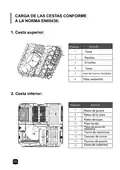
- Page 78: Carga de las cestas conforme a la norma EN60436. Cesta superior: - Artículo número 2. - Tazas: 5. - Platillos: 3. - Cristales: 6. - Olla de hierro fundido: 4. - Ollas pequeña: 1. Cesta inferior: - Artículo número 2. - Platos de postre: 7. - Platos de la cena: 1. - Platos de sopa: 1. - Tazón de melamina: 1. - Tazones de cristal: 4. - Cesta de cubiertos: 1.
- Page 79: Estante de la tienda: El peso total es inferior a 1,5. Por favor, coloque los objetos planos ligeros en el estante. Cesto de cubiertos: Información para comparabilidad. Pruebas de acuerdo con EN. Capacidad: Posición de la cesta superior: posición inferior. Programa: ECO. Ajuste de abrillantador: Max. Configuración del suavizador: H3.
- Page 80: Índice Uso del lavavajillas Panel de control Suavizante para el agua Preparación e introducción de la vajilla Funcionamiento del abrillantador y el detergente Llenado del depósito de abrillantador Llenado del dispensador de detergente Programar el lavavajillas Tabla de ciclos de lavado Códigos de error Información técnica
- Page 81: Guía rápida Lea el contenido correspondiente del manual de instrucciones para conocer el funcionamiento en mayor detalle. Instalación del lavavajillas Retirar la suciedad más visible de los cubiertos Cargar las cestas Llenar el dispensador Seleccionar un programa y poner en marcha el lavavajillas
- Page 82: Uso del lavavajillas Panel de control Funcionamiento (Botón) Pulse este botón para encender el lavavajillas, la pantalla se encenderá. Potencia Intensivo Artículos muy sucios, incluyendo ollas y sartenes. Con comida seca pegada. Universal Para cargas normalmente sucias, como ollas, platos, vasos y cacerolas ligeramente sucias. Programa ECO Es el programa estándar adecuado para cargas con una suciedad normal, como ollas, platos, vasos y sartenes ligeramente sucias.
- Page 83: Programa rápido para cargas ligeramente sucias que no necesitan secarse. Función de secado extra para mejorar la eficiencia del secado. Opción para ahorrar agua y energía con cargas de vajilla media. Configuración del tiempo de retardo con indicador correspondiente. Indicador de abrillantador que señala bajo nivel y necesidad de rellenar. Indicador de sal que señala bajo nivel y necesidad de rellenar. Cargas con suciedad normal que deben lavarse rápidamente. Uso de funciones específicas con programas de lavado. Importancia de los indicadores para el mantenimiento del aparato. Opciones de lavado para diferentes niveles de suciedad.
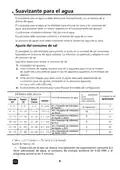
- Page 84: Suavizante para el agua se debe seleccionar manualmente, con el selector de la dureza del agua. El suavizante se ha diseñado para eliminar las sales y los minerales del agua. Cuantos más minerales contiene, más dura es el agua. El suavizante debe ajustarse conforme a la dureza del agua de su zona. El lavavajillas ha sido diseñado para permitir el ajuste en la cantidad de sal consumida. Siga estos pasos para ajustar el consumo de sal. Pulse el botón de Rápido durante más de 5 segundos para iniciar el modelo de ajuste. La regeneración ocurre secuencialmente cada x programas. Ajuste de fábrica: H3. Cada ciclo en el que se realiza una operación de regeneración consume 2,0 litros adicionales de agua.
- Page 85: Revise la sección 3 “Carga de sal en el suavizante” del apartado I: versión genérica, si su lavavajillas no tiene sal. Si su modelo no lleva suavizante para el agua, puede saltarse esta sección. La dureza del agua varía de un lugar a otro. El aparato está equipado con un suavizante especial, que utiliza un recipiente de sal específicamente diseñado para eliminar la cal y los minerales del agua. Cuando compre utensilios, preste atención a que se puedan meter en el lavavajillas. En algunos casos particulares, seleccione un programa con la temperatura más baja posible. Para evitar daños, no saque los objetos de vidrio ni los cubiertos del lavavajillas inmediatamente después de que finalice el programa. No son adecuados: cubiertos con madera, porcelana abocinada o asas de nácar, artículos de plástico que no sean resistentes al calor, cubiertos antiguos con piezas pegadas que no sean resistentes a la temperatura, cubiertos o platos con piezas unidas, artículos de peltre o cobre, artículos de cristal, artículos de acero que se puedan oxidar, platos de madera, artículos hechos de fibras sintéticas. Presentan ciertas limitaciones: algunos tipos de cristal que se puede volver opaco tras una serie de lavados, los componentes de plata y aluminio tienden a decolorarse durante el lavado, los patrones de vidrio pueden perder desvanecerse si se lavan con frecuencia.
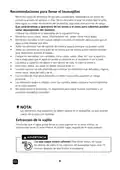
- Page 86: Recomendaciones para llenar el lavavajillas Retire los restos de alimentos de tamaño considerable. No es necesario aclarar los platos bajo el grifo. Coloque los objetos en el lavavajillas de la siguiente forma: Elementos como copas, vasos, ollas/sartenes, etc. deben mirar hacia abajo. Todos los utensilios han de apilarse de manera segura para que no puedan volcar. Cargue los elementos con cavidades como copas, vasos, ollas, etc. con la apertura hacia abajo. La cesta superior ha sido diseñada para colocar los elementos más delicados y ligeros. Los cuchillos de hoja larga colocados mirando hacia arriba suponen un riesgo potencial. No sobrecargue el lavavajillas. Para evitar que el agua gotee, se recomienda vaciar la cesta inferior en primer lugar.
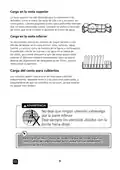
- Page 87: Carga en la cesta superior La cesta superior ha sido diseñada para los elementos más delicados, como el vidrio, las tazas de café y té y los cazos. Carga en la cesta inferior Se recomienda colocar los artículos de mayor tamaño y más difíciles de limpiar en la cesta inferior. Es preferible colocar las fuentes y las tapas en el lateral de las cestas, para evitar bloquear el giro del brazo pulverizador. El diámetro máximo recomendado para los platos delante del dispensador de detergente es de 19 cm. Carga del cesto para cubiertos Los cubiertos deben colocarse en el cesto para cubiertos independiente, separado entre sí y en las posiciones adecuadas. ADVERTENCIA No deje que ningún utensilio sobresalga por la parte inferior. Deje siempre los utensilios afilados con la punta hacia abajo. Para lograr un mejor efecto de lavado, cargue las cestas según las instrucciones de carga estándar.
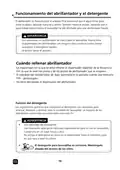
- Page 88: Funcionamiento del abrillantador y el detergente El abrillantador se libera durante el aclarado final para evitar que el agua forme gotas sobre los platos, dejando manchas y rastros. También mejora el secado, haciendo que el agua resbale por los platos. El lavavajillas ha sido diseñado para usar abrillantador líquido. ADVERTENCIA Use solamente un abrillantador de marca para el lavavajillas. Nunca llene el dispensador del abrillantador con ninguna otra sustancia. Se podría dañar el aparato. Cuándo rellenar abrillantador La regularidad con la que se debe rellenar el dispensador depende de la frecuencia con la que se laven los platos y de los ajustes de abrillantador que se empleen. El indicador del abrillantador bajo aparecerá en la pantalla cuando sea necesario más abrillantador. Función del detergente Los ingredientes químicos que componen el detergente son necesarios para arrancar, deshacer y eliminar toda la suciedad del lavavajillas. La mayoría de los detergentes comerciales son adecuados para este fin. ADVERTENCIA Use solamente detergente fabricado expresamente para su uso en lavavajillas. Consérvelo en un lugar fresco y seco. No ponga el detergente en polvo en el dispensador hasta el momento justo en que vaya a lavar los platos. El detergente para lavavajillas es corrosivo. Manténgalo alejado del alcance de los niños.
- Page 89: Llenado del depósito de abrillantador Retire la tapa del depósito de abrillantador tirando del asa. Vierta el abrillantador en el dispensador, teniendo cuidado de que no rebose. Finalmente, cierre la tapa. Ajuste del depósito de abrillantador Para lograr un mejor rendimiento de secado con poco abrillantador, el lavavajillas está diseñado para que el usuario pueda ajustar el consumo. Encienda el aparato. Pulse el botón durante más de 5 segundos para entrar en el modo de ajuste; la indicación de aclarado parpadeará con una frecuencia de 1 Hz. Pulse el botón para seleccionar el ajuste adecuado dependiendo de sus hábitos de uso; los ajustes cambiarán en la secuencia siguiente: D1->D2->D3->D4->D5->D1. Cuanto mayor sea el número, más abrillantador se utilizará. Si no efectúa ningún ajuste durante 5 segundos o pulsa el botón de encendido para salir del modo establecido, los ajustes se guardarán correctamente. Nivel del abrillantador D1, se enciende la luz de Rápido. D2, se enciende la luz de 90 min. D4, se enciende la luz de Vidrio. D5, se enciende la luz de Vidrio, se enciende la luz de Rápido. D3, se enciende la luz de 90 min, se enciende la luz de Rápido.
- Page 90: Llenado del dispensador de detergente Agregue detergente en la cavidad más grande para el ciclo de lavado principal. Para un mejor resultado de limpieza, vierta una pequeña cantidad de detergente en la puerta. El detergente adicional se activará durante la fase de prelavado. Elija la forma de apertura de acuerdo con el producto real. Abra la tapa deslizando el pestillo de liberación. Cierre la solapa deslizándola hacia el frente y luego presionándola hacia abajo. Tenga en cuenta que dependiendo de la suciedad del agua, el ajuste puede ser diferente. Observe las recomendaciones del fabricante sobre el embalaje del detergente.
- Page 91: Programar el lavavajillas Tabla de ciclos de lavado En la siguiente tabla se muestra qué programas son mejores para los niveles de residuos de alimentos y cuánto detergente es necesario. También se muestra información variada sobre los programas. El programa ECO es adecuado para la limpieza de platos con suciedad normal, que para este fin es el programa más eficiente en términos de consumo combinado de energía y agua.
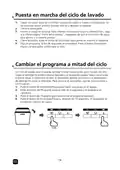
- Page 92: Puesta en marcha del ciclo de lavado Saque las cestas superior e inferior, coloque los platos y vuelva a introducirlas. Se recomienda cargar primero la cesta inferior y después la superior. Vierta el detergente. Inserte la clavija en la toma. Asegúrese de que el suministro de agua está abierto y a máxima presión. Cierre la puerta, pulse el botón de Encendido para poner en marcha la máquina. Elija un programa, la luz de respuesta se encenderá. Pulse el botón Encendido/Pausa y el lavavajillas comenzará su ciclo. Un ciclo de lavado solo se puede cambiar si lleva funcionando poco tiempo, de otro modo el detergente podría haberse liberado. Pulse el botón de Encendido/Pausa para hacer una pausa en el lavado. Pulse el botón del Programa durante más de 3 segundos y el programa se cancelará. Pulse el botón del Programa para seleccionar el programa deseado. Pulse el botón de Encendido/Pausa y, después de 10 segundos, el lavavajillas se pondrá en marcha de nuevo.
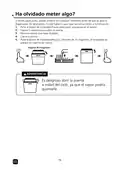
- Page 93: Ha olvidado meter algo? Si olvida algún plato, puede añadirlo en cualquier momento antes de que se abra el dispensador de detergente. Pulse el botón de Encendido/Pausa para hacer una pausa en el lavado. Espere 5 segundos para abrir la puerta. Meta los platos que haya olvidado. Cierre la puerta. Pulse el botón de Encendido/Pausa y, después de 10 segundos, el lavavajillas se pondrá en marcha de nuevo. Es peligroso abrir la puerta a mitad del ciclo, ya que el vapor podría quemarle.
- Page 94: Códigos de error Si el lavavajillas no funciona bien, mostrará códigos de error para identificarlos. Los grifos no están abiertos, o el consumo de agua está restringido o la presión del agua es demasiado baja. La luz de Rápido parpadea. Tiempo de entrada más largo. La luz de 90min parpadea. No alcanzar la temperatura requerida. Mal funcionamiento del elemento calefactor. Algún elemento del lavavajillas gotea. La luz ECO parpadea. Si se produce algún rebose, apague la llave de agua principal antes de llamar al servicio técnico.
- Page 95: No text to extract.
- Page 96: Ficha de producto Modelo: EHDB-6930-I Capacidad nominal (a) (ps) Dimensiones en cm: alto 82, ancho 60, profundo 55 Clase de eficiencia energética Índice de rendimiento de secado (a): 1,125 Índice de rendimiento de limpieza (a): 1,065 Consumo de energía en kWh [por ciclo], basado en el programa eco usando llenado de agua fría. Consumo de agua en litros [por ciclo], basado en el programa eco. Duración del programa (a) (h: min): 3:40 Emisiones de ruido acústico aéreo (a) (dB (A) re 1 pW): 49
- Page 97: Page 97

FISHER PAYKEL DD24SI9 N Integrated Single Dishwasher

InDesiT D2I HL326 Integrated Dishwasher

BOSCH SPS2HKI42E Dishwasher

PKM GSP12A++7TI2 Dishwasher

FURRION CCD-0009140 18 Inch Dishwasher

BOSCH SKS62E38EU Dishwasher

Fisher Paykel DW60UT4I2 Built Under Dishwasher
GE PDP755SYV Profile UltraFresh System Dishwasher

Blomberg LDV42320 Dishwasher

Indesit I3B L634 B Dishwasher