
MEIKO UPster U 400 M2 Glass and Dishwasher

















UPster U 400 M2
Glass- and dishwasher
Operating instructions
For the types in the series:
M001DWUC10M3-10
EN
Read operating instructions before using the machine!
test
9760441 / Valid from: 2018-02 / Update: 2023-03


| General | Details |
|---|---|
| Name | MEIKO UPster U 400 M2 Glass and Dishwasher |
| Make | MEIKO |
| Language | English |
| Filetype | PDF (Download) |
| File size | 0.68 MB |
 (1 votes, average: 5.00 out of 5)
 Loading...

Meiko FV 40.2 Glass and Dishwasher

MEIKO UPster U 400 M2 Glass and Dishwasher Overview
Summary of Contents
- Page 1: UPster U 400 M2 Glass- and dishwasher Operating instructions Read operating instructions before using the machine! Valid from: 2018-02 / Update: 2023-03
- Page 2: Original operating instructions Notes on the operating instructions Product identification Delivery contents Related documents Liability and warranty Safety Symbol explanation Requirements for the personnel Intended use Technical data
- Page 3: Claims must be reported to the manufacturer immediately after determination of the defect or error. Liability claims for personal injury or material damage as well as for operational problems are excluded if they are due to unintended use. Improper installation, commissioning, operation and maintenance can lead to liability exclusions. Operation of the machine or system with defective safety devices or improperly attached or non-functioning safety and protective devices is also a cause for exclusion. Noncompliance with the notes in the operating instructions regarding transport, storage, mounting, commissioning, operation and maintenance is critical. Unauthorized design changes or settings on the machine or system beyond the intended purpose can void claims. Improper monitoring of parts subject to wear is a significant concern. Use of wear and replacement parts that are not from the manufacturer can lead to liability exclusions. Improperly performed repairs, inspections or maintenance are also causes for exclusion. Catastrophes due to human-induced events or force majeure can affect liability claims. Important notes for safety are specially marked with symbols in the operating instructions.
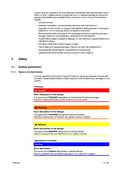
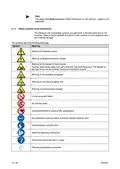
- Page 4: Note designates further information on the machine or its application. The following note and danger symbols are used both in the document and on the machine. Observe these symbols and signs on the machine to avoid personal injury and material damage. Warning of hazardous areas. Warning of dangerous electric voltage. Caution, keep hands away from parts that bear this warning symbol. Warning of hot surfaces and liquids. Warning of the machine falling over. Eye protection must be used or protective glasses must be worn. Read the operating instructions.
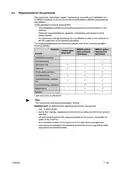
- Page 5: Requirements for the personnel Commissioning, instructions, repairs, maintenance, assembly and installation of or on MEIKO machines must only be carried out/authorised by MEIKO-authorised service partners. Only adequately trained and instructed personnel are allowed to work on the machine. Personnel responsibilities for operation, maintenance and repairs must be clearly defined. Any personnel undergoing training are only allowed to work on the machine under the supervision of an experienced person. The required qualifications for performing specific work at the machine are determined by MEIKO. Qualified staff are persons over 14 years of age, who have the necessary training, experience, and instruction. Qualified staff must be authorised to perform required activities by the person responsible for safety of the machine. Qualified staff should have training in first aid and on-site rescue arrangements. Instructions must be acknowledged in writing.
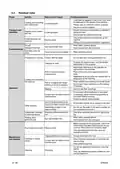
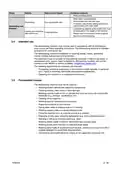
- Page 6: Residual risks Load-bearing capacity of the forklift truck must be adequate for the weight of the machine. Ensure that the ground beneath is capable of taking the load. Only skilled personnel may connect up the machine. Adhere to the accident prevention regulations. Wear safety eyewear/gloves. Avoid contact with skin and eyes. Do not open door during programme run. Wear suitable work clothing and sturdy shoes. Do not use the water in the wash chamber for food preparation or drink it. Only allow specialist personnel to adjust dosing.
- Page 7: Intended use The dishwashing machine must only be used in accordance with its intended purpose and as per these operating instructions. The dishwashing machine is intended exclusively for commercial use. The dishwashing machine is designed for cleaning dishes, cutlery, glassware, kitchen utensils, baking trays, and containers. The washware must be suitable for dishwashing machines. Foreseeable misuse The dishwashing machine must not be used for washing kitchen utensils with electronic components. The machine should not be used for cleaning textiles, oven cloths, or steel sponges. It is not intended for washing utensils made of iron or utensils that must not come into contact with foodstuffs. The machine must not be used for cleaning living creatures or washing food for subsequent consumption. Preparing foodstuffs in the machine is prohibited. Disposing of dirty water using the dishwasher is not allowed. Washing dishes made of wood or dishes that have wooden parts is not permitted.
- Page 8: Fundamental safety and accident prevention regulations The following safety instructions aim to protect operating personnel as well as third parties and the dishwashing machine itself. The operator of the machine has an obligation of care to ensure that necessary measures are planned for and correctly implemented. The dishwashing machine is only used in accordance with its intended purpose. Only original spare parts supplied by the manufacturer may be used. Only appropriately qualified and authorized personnel operate, maintain and repair the dishwashing machine. Staff are regularly trained in all questions relating to occupational safety and environmental protection. The area around the machine is assessed with reference to the risk to other people. The dishwashing machine is only operated in perfect, functional condition, with all protection devices and covers installed. A functional test on all dishwashing machine safety systems is carried out at every regular maintenance appointment. Only operate the dishwashing machine under the supervision of trained personnel.
- Page 9: Switch off the dishwashing machine at the on-site mains disconnection device. Close the on-site stop valve in the fresh water supply line. Only use detergents and rinse aid suitable for commercial dishwashing machines. Detergent and rinse aid may contain hazardous substances. Never drink the wash water. When handling chemicals, wear appropriate protective gloves and safety eyewear. Residue from descaling agents can cause damage to the plastic components and sealing materials in the machine. Foam can cause malfunctions in the dishwashing machine and a poor washing result. Do not use aggressive detergents when cleaning the surrounding area. There is a danger to life if exposed parts and damaged supply lines under electrical voltage are touched.
- Page 10: Overview illustration Exterior view Operating panel Door handle Door Potential equalisation connection Fresh water connection G ¾” Electrical connection Detergent storage tank (option) Storage tank for rinse agent (option) Waste water connection
- Page 11: Type label The rating plate is located on the left side or right side in the lower rear section of the dishwasher. An additional rating plate is located on the switch cabinet behind the front panel. The following information can be found on the rating plate: - Name and address of manufacturer - Machine type - Model name - Serial number - Current type - Electrical connection - Rated power boiler - Water pressure - Boiler capacity - Steam connection - Year of manufacture - CE mark - IP protection rating Blue operating concept The parts of the dishwasher that must be touched by the operator in operation and in daily use are blue. Detergent and rinse aid Risk of injury from contact with chemicals - Observe the safety data sheets and dosing recommendations of the chemical manufacturers. - Use eye protection. - Wear protective gloves. - Do not mix different chemical products.
- Page 12: Caution Only use products that are suitable and approved for commercial dishwashers. MEIKO recommends MEIKO ACTIVE detergent and rinse aid. Do not mix different cleaning products. The dishwashing machine is equipped by default with dosing units for dosing liquid detergent/rinse aid. Manual dosing with powder cleaner is not intended. Detergents are alkaline and are needed to dissolve soiling from the washware. The standard setting is 2 ml of detergent per litre of tank water. Rinse aids are acidic and accelerate the drying of the washware. The correct dosage is achieved when the water drips evenly from the washware. The components of the dosing units must be regularly maintained and replaced in accordance with the maintenance specification.
- Page 13: Change of products When changing the detergent product, crystallisation may occur, which can lead to failure of the dosing system. When changing the detergent product, flush the dosing system with warm water. Procedure for changing the detergent product includes providing a suitable container with warm water and inserting the suction lance. Thoroughly flush the dosing system several times by venting the lines. For dishwashers with an internal reservoir, have the system flushed by a service technician authorised by MEIKO. Technical data includes a dimensional drawing that shows machine dimensions as well as connection and consumption values. Workplace noise level is ≤ 70 dB (A). EC/EU declaration of conformity is available in a separate document. Warning about danger of injury from entering a danger zone during various operations. Only permit qualified persons to perform work at the machine and always wear cut-resistant protective gloves when working inside the machine.
- Page 14: Prerequisites for assembly Check that the delivery is complete immediately after receiving it by comparing it with MEIKO’s order confirmation and/or the delivery note. If applicable, submit a claim for any missing parts immediately to the freight forwarder and notify MEIKO. Check the machine for transportation damage. If there is any suspicion of transportation damage, the shipping company and MEIKO must be informed immediately in writing. The dishwashing machine is only frost-proof in as-delivered state or if equipped with special features. Ensure that the storage and installation locations are always frost free. There is a danger of slipping in the working area due to the use of water. Connect the drainage hose to the locally available waste water pipe. Fresh water connections and their components must be carried out in accordance with local regulations. An on-site stop valve must be built into the fresh water supply for the operating staff.
- Page 15: Pressure range of the fresh water supply flow pressure upstream of the solenoid valve includes machines with air gap or pressure booster pump at 60 – 500 kPa and machines with a safety device to prevent backflow at 250 – 500 kPa. Do not exceed maximum pressure of 500 kPa. If the minimum flow pressure is too low, increase the pressure using a pressure booster pump. If the maximum pressure is exceeded, limit the pressure using a pressure regulator. Ensure that no foreign iron particles can enter the appliance via the fresh water connection. A dirt trap must be fitted in the fresh water supply to protect the solenoid valve. Drain the connection line and wash it before placing the machine in operation again after it has been unused for longer periods. Work at or repairs to the electrical system must be conducted by a qualified electrician. Disconnect the machine from the power supply before working on the electrical system. The machine must be connected by a qualified electrician in accordance with the locally applicable standards and regulations.
- Page 16: Power cable/fixed connection: Recommended connection with protective equipotential bonding. The machine and accessory appliances are intended for permanent connection to the locally available power supply. A 5-pole terminal strip (L1, L2, L3, N, PE) must be used for connection to three-phase current. Electricity supply without a neutral wire (N) requires a 4-pole clamping strip (L1, L2, L3, PE). Wire colours: live wire L1 = black, L2 = brown, L3 = grey, neutral wire N = blue, protective earth conductor PE = green-yellow. The operator can decide to connect the electrical supply using customer resources in collaboration with a professional electrician. The use of an RCD/FI is not recommended where discharge currents exceed 10 mA. Install a main switch with all-pole disconnection from the mains in accordance with the installer's regulations. Fuse the machine for the rated current shown on the rating plate. The screw for the potential equalisation is located on the back of the machine near the media connections.
- Page 17: The potential equalisation connection must comply with local electricity supply requirements and regulations. Only qualified personnel may carry out transport works. Always transport the machine on a wooden frame only. Wear protective gloves and safety shoes during transport. The packaging is designed for safe movement using a pallet jack or sack truck. If the machine is freestanding, it must be secured to prevent tipping. Have the fresh water connected by a qualified professional and in accordance with local regulations. Shut off the fresh water supply at the main valve prior to installation works. Check that all lines are securely connected before use.
- Page 18: Caution regarding material damage due to steam escape. Small quantities of steam may escape through the dishwashing machine's door area, potentially causing adjacent furniture to swell. Protect adjacent furniture from swelling. Assembly must be performed only by a licensed and authorized service technician. Ensure the machine is level in both directions using a water level. Check that the machine is stable. Danger of injury from entering a danger zone during transport, assembly, commissioning, maintenance, and repair work. Only permit qualified persons to perform work at the machine. Never remove or disable safety devices on the machine. Prerequisites for commissioning include a frost-free storage area and proper electrical, fresh water, and waste water connections.
- Page 19: Perform commissioning only by an authorised service technician. The operator must not use the dishwashing machine before completing training. Check supplier parts such as external water processing devices or heating pumps. Ensure that all tools and foreign parts are removed from the machine. Make sure that any escaped fluids have been removed. Activate all safety systems and door switches before commissioning. Check that all screw connections sit securely. For dishwashing machines with GiO Module, adhere to the Commissioning certificate for GiO Modules. The dishwasher is equipped with a membrane key pad that includes 4 operating keys and 3 control lights. A display reports the current temperatures of the wash and rinse water and shows information messages and error codes. The meaning of each key and symbol is described in the manual.
- Page 20: Prepare dishwasher Warning Risk of injury from contact with chemicals Observe the safety data sheets and dosing recommendations of the chemical manufacturers. Use eye protection. Wear protective gloves. Do not mix different chemical products. System operators must be very familiar with the operating instructions of the dishwashing machine. Ensure the water supply is available. Check detergent and rinse aid and top up, if required. Ensure that the hoses are fed down to the base of the container.
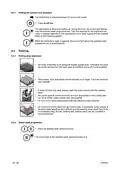
- Page 21: Putting the machine into operation involves pressing the on/off key. The dishwasher fills and heats up, indicated by a flashing control light over the selected wash programme key. The time required for the machine to be ready depends on the water supply temperature and heating capacity. When ready, the control light above the selected wash programme key is lit permanently. For putting away washware, all hollow containers must be loaded upside down to ensure proper drainage and drying. Plates, trays, and dishes should be placed at an angle with inner surfaces facing upwards. Cutlery should be inserted with handles down, and it's important to mix up different types of cutlery to prevent nesting. Avoid overfilling cutlery baskets and do not stack crockery items to ensure effective washing. To select a wash programme, press the desired wash programme key, which will light up to indicate selection.
- Page 22: Wash programme Washware Short programme for lightly soiled washware Standard programme for normally soiled washware Intensive programme for heavily soiled washware Programme configuration can vary depending on machine type and supply. Programme table includes wash time setpoints and boiler temperatures. Total wash times are specified in seconds. Different wash programmes are numbered and categorized by soil level. Setpoints for boiler temperature vary across different wash programmes.
- Page 23: Wash time setpoint Wash programme Boiler temperature The concentration of the rinse aid in the water remains constant. Clear the washware (removing any large food residues, napkins, tooth picks, lemon peel etc.). Put the washware into the rack. Ensure that the correct programme has been selected. The control light above the wash key is lit. The wash cycle time may differ from the set programme running time. The dishwasher runs until the required temperatures are reached, but max. 5 minutes.
- Page 24: Emptying the washware Caution regarding danger from hot wash water, washware, and machine parts. Wear protective gloves if necessary. Let the washware cool down before emptying. Never open the machine door or hood during a wash cycle. After the programme ends, the control light above the wash key turns off and an acoustic signal sounds. Shutting down the dishwasher The dishwashing machine does not have a rack inside. Press the On/Off button; all control lights turn off. For machines without a drain pump, water runs into the drain. Press the wash key to start the self-cleaning programme.
- Page 25: After the end of the process, clean the machine, see chapter “Daily cleaning” on page 40. Risk of injury from contact with chemicals. Observe the safety data sheets and dosing recommendations of the chemical manufacturers. Use eye protection. Wear protective gloves. Do not mix different chemical products. The storage tanks are located on the front of the lower front panel. The fill level can be read from the front. The detergent tank is transparent, the rinse aid tank is blue. Pour the appropriate chemical for dosing into a measuring cup.
- Page 26: Replace canister for detergent and rinse aid. The canisters are located near the dishwasher. A shortage of detergent or rinse aid will be indicated on the display. To replace an empty canister, remove the suction lance and insert it into a full canister. Ventilate the pipelines if necessary. The dishwasher does not have a rack inside. Press the on/off key to turn off all control lights. Remove the stand pipe and close the door to drain water. Press the wash key to start the self-cleaning program. Replace the stand pipe and close the door to resume operation.
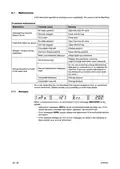
- Page 27: Malfunctions If the described operational problems occur repeatedly, the cause must be identified. Occasional malfunctions include issues such as the dishwashing machine not filling up, which may be caused by a clogged dirt trap or an open door. For streaks or smears on the washware, adjust the dosing quantity and check the water pre-treatment. Do not use a foaming manual dishwashing detergent for precleaning or cleaning the machine, as foam can cause malfunctions. Faults not described may require assistance from an authorized service technician. When a malfunction occurs, an information or error message (INFO/ERR) is displayed. Information messages (INFO) can be acknowledged with the wash key, allowing operation to continue if the cause has been remedied. Error messages (ERR) usually require the deployment of an authorized service technician. If the machine displays an info or error message not listed, contact your service technician.
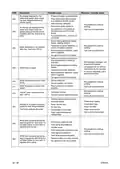
- Page 28: Possible to continue work at limited capacity. No boiler/tank heating. No fresh water supply. Call a service technician! Door/hood not closed. Enter code again. Message disappears after 5 min. Maintenance necessary. Replace empty canister. Fill salt container.
- Page 29: ERR Description Possible cause No change detected by the boiler level switch when emptying Pressure booster pump defective Plug connections disconnected Start capacitor defective Boiler level switch defective No change yet detected at the boiler level switch after the rinse time expired No signal to or from pressure booster pump and I/O circuit board Call a service technician! Boiler heating defective/melting beads, heating element Temperature sensor defective, incorrect installation position Boiler temperature not reached after max. heat time Boiler protection defective, output switch triggered Boiler not ready for final rinse on time Acknowledge message, continued work possible Boiler temperature sensor short-circuit Sensor defective Sensor position not correct Call a service technician! Feeding water pressure too low Inlet filter soiled Check water supply Check feed hose Rinse nozzles dirty Drain pump output too low Drain pump dirty/defective Call a service technician!
- Page 30: ERR Description Possible cause Tank heating defective/melting beads, heating element Not possible to continue working Tank temperature not reached after max. heat time Temperature sensor defective, incorrect installation position Call a service technician! Feeding water pressure too low Inlet filter soiled Rinse nozzles dirty Check water supply Clean inlet filter Max. tank level exceeded Tank level analysis disrupted. Call a service technician!
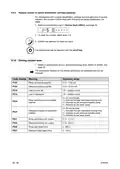
- Page 31: Press and hold the on/off key for approximately three seconds. Enter the service code for the required authorisation level. After entry of the correct code, the desired authorisation level is displayed. Authorisation level 1 – service level allows the operator to view service data. Authorisation level 1 service code is 10000. Authorisation level 4 – dosing equipment level allows the operator to view settings. Authorisation level 4 service code is 40000. The operator can view/edit all the relevant parameters for the dosing equipment. Reset the counter for replacing the partial desalination cartridge. Refer to specific pages for detailed procedures.
- Page 32: View parameters involve switching to authorisation level 1 and selecting entry 1-1. The first parameter is displayed after confirming the selection. Parameters can be viewed using the wash programme keys. The service level can be exited with the On/Off key. Ventilating the pipes is necessary if air is sucked in from the dosing units. Ventilation must be performed if a canister is completely emptied or if a suction lance is not properly threaded. Switch to authorisation level 1 for ventilating the detergent or rinse pipes. Select entry 1-3 for the detergent pipe and entry 1-2 for the rinse pipe. The respective pipes are ventilated, and the remaining time is displayed. Venting can be cancelled with the On/Off key.
- Page 33: Replace counter for partial desalination cartridge (optional). The counter must be reset after changing the partial desalination cartridge. Switch to authorisation level 1 Service level (10001). To reset the counter, select entry 1-5. Confirm the selection to reset the value. The setting level can be departed with the on/off key. Dosing system level requires switching to authorisation level 4. Parameters relevant for the dosing technology are displayed and can be changed. Rinse aid dosing quantity and detergent dosing quantity can be adjusted. Methods for activating dosing units are specified.
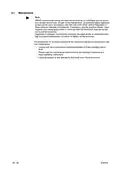
- Page 34: Maintenance and cleaning Danger to life from electric shock Contact with live electrical parts can lead to serious injury or death. Work at or repairs to the electrical system must be conducted by a qualified electrician. Disconnect the machine from the power supply before working on the electrical system. Danger to life from electric shock if cover panels are open If the machine is operated without cover panels, electrified parts are freely accessible. Danger of injury from entering a danger zone Only permit qualified persons to perform work at the machine. Cordon off danger zone and signpost it for third parties. Environmental damage due to improper disposal of liquids Improper disposal of environmentally hazardous liquids can damage the environment.
- Page 35: Maintenance MEIKO recommends having the machine serviced by an authorised service technician at least once a year. An electrical safety inspection is carried out in accordance with DIN VDE 0701-0702 / DGUV Regulation 3. Wear parts are checked and replaced, if necessary, and the machine tested. Cleaning work and changing pre-filters in machines with GiO MODULE must be carried out by trained operators. Neglected or improper maintenance increases the residual risk of unforeseen damage to property and persons. A functional test on all safety systems of the machine is carried out during every regular maintenance. Comply with the maintenance intervals prescribed in these operating instructions. Please note the maintenance instructions for the individual components in these operating instructions. Carefully dispose of any detergents that could harm the environment.
- Page 36: Maintenance table Maintenance work must only be carried out by MEIKO authorised staff. Check error memory for unusual events using M-Commander 2.7. Functional and visual check of washing and rinse arms. Check rotating arm hubs and replace if necessary. Clean and check rinse nozzles and swirl plates. Check air trap of the tank and clean if necessary. Check tank level control for leaks. Check sieves and filters. Check rack guide for damage. Check wash and rinse systems for leaks.
- Page 37: Maintenance requirements include visual checks and testing of the machine's functionality. Rinse aid dosing should be checked for leaks and replaced annually. A functional test of the entire machine is necessary, including checks for filling and heating readiness. Fresh water quality and temperature should be monitored regularly. Electrical safety checks are recommended, including measuring insulation resistance and current on the protective earth conductor. Daily cleaning is crucial to prevent material damage due to water ingress. Electrical components must not come into contact with water to avoid damage. Avoid using foaming detergents for pre-cleaning or cleaning the dishwasher. Ensure the machine is emptied as per the shutdown instructions. Prevent flooding in the surrounding area if the machine is installed at ground level.
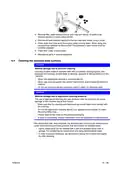
- Page 38: Remove filter, wash systems below and rinse arm above. All parts to be cleaned are blue or have a blue handle. Remove all food residues sticking to the tank and tank heater using a brush. Rinse wash and rinse arms thoroughly under running water, paying particular attention to the nozzles. Clean filter under running water. Reinstall all parts in reverse sequence. Caution: Material damage due to incorrect cleaning. Never use aggressive cleaning or scouring agents. Do not use cleaning utensils previously used to clean non-stainless steel. Make sure that cleaning and care products cannot have direct contact with the machine. Lightly soiled parts can be cleaned with a soft and possibly damp cloth or sponge.
- Page 39: Descaling Warning: Danger of injury from contact with acids. Descaling agents can cause damage to health if they come into contact with skin or eyes or are swallowed. Use eye protection and wear protective gloves. Contact a physician immediately if chemicals or water containing chemicals are swallowed. Please take note of the manufacturer's safety instructions. Caution: Destruction of plastic parts and seals from residues of de-scaling agent. Completely flush the de-scaling agent out of the dishwasher. For de-scaling, only use products suitable for industrial dishwashers. Completely flush the de-scaling agent out of the dishwasher by performing 1-2 wash cycles with fresh water. Possibly assign Customer Service the task of de-scaling the boiler. Spare parts: Please provide the type and serial number when ordering spare parts. Non-use for several days: Run self-cleaning programme and clean the machine.
- Page 40: Commissioning Set up the machine for 24 h at 25°C if it is not frost-free. Have an authorised service technician commission the machine again. Have reverse osmosis (GiO MODULE) disinfected in the case of down-times of more than 6 months. Open the on-site shut-off valve and switch on the main switch. Dismantling and disposal The packaging and the old appliance may contain substances that are harmful to health and the environment. Disposal of packaging materials All the packaging materials are recyclable. The square timber frame consists of untreated raw pine/spruce. Dismantling and disposal of the old device Observe the safety data sheets and dosing recommendations of the chemical manufacturers. Use eye protection and wear protective gloves. The device is marked with this symbol. Please observe the local regulations for proper disposal of your old device.
- Page 41: Abbreviations and their meanings are provided. GiO refers to the integrated reverse-osmosis system. The pH value denotes the acidity of liquids. LpA denotes the emission sound pressure levels at the workplace. Decibel is the unit of sound pressure level.
- Page 42: Abbreviations Assembly Authorisation level Functional description Fundamental safety and accident prevention regulations Intended use Liability and warranty Daily cleaning Descaling Product description

FISHER PAYKEL ADDD60DTPX Door Panel for Dishwasher

HOBART S.48820 Commercial Dishwasher

Indesit D2F HD624 A Separate Dishwasher

BOSCH SMV4ECX10E-38 Dishwasher

BOSCH SBT4ECX10E Dishwasher

ATAG VA7213SMN Dishwasher

Whirlpool WFE2B19 Dishwasher

FISHER & PAYKEL DW60UNT4X2 Built-Under Dishwasher

BOSCH 9001164801 Dishwasher

BOSCH SMV6ZCX49E-39 Dishwasher