
LG LDF5545SS Dishwasher






























OWNER'S MANUAL
DISHWASHER
Read this owner's manual thoroughly before operating the appliance
and keep it handy for reference at all times.
LDF554#**
LDB454***
www.lg.com
MFL69261705
Rev.24_072519
Copyright © 2016 - 2019 LG Electronics Inc. All Rights Reserved.


| General | Details |
|---|---|
| Name | LG LDF5545SS Dishwasher |
| Make | LG |
| Language | English |
| Filetype | PDF (Download) |
| File size | 8.09 MB |
 (1 votes, average: 5.00 out of 5)
 Loading...

LG LDTH7972SS Black Dishwasher

LG SDWB24S3 STUDIO Smart Dishwasher

LG LDTH7972D Smart Tub Dishwasher

LG LDPH7972D Smart Dishwasher

LG XD3A25UMB 15 Place QuadWash Dishwasher

LG LDT779 Dishwasher

LG LDT7808BD Dishwasher

LG LDFN4542S Dishwasher

LG DFB424 Dishwasher

LG LDTS5552D PrintProof Black Dishwasher

LG LDF5545SS Dishwasher Overview
Summary of Contents
- Page 1: Owner's manual for the dishwasher. Read this owner's manual thoroughly before operating the appliance. Keep it handy for reference at all times. Model numbers include LDF554#** and LDB454***. Copyright © 2016 - 2019 LG Electronics Inc. All rights reserved.
- Page 2: Product features Smart functions SmartThinQ application Smart diagnosis function Safety instructions Important safety instructions Maintenance Cleaning the exterior Cleaning the interior Installation overview
- Page 3: Product features QuadWash™ system provides powerful and complete cleaning coverage. Inverter Direct Drive Motor offers advanced features like whisper-quiet operation and energy efficiency. The motor is covered for 10 years under warranty. EasyRack Plus system provides flexibility and versatility when loading dishes. Hybrid Drying System ensures superior energy efficiency and gentle care for dishes. SmartThinQ™ app allows users to set options and troubleshoot problems.
- Page 4: Safety instructions are crucial for your safety and the safety of others. Always read and follow all safety messages provided in the manual and on the appliance. The safety alert symbol indicates potential hazards that can cause serious injury or death. Warnings indicate that failure to follow instructions may result in serious injury or death. Cautions indicate that failure to follow instructions may result in minor injury or damage to the product. Safety messages will specify the potential hazard, how to reduce the risk of injury, and the consequences of not following instructions. To reduce the risk of explosion, fire, electric shock, or injury, follow basic precautions during installation. Ensure the appliance is installed and grounded by qualified personnel according to local codes. Disconnect the power supply before installing or servicing the appliance. Moving or installing the appliance requires two or more people for safety.
- Page 5: Safety instructions Store and install the appliance where it will not be exposed to temperatures below freezing or outdoor weather conditions. Do not, under any circumstances, cut or remove the ground from the power supply line. Never attempt to operate this appliance if it is damaged, malfunctioning, partially disassembled, or has missing or broken parts. Use new hoses when connecting the appliance to the water supply. Do not reuse old hoses. Repair or immediately replace all power supply lines that have become frayed or otherwise damaged. Do not use an extension cable or adapter with this appliance. Keep the area underneath and around your appliances free of combustible materials, gasoline, chemicals, and other flammable vapors and liquids. This appliance is not intended for use by persons with reduced physical, sensory or mental capabilities unless supervised. If the electrical supply line is damaged, it must only be replaced by the manufacturer or a qualified person. Read all instructions before using the appliance and save these instructions.
- Page 6: SAFETY INSTRUCTIONS Do not allow children to play on, in or with the appliance. Close supervision of children is necessary when the appliance is used near children. In the event of a gas leak, do not operate this or any other appliance. Open a window or door to ventilate the area immediately. Hydrogen gas may be produced in a hot-water system that has not been used for two weeks or more. If the hot-water system has not been used for such a period, turn on all hot water faucets and let the water flow from each for several minutes. Use only detergents or wetting agents recommended for use in a dishwasher and keep them out of the reach of children. Do not wash plastic items unless they are marked dishwasher safe or the equivalent. Do not operate your dishwasher unless all enclosure panels are properly in place. Do not open the door while operating. For safety reasons, the drain pump operates if the door is opened, resulting in a longer cycle time. Do not plug the dishwasher into a damaged outlet. Do not wash dishes exposed to gasoline, solvents or other flammable materials. Small parts, such as rack clips and filter retaining posts can be a choke hazard to small children if removed from the dishwasher.
- Page 7: Safety instructions include important maintenance guidelines. Repairs and servicing must be performed by qualified personnel. Do not disassemble or repair the appliance by yourself. Disconnect the appliance from the power supply before cleaning. Remove the door before discarding the appliance to prevent trapping children or animals. Unplug the appliance before cleaning to avoid electric shock. For permanently connected dishwashers, ensure proper grounding. Connect the ground wire to the designated terminal. Do not use the dishwasher until it is completely installed. Avoid pushing down on the open dishwasher door to prevent injury.
- Page 8: Safety instructions are crucial to reduce the risk of injury or damage. The product should be installed on a firm and level floor. It must be connected to a hot water supply with a temperature between 120 °F and 149 °F for optimal performance. The drain hose should not be placed under the dishwasher during installation. Objects should not be placed on top of the appliance. Water faucets should be turned off and the appliance unplugged if not in use for an extended period. Liquid detergents and cleaners should not be stored or spilled on the appliance to avoid damage. Draining water may be hot and should not be touched. If hoses are frozen, they must be defrosted before use. The exterior should be cleaned immediately if cooking oil is spilled, using appropriate cleaners.
- Page 9: Product overview Exterior parts Control panel & door handle Front cover Lower cover Shipping brace Safety cover SignaLight™ (some models) Do not remove the safety cover at any time. To ensure reliability, each LG dishwasher goes through thorough quality control before it leaves the factory.
- Page 10: Product overview Interior parts Top wash impeller Upper spray arm Lower spray arm Filtration system Detergent and rinse aid dispenser Drying vent cover Silverware basket Remove all packing materials from the exterior and interior of the dishwasher before installing the appliance.
- Page 11: Installation parts and tools are essential for the setup process. Parts not provided include electrical cable, water supply tube, fittings for the tube, coupler, electrical tape, air gap, wire nuts for 16-gauge wiring, hose clamp, and UL approved strain relief. Tools needed for installation consist of a flat-blade screwdriver, Phillips screwdriver, hole saw with a minimum 2½” bit, electrical drill, gloves, safety glasses, adjustable wrench, tape measure, utility knife, level, ¼” square nipper, pliers, wire stripper, tubing cutter, drive wrench, and ⅜” square drive wrench with a ½” socket.
- Page 12: Installation overview Preparing cabinet opening Leveling the dishwasher Securing the dishwasher to countertop Connecting the drain hose Connecting water supply Connecting power Preparing electrical wiring Preparing water supply connection Product specifications
- Page 13: Installation To allow for proper clearance of plumbing and electrical, use the template included with the literature to determine the clearance on the side of the cabinet where the cabinet meets the back wall. This dishwasher is designed to fit a standard dishwasher opening. An opening may be needed on both sides to route plumbing and electrical connections. To ensure proper drainage, install the dishwasher no more than 12 ft. (3.65 m) from the sink. The location must have sufficient space for the dishwasher door to open easily and provide at least 0.1” (2 mm) between the dishwasher and the cabinet sides. If installing the dishwasher in a corner, leave a minimum of 2” (50 mm) between the dishwasher and the adjacent wall. The adjacent wall must be free of obstructions. For flush installations only, you may remove the cabinet brace inside the cabinet. Installation damage is not covered by the warranty, and leaks caused by improper installation may result in property damage. Do not use existing holes unless they are in the target area. Failure to properly locate the hole for the water and drain lines may prevent the dishwasher from installing flush with the cabinets and could result in kinked, pinched, crushed, stressed or damaged lines.
- Page 14: INSTALLATION Preparing water and electrical connections There are 2 channels in the bottom of the dishwasher for routing the water and electrical connections. WARNING Water connection Do not reuse an old hose. Use only a new hose when installing the dishwasher. Electrical connection Use a time-delay fuse or circuit breaker. Operate this appliance with the correct voltage as shown in this manual and on the rating plate. The wiring must be grounded properly. Connect the appliance using 3-wires, including a ground wire. Do not use an extension cable or adapter with this dishwasher. When connecting the dishwasher water supply line to the house water supply, sealing tape or compound should be used on pipe threads to avoid leaks. Connect the dishwasher to a hot water supply with a temperature range between 120 °F (49 °C) and 149 °F (65 °C). Water supply pressure must be between 20 psi and 80 psi (140–550 kPa).
- Page 15: Installation The rear shipping brace can be removed if additional clearance is needed when installing the dishwasher under a low countertop. Do not remove safety cover. Removal can result in fire, electric shock or death. Remove the twist tie holding the drain hose to the back of the shipping brace. Remove the screws at either side which attach the lower cover to the dishwasher. If there is insulation padding behind the lower cover, remove it. Set the parts aside until the installation is complete. If you lay the dishwasher on its back, do so carefully to avoid damaging the drain hose and the tub.
- Page 16: Installation Remove all packing materials from the interior of the dishwasher before installing the appliance. For countertops made of wood or other material that will not be damaged by drilling, use the metal installation brackets provided. For countertops made of granite, marble, or other materials that could be damaged by drilling, use the wood screws to attach the dishwasher to the cabinet. Installation brackets and screws can be found in the silverware basket. Insert the tabbed end of the installation brackets into the slots in the upper frame. Rotate the brackets until the tabbed ends are facing up. Bend the tabs on the brackets to secure them to the frame using a pair of needle nose pliers.
- Page 17: Installation Sliding dishwasher into cabinet opening Open the door and grab the body frame and the top front opening of the tub to move or lift the dishwasher. Do not pull or lift the dishwasher using the handle. Doing so can damage the door and hinges. Align the dishwasher with the opening. Make sure the water supply line and electrical cable are in the correct positions to slide into their channels properly. Do not push the door of the dishwasher with knees when sliding the dishwasher into position. Doing so can damage the front cover. Smooth out or pad the edges of the hole drilled for the water supply to avoid damaging the drain hose. Do not push the top of the dishwasher. Doing so can damage the interior of the dishwasher.
- Page 18: Installation Make sure the drain hose is straight before feeding the end of it through the hole for the water supply. Remove the tape from the water supply line and the electrical cable. Be careful not to kink, pinch, crush or stress the drain hose during installation to avoid leaking and water damage. Gradually slide the dishwasher into the opening, making sure that the water supply line and electrical cable are passing freely through the channels. Stop periodically to take up the slack by pulling the drain hose farther into the cabinet. To avoid malfunctions or leakage, it is important that the drain hose not get kinked, pinched, stressed or crushed. Damage resulting from improper installation is not covered under the warranty.
- Page 19: INSTALLATION The best location for the electrical conduit is on the right side of the back wall. Re-route the electrical cable before installation if the electrical conduit pipe is longer than 3” (76 mm) and is centered on the back wall. Turn off electrical power to the unit at the circuit breaker. With the home water supply turned off, connect the water supply line to the inlet valve on the left front of the dishwasher. Tape or compound should not be used on the dishwasher inlet valve. Tighten the compression nut. Slide the water supply line back through the channel, pulling gently from inside the cabinet to make sure the line is not kinked, pinched, stressed or crushed. The dishwasher should have a dedicated properly grounded branch circuit to connect the 3 wire setup which includes the ground wire. If a 3-prong power supply is used, it should be in an accessible location adjacent to the dishwasher within 4 ft. (1.22 m) of the dishwasher side and not behind the dishwasher.
- Page 20: Installation Insert a strain relief junction box. Tighten the ring nut in place. Pair the white, black, and green wires to the matching colored wires from the dishwasher. Twist on the provided wire nuts tightly to connect the corresponding wires. Insert the electrical cable through the hole in the strain relief. Tighten 2 screws to secure the cable. Wrap electrical tape around each connection. Pull the existing wires through the openings in the junction box. Tighten 2 screws to reassemble the junction box in the appliance. Fold the connected wires back into the junction box and screw on the junction box cover. Warning: Verify that the black wire is hot (120 V). If not, or if you are unsure of the power supply, have it checked by a licensed electrician. Caution: Do not leave stripped wire exposed. Trim stripped wire to fit completely inside wire nuts.
- Page 21: Installation Connecting to disposal without air gap The height of the drain hose end must be at least 12” (305 mm) and within 40” (1016 mm) from the base of the dishwasher to avoid water being siphoned from the tub. If the end of the drain hose does not fit the drain line, use a heat and detergent resistant adapter. For drain hose installation, use the screw style hose clamp provided with this dishwasher. If connecting the dishwasher’s drain hose to the garbage disposal, follow your garbage disposal’s manual for proper installation instructions. Follow local codes and ordinances. Do not exceed 12 ft. (3.65 m) distance to drain. Do not connect drain hoses from other appliances to the dishwasher’s drain hose. If an extension drain hose is required, use a 5/8” or 7/8” inside diameter, 2-3 ft. length hose and a coupler for connecting the two hose ends. If the knockout plug has not been removed, the dishwasher will not be able to drain properly.
- Page 22: Installation Attach the drain hose to the disposal with the hose clamp provided. Attach the drain hose to the waste tee with the hose clamp provided. The height of the drain hose end must be at least 12” (305 mm) and within 40” (1016 mm) from the base of the dishwasher to avoid water being siphoned from the tub. Remove the knockout plug with a hammer and screwdriver. Connect the end of the drain hose to the air gap with the hose clamp provided. If it is not connected, attach the rubber hose connector to the disposal or waste tee with a hose clamp. If the knockout plug has not been removed, the dishwasher will not be able to drain properly.
- Page 23: Installation Check that the dishwasher is level from side to side. Adjust the leveling feet if necessary. If you do not have a level, use a smartphone level application. Failure to level the dishwasher may result in leakage or problems closing the door. The dishwasher must be carefully leveled and aligned if the cabinet opening is narrower than recommended. Ensure the dishwasher is supported fully by the leveling feet. Check that the gap between the tub walls and the door liner is the same on either side. To check that the tub is level from front to back, pour 169 oz. (5 L) of water into the bottom of the tub. The water level should be near the center of both tub lower indentations at the front.
- Page 24: Installation Adjusting rear leveling foot Use a Phillips screwdriver to adjust the rear leveling foot and the rear of the tub using the center screw at the base of the appliance in the front. Turn the center screw clockwise to raise the rear of the tub and counterclockwise to lower it. Adjusting front leveling feet Use a flat-blade screwdriver to turn the front leveling feet and adjust the front of the tub. Turn the front leveling feet clockwise to raise the front of the tub and counterclockwise to lower it. To avoid damaging the screw, do not use an electric screwdriver. Adjust the front and rear leveling legs until they are all in firm contact with the floor. Failure to level the dishwasher may prevent the door from closing properly and the dishwasher will not turn on.
- Page 25: Installation instructions for securing the dishwasher to the cabinet frame and countertop are provided. There are two options for securing the dishwasher based on the countertop material. If the countertop is wood, secure the dishwasher with provided brackets. If the countertop is granite or marble, secure the dishwasher to the cabinet frame with wood screws. Ensure the dishwasher is level and all leveling feet are in firm contact with the floor before attachment. Improper leveling may cause the door to not close properly or lead to water leakage. Drive a wood screw through the mounting bracket into the cabinet frame for secure installation. Installation brackets and screws are located in the silverware basket. Use a magnetic screwdriver for ease of installation. Cover the filter hole with towels to prevent screws from falling into the pump.
- Page 26: Installation check is essential to ensure the dishwasher is properly installed. Only use the lower cover provided with the dishwasher to avoid noise and leakage. Turn on the circuit breaker and the house water supply. Ensure the door opens and closes smoothly; level the dishwasher if necessary. Refer to the error codes chart before calling for service. Drain hose issues may arise from kinks or improper connections. Remove the knockout plug from the disposal if connected incorrectly. Check for leaks at the drain hose and water supply connection. Press and hold the Start button for 3 seconds to cancel the wash cycle if a leak is detected. Replace the lower cover and turn the water faucet on after installation.
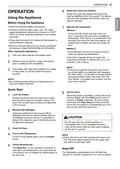
- Page 27: Operation Select the cycle and options that best fit the load by referring to the Cycle guide. The display will show the estimated time for the cycle and options selected. Before using the appliance, read the important safety instructions. Connect to the hot water supply only. The water supply temperature should be a minimum of 120°F (49°C) for better washing performance and shorter cycle time. Press the Start button and then close the door in less than four seconds to operate the dishwasher. Remove insoluble items such as bones, toothpicks, and pieces of paper while loading the dishwasher. When loading the dishwasher, only load items that are dishwasher-safe. If the door is opened during the cycle, the dishwasher will stop. When the cycle is complete, a chime will sound and the display will show End until the door is opened or Power is pressed. Using the guidelines in this manual, fill the detergent cup with the recommended amount of detergent and close the lid. The Rinse Aid icon will flash if the level of rinse aid in the dishwasher is low.
- Page 28: Control Panel Power - Press the Power button to turn power on and off. - The Control Lock feature helps prevent settings from being changed during a cycle. - This feature locks all of the buttons, except for the Power button, on the control panel. - After the cycle is complete, the power automatically turns off for safety and economy. - To start a new cycle, deactivate Control Lock. Cancel - The drain pump activates and the cycle cancels. - Once the dishwasher finishes draining, the power turns off. Display - The digital display shows the estimated cycle time. - During operation, the display shows the remaining estimated operating time. - If the Start button is not pressed to start the cycle, an alert will sound. Chime On/Off - To activate or deactivate the button sounds, press and hold Dual Zone and Energy Saver simultaneously for three seconds. - The error alert sound cannot be turned off.
- Page 29: Operation Download Cycle Use a dedicated cycle downloadable via Wi-Fi or NFC. Select your desired cycle. Only the cycle code for the current Download cycle appears on the appliance. This cycle senses the soil amount and soil toughness and is optimized to achieve the best cleaning. Heavy cycle is for heavily soiled dishes and defaults to the strongest spray intensity. Machine Clean cycle is for cleaning the inside of the dishwasher without dishes. Use the Delicate cycle to clean delicate items such as fine china and stemware. Normal cycle is for moderately soiled, everyday loads. Rinse cycle is a quick rinse for dishes that will not be washed immediately. Turbo cycle will clean heavily soiled dishes in an hour using slightly more energy and water.
- Page 30: Operation High Temp raises the main wash temperature to improve cleaning. Options allow selection of desired cycle buttons and additional options. Extra Dry enhances drying performance by adding extra drying time and raising rinse temperature. Dual Zone sets spray intensity to soft for the upper spray arm and strong for the lower spray arm. Night Dry runs the ventilation fan periodically to vent steam from the tub. Half Load allows washing intensively by selecting either the upper or lower racks for small loads. Energy Saver reduces wash and rinse temperatures to save energy, increasing wash time for performance. Delay Start delays the start of a selected cycle, adjustable from 1 to 12 hours in one-hour increments.
- Page 31: Operation Cycle/Option Guide The cycle guide shows the available options for each cycle. Water usage varies depending on soil level and hardness of water. The actual running time and cycle time displayed may change depending on options chosen. Energy Saver cannot be used at the same time as Extra Dry or High Temp. Extra drying time only, no added high-temperature rinse. Options are not available for Download Cycle.
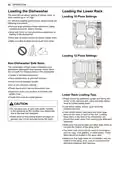
- Page 32: Operation Loading the dishwasher The extra tall tub allows loading of dishes, pans, or other utensils up to 14 high. For effective washing performance, always follow the instructions. Remove large particles of food debris from plates before loading. Items with burnt on food should be soaked prior to loading in the dishwasher. The combination of high water temperature and dishwasher detergents may damage certain items. Do not wash copper or anodised aluminium, hand painted silver or gold leaf crockery, wood or bone handled utensils, iron or non rust proof utensils, and plastic items which are not dishwasher safe. Load dinner plates, dishes, and soup bowls between the tines. Do not place pots or pans with plastic handles in the appliance. Make sure that pot handles and other large items do not stop the rotation of the spray arms. The lower rack should not be used for small items such as cups, wine glasses, or small plates.
- Page 33: Operation Loading pots & bowls Folding down the lower tines Fold tines down to fit larger dishes; pull tines back up to fit smaller dishes. The silverware basket ships installed at the back of the bottom rack. For best performance, install it along the right side as shown. Loading dishes & pots
- Page 34: Operation Silverware loading tips: - For best cleaning results, use the top separators in the basket when loading silverware to prevent nesting. Loading the silverware basket: - The silverware basket has separators to avoid scratching and tarnishing of delicate silverware. - Load sharp items, such as knives, pointing down. - When unloading the dishwasher, start with the silverware basket to prevent water droplets from falling on your silverware from the upper rack. Warning: - Be careful when loading and unloading sharp items. Load sharp knives with the handles up to reduce the risk of personal injury.
- Page 35: Upper rack loading tips: Place cups and glasses in the rows between the rack tines to avoid breakage and water spots. To avoid chipping, do not let stemware touch other items. Place items so that the open end faces down for cleaning and drying. Do not stack items on top of each other. Use the upper rack for small or delicate items such as small plates, cups, saucers, glasses, and dishwasher-safe plastic items. Cups, glasses, and bowls must be positioned upside down. Make sure items do not interfere with the rotation of the spray arms above and below the upper rack. When loading larger items in the upper rack, it may be necessary to remove the cutlery rack if one is present.
- Page 36: Operation Folding down the upper tines allows for fitting larger dishes and pulling tines back up for smaller dishes. The upper rack is height adjustable, allowing items up to 14” tall in the lower rack when raised. Lowering the upper rack allows dishes up to 12” tall in the upper rack when lowered. The dishwasher ships with the upper rack raised. There are three available positions for adjusting the height of the upper rack. To lower the rack, hold it at the center of each side and push the button on each side. To raise the rack, lift it at the center of each side until it locks into place in the upper position. It is not necessary to lift the lock levers to raise the rack.
- Page 37: Operation Warning Before adjusting, ensure the rack is empty of all dishes. Otherwise dishes may get damaged or you may get injured. Note Raise the upper rack without pushing the buttons on each side. Pushing the buttons when raising the rack will prevent the rack from locking into position. To set the rack to the middle position, it may be easier to lower the rack all the way down and then raise each side of the rack individually until it clicks into place. Before pushing the upper rack into the dishwasher, ensure the rack height is the same on both sides. If the height is not the same on both sides, the dishwasher door will not shut and the upper spray arm will not connect to the water inlet. There is a 24 5/8 inches (56 mm) gain in height when the upper rack is moved to the lower position. After adjusting the rack levels, check that the spray arms are free to rotate. With the lower position of the upper rack, check if the bottom part of the upper rack including spray arm is not disturbing items on the lower rack. When the upper rack is in the lower position, push in the upper rack first, and the lower rack later. Pull out the lower rack first, and the upper rack later.
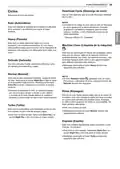
- Page 38: Operation Adding cleaning agents Warning Adding detergent to the dispenser Remove the label on the dispenser prior to running the dishwasher for the first time. Dishwasher detergent and rinse aid contain chemical components, so they must be kept out of the reach of children. The amount of detergent needed depends on the cycle, load size, and soil level of dishes. Use only detergent intended for dishwashers to avoid excessive suds and potential leaks. Add dishwashing detergent to the main wash compartment until the level is between the lines marked 15 and 25. After completion of the wash program, check whether the detergent was completely washed out. Too much detergent can leave a film on dishes and in the dishwasher, resulting in poor wash performance. Using liquid rinse aid improves drying performance by allowing water to drain off of dishes after the final rinse. Do not use detergent tablets for shorter wash cycles, as they may not dissolve completely. Using a wash booster helps remove spots, residue, and the white film caused by hard water.
- Page 39: Adding rinse aid to the dispenser is essential for optimal performance. The rinse aid indicator appears when more rinse aid is needed. The dispenser has five adjustment levels, factory set at level 2. Rinse aid prevents water spots on dishes and enhances drying performance. Ensure the appliance is off before adding rinse aid. To check the current setting, press Dual Zone and Power simultaneously. Press Delay Start to change the rinse aid dispenser setting from L0 to L4. Save the desired setting by pressing Start. Add liquid rinse aid to the maximum fill level, avoiding overfilling to prevent air bubbles. Adjust the setting higher for hard water to prevent calcium buildup. A low setting contributes to spotting and poor drying performance, while a high setting can cause foaming. The rinse aid icon flashes when more rinse aid is needed, except when set to L0. Only use liquid rinse aid and wipe off any spills around the dispenser.
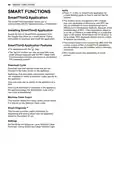
- Page 40: Smart functions The SmartThinQ application allows you to communicate with the appliance using a smartphone. The location of the smartphone’s NFC module may vary depending on the phone. NFC use may be restricted on some smartphones due to differences in transmission methods. The content found in this manual may differ from the current version of the LG SmartThinQ application. Download new and special cycles that are not included in the basic cycles on the appliance. Only one cycle can be stored on the appliance at a time. This function shows how many cycles remain before it is time to run the Machine Clean cycle. Smart Diagnosis™ provides useful information for diagnosing and solving issues with the appliance. Set the Rinse Aid Dispenser Level, Machine Clean Reminder, Chime On/Off, and Clean Indicator Light.
- Page 41: Smart functions SmartThinQ Smart Diagnosis™ Smart Diagnosis™ function allows appliances to transmit data to the LG Customer Information Center via telephone. NFC or Wi-Fi equipped models can transmit data to a smartphone using the LG SmartThinQ application. Use the Smart Diagnosis feature in the SmartThinQ application for help diagnosing issues without assistance. Smart Diagnosis™ cannot be activated unless the appliance can be turned on using the Power button. For appliances with the logo, you can speak directly to trained specialists for analysis and diagnosis. Follow specific instructions to perform a Smart Diagnosis using your smartphone. For best results, do not move the phone while tones are being transmitted. Bad call quality may result in poor data transmission, causing Smart Diagnosis™ to malfunction.
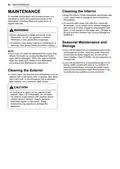
- Page 42: Maintenance Clean the interior of the dishwasher periodically with a soft, damp cloth or sponge to remove food and dirt particles. To maintain performance and prevent trouble, it is important to check the outside and inside of the dishwasher, including filters and spray arms, at regular intervals. To remove white spots and odor from inside the dishwasher, run an empty cycle with one cup of white vinegar in a dishwasher safe glass or bowl placed on the upper rack. When cleaning the outside and inside of the dishwasher, do not use benzene or thinner to avoid fire or explosion. To prevent injury during care and maintenance or cleaning, wear gloves and/or protective clothing. If you will be absent for an extended period of time during warmer months, close the water valve and disconnect the power supply line. If you have not used the dishwasher for a long time, refresh the inside by running the Machine Clean cycle without detergent. If you will be absent for an extended period of time during colder months, winterize the water supply lines and the dishwasher itself. In most cases, the exterior of the dishwasher can be cleaned with a soft damp cloth or sponge. If cooking oil is spilled on the exterior of the product, wipe it off immediately and avoid using cleaners that may damage the appliance.
- Page 43: Maintenance Check the drain air gap or in-sink disposal if the dishwasher is not draining well. Turn off the dishwasher. Remove the air gap cover and the plastic cap underneath it. Clean out any debris with a toothpick or brush. Replace the plastic cap and air gap cover. The drain air gap and disposal are external plumbing devices that are not part of the dishwasher. The warranty provided with the dishwasher does not cover service costs directly associated with the cleaning or repair of the external drain air gap and disposal.
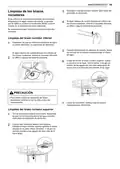
- Page 44: Maintenance Cleaning the filters Warning Be cautious of sharp edges when handling the stainless steel filter. Caution Remove food residue caught in filters to prevent the build-up of odor-causing bacteria and possible drainage problems. Note For best wash performance, clean the filter after each load. In areas with hard water, clean the filter at least once a month with a soft brush. Clean the filters using non-abrasive materials and warm running water. Make sure the filter is assembled correctly before starting a cycle. Recommended filter cleaning schedule.
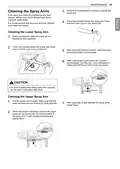
- Page 45: Maintenance Remove food particles by rinsing or shaking the spray arm. If the spray arm holes are blocked by any food residue, dishes may not be cleaned well due to improper water spray. It is recommended that the spray arms be cleaned once every two weeks. Make sure that the water jet holes are not blocked by food particles. After removing the food residue, clean the spray arms holes under running water. After cleaning the upper spray arm, press it up into place. To avoid breaking the rolling spray arm sections, do not pull or manually rotate them. When cleaning is necessary, remove the upper spray arm by turning the nut on the bottom of the spray arm. After assembly, check whether the spray arms rotate freely.
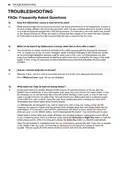
- Page 46: Troubleshooting FAQs: Frequently Asked Questions Rinse aid is strongly recommended to enhance the drying performance of the dishwasher. If a rinse aid is not used, water may remain on the dishes and the tub. The cloudy film on dishes is usually caused by minerals in the water reacting with the dishwasher detergent. Adding an extra rinse to the cycle aids in rinsing the film away. To remove white film on the tub, measure 3 tbsp. of citric acid powder and run a Machine Clean cycle without detergent. Drying performance is affected by the amount of heat that remains in the tub after the heated rinse. Using the High Temp setting aids in keeping the inner drum temperature hotter before drying begins. Adjust the amount of rinse aid used if performance needs a boost. Select the Extra Dry or Night Dry option for better drying results with plastic items. Allow the dishwasher to completely finish the dry cycle before opening the door to prevent dishes from remaining wet.
- Page 47: Troubleshooting What is the hybrid drying system? The dishwasher relies on the heat retained by the dishes and the tub during the wash and rinse cycles to turn moisture into humidity. Rinse aid is required to enhance the drying performance. Why am I hearing a whistling sound from the dishwasher? A whistling noise can be heard when water is drawn into the dishwasher, which is normal. What kinds of dishes can be placed in the dishwasher? Ensure that the dishes are dishwasher safe; plastic dishware may require hand drying. Can I perform a drain only cycle? To drain standing water, press and hold Start for three seconds until the cycle stops. Why does my dishwasher continuously chime if I open the door during a cycle? The chiming indicates that the interior temperatures are hot, and caution is advised.
- Page 48: Troubleshooting Control Lock is a feature that prevents the controls from being changed during the cycle. To activate or deactivate, press and hold Half Load and Energy Saver simultaneously for three seconds. If an extension drain hose is required, use 5/8 or 7/8 inside diameter, 2-3 ft. length hose and a coupler for connecting the two hose ends. The door must be closed within four seconds of pressing the Start button. If the door is not closed within four seconds, an LED flashes, an audible alert sounds, and the dishwasher does not operate. No, you don't need to pre-rinse the dishes before loading especially if using the Normal and Auto cycles. The dishwasher washes dishes clean without pre-rinsing. For further assistance, there are videos and tutorials available through the LG.com website. Select a product category and then pick a topic or search a keyword.
- Page 49: Troubleshooting Before calling for service, check the following if the appliance does not function properly. Possible causes and solutions include: - Ensure the start button is pressed. - Make sure the door is completely closed and latched. - Verify that the power supply or power supply line is connected properly. - Replace the blown fuse or reset the circuit breaker. - Deactivate the control lock if it is activated. - Check the water supply connection or water heater setting if the dishwasher operates too long. - Run the Cancel cycle option to remove residual water if the previous cycle was stopped. - Clean the filter and interior to eliminate odors. - Cycle with white vinegar if unwashed dishes have been left in the unit for a long time. - Adjust the drain hose if it is kinked or clogged.
- Page 50: Troubleshooting Combination of excessive detergent and hard water. Use less detergent and use a rinse aid to minimize the problem. Aluminum items rubbing dishes during cycle. Reposition the dishes. Cloudiness on glassware. Black or gray marks on dishes. Yellow or brown film on inside surfaces of dishwasher. Coffee or tea stains. Eliminate the stain by using a stain removal product. Low water temperature. Water supply should be at least 120 °F for best wash performance. Overloading. Do not overload the dishwasher. Improper loading. See the Operation section. Insufficient water pressure. Water pressure should be between 20 and 80 psi.
- Page 51: Troubleshooting Bumping into or touching the control panel during operation may result in a disabled button sound. Only the Power, Start, and Control Lock buttons are enabled during operation. Dishwasher chimes if the panel is touched during operation. Button sounds can be turned off by pressing and holding Half Load for three seconds. If the door is opened during a cycle, the Start key must be pressed within 4 minutes or the machine turns off and all settings are lost. Verify the unit is level from side to side and from front to back. If excessive sudsing is causing the leak, allow the foam to subside for 24 hours then clean the inside of the tub with milk. This is not an error code. This code indicates the current Download cycle. This is not an error code. This code is used when testing the dishwasher. Power the unit off and on and the code will disappear. This is not an error code. This code indicates the current rinse aid level. This is not an error code. This code indicates that the control lock is activated. Press and hold Half Load and Energy Saver simultaneously for three seconds.
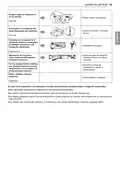
- Page 52: Troubleshooting Error Codes Water inlet problem. Check for a clogged, kinked or frozen water inlet hose. Check water supply. Drainage problem. Check for a clogged, kinked or frozen water drain hose. Air gap or disposal is clogged. Clean air gap or disposal. Filters are clogged. Clean filters. Oversudsing caused by improper detergent. Do not use hand dishwashing liquids. Only use detergents designed for use in automatic dishwashers. Failure to level dishwasher. Make sure that the appliance is properly leveled. Water leakage. Turn off the water supply to the dishwasher and call an LG Electronics Customer Information Center. Excessive water supplied. Please call an LG Electronics Customer Information Center. Heater circuit failure. Please call an LG Electronics Customer Information Center. Motor trouble. Please call an LG Electronics Customer Information Center.
- Page 53: Limited warranty for USA includes an arbitration provision requiring binding arbitration for disputes. LG will repair or replace the dishwasher if it fails due to defects in materials or workmanship during the warranty period. This warranty is valid only for the original retail purchaser and requires proof of purchase for service. The warranty period is one year for general defects, five years for the main control board and racks, and ten years for the direct drive motor. Customers are responsible for labor or in-home service to replace defective parts. Replacement products and parts are warranted for the remaining portion of the original warranty period or ninety days, whichever is greater. The warranty excludes service trips for delivery, installation, or instruction, and does not cover damages from power failures or inadequate service. It also does not cover damage from environmental factors, accidents, or unauthorized modifications. This warranty is in lieu of any other express or implied warranties, including merchantability or fitness for a particular purpose. Specific legal rights may vary from state to state.
- Page 54: Limited warranty Damage or failure caused by incorrect electrical current, voltage, or plumbing codes, commercial or industrial use, or use of accessories, components, or consumable cleaning products that are not approved by LG. Damage caused by transportation and handling, including scratches, dents, chips, and/or other damage to the finish of your product. Products with original serial numbers that have been removed, altered, or cannot be readily determined. Repairs when your product is used for other than normal and usual household use. Poor wash results caused by debris remaining in the filter. Make certain that no dishes or utensils are in the path of the spray arms. Poor drying results caused by lack of rinse aid. Use rinse aid or combination detergent. Water is not supplied because the water tap is not turned on. Not draining because drain hose is kinked.
- Page 55: Limited warranty The knockout plug in the garbage disposal is not removed. Remove the plug on the disposal. OE error: The disposal or air gap is blocked by debris. Clean the disposal or the air gap. OE error: Inlet valve and drain hose connection problem caused by improper installation. Reinstall the hose. External leakage: Door movement or closing compromised by incorrect leveling. Adjust the lower front leveling legs to the required height. No power due to loose connection of power supply line or electrical outlet problem. Reconnect the power supply line or repair the electrical outlet.
- Page 56: Limited warranty Procedure for resolving disputes All disputes between you and LG arising out of or relating in any way to this limited warranty or the product shall be resolved exclusively through binding arbitration. Definitions: References to “LG” mean LG Electronics U.S.A., Inc., its parents, subsidiaries and affiliates. Notice of dispute: You must notify LG in writing at least 30 days in advance of initiating arbitration. Agreement to binding arbitration and class action waiver: You and LG agree to resolve any claims only by binding arbitration on an individual basis. Arbitration rules and procedures: The arbitration will be administered by the American Arbitration Association. Governing law: The law of the state of your residence shall govern this limited warranty and any disputes. Fees/costs: You do not need to pay any fee to begin an arbitration. LG will promptly pay all arbitration filing fees to the AAA unless you seek more than $25,000 in damages.
- Page 57: Limited warranty Hearings and location. If your claim is for $25,000 or less, you may choose to have the arbitration conducted solely on the basis of documents submitted to the arbitrator, through a telephonic hearing, or by an in-person hearing as established by the AAA Rules. Opt out. You may opt out of this dispute resolution procedure. If you opt out, neither you nor LG can require the other to participate in an arbitration proceeding. To opt out, you must send notice to LG no later than 30 calendar days from the date of the first consumer purchaser’s purchase of the product. You must include in the opt out e-mail or provide by telephone your name and address, the date on which the product was purchased, the product model name or model number, and the serial number. You may only opt out of the dispute resolution procedure in the manner described above; no other form of notice will be effective to opt out. Opting out of this dispute resolution procedure will not affect the coverage of the Limited Warranty in any way.
- Page 58: Page 58
- Page 59: Lea detenidamente el manual del propietario antes de poner el electrodoméstico en funcionamiento y consérvelo a mano en todo momento para su referencia.
- Page 60: Tabla de contenidos Características del producto Funciones inteligentes Aplicación SmartThinQ Función Smart Diagnosis™ Instrucciones de seguridad Instrucciones importantes de seguridad Mantenimiento Limpieza del exterior Limpieza del interior Descripción general del producto
- Page 61: Características del producto Sistema QuadWash™: Los brazos rociadores inferiores Multi-Motion esparcen el agua en diferentes direcciones y en intensidades optimizadas para llegar a cada zona de la cuba. Motor inversor Direct Drive: La experiencia de LG en tecnología de motores resulta en una funcionalidad extraordinaria con características avanzadas, como la opción Dual Zone y un funcionamiento silencioso. EasyRack Plus: Este sistema de alturas de bandejas y juntas separadoras ajustables es fácil de usar y brinda más flexibilidad y versatilidad al cargar vajilla de varias formas y tamaños. Sistema de secado híbrido: Este eficiente sistema de secado no usa un elemento calentador durante el proceso de secado, lo que resulta en una eficiencia superior en el consumo de energía. SmartThinQ™: Descargue la nueva aplicación de LG para teléfonos inteligentes para configurar opciones, autodiagnosticar y resolver problemas del artefacto.
- Page 62: Instrucciones de seguridad Lea todas las instrucciones antes de utilizar. Su seguridad y la de los demás son muy importantes. Siempre debe leer y respetar todos los mensajes de seguridad. Este es el símbolo de alerta de seguridad. El símbolo de alerta de seguridad siempre estará acompañado de las palabras ADVERTENCIA o PRECAUCIÓN. ADVERTENCIA: Podría sufrir lesiones graves o la muerte si no sigue las instrucciones. PRECAUCIÓN: Podría sufrir lesiones leves o dañar el producto si no sigue las instrucciones. Instrucciones importantes de seguridad. Para disminuir el riesgo de explosiones, incendios, descargas eléctricas, quemaduras, lesiones o muerte, siga las precauciones básicas.
- Page 63: Instrucciones de seguridad Almacene e instale el artefacto donde no esté expuesto a temperaturas bajo cero ni a la intemperie. Debe posicionar este artefacto cerca de una fuente de suministro eléctrico. En ninguna circunstancia debe cortar o quitar la tercera clavija (tierra) de la línea de alimentación. No instale el artefacto en lugares húmedos. Destruya el cartón, la bolsa de plástico y los demás materiales de empaque luego de desempacar el artefacto. Nunca intente operar este artefacto si se encuentra dañado, si no funciona correctamente, o si tiene piezas faltantes o rotas. Cumpla con todos los procedimientos de seguridad del sector recomendados, incluido el uso de guantes de manga larga y gafas de seguridad. Use mangueras nuevas cuando conecte el aparato al suministro de agua. No dañe la línea de alimentación del artefacto ni coloque objetos pesados sobre él. Repare o reemplace de inmediato todas las líneas de alimentación deshilachados o dañados de otra forma.
- Page 64: Instrucciones de seguridad No permita que los niños jueguen con el artefacto. Es necesario supervisar atentamente a los niños cuando el artefacto esté en funcionamiento cerca de ellos. En el caso de que se produzca una fuga de gas, no ponga en funcionamiento este artefacto ni ningún otro. Abra una puerta o una ventana para ventilar el área de inmediato. Bajo ciertas condiciones, podría producirse gas hidrógeno en un sistema de agua caliente que no ha sido utilizado por dos semanas o más. El gas hidrógeno es explosivo. Solo use detergentes y agentes de enjuague recomendados para lavavajillas. Mantenga dichos productos fuera del alcance de los niños. No lave artículos de plástico a menos que contengan la indicación de que son seguros para lavar con lavavajillas. No toque el elemento calentador durante el uso o inmediatamente después. No ponga en funcionamiento el lavavajillas a menos que todos los paneles del cerramiento estén en el lugar adecuado. No abra la puerta durante la operación. Por motivos de seguridad, la bomba de purga opera si la puerta está abierta. No instale ni almacene el lavavajillas en lugares expuestos a la intemperie. No lave vajilla que haya estado expuesta a gasolina, solventes u otros materiales inflamables.
- Page 65: Instrucciones de seguridad Mantenimiento No repare ni reemplace ninguna pieza del artefacto. Todas las reparaciones y el servicio de mantenimiento deben ser realizados por un miembro del personal de servicio calificado. No desarme ni repare el artefacto por su cuenta. Desconecte el artefacto del suministro eléctrico antes de limpiarlo o realizar cualquier tipo de mantenimiento. Quite la puerta antes de sacar de servicio o desechar el artefacto para evitar el riesgo de que niños o animales pequeños queden atrapados adentro. Instrucciones de conexión a tierra Este artefacto debe estar conectado a un sistema permanente de cableado de metal con descarga a tierra. Conecte el cable a tierra al conector a tierra de color verde en la caja de conexiones eléctricas. Riesgo de vuelco No use el lavavajillas hasta que esté instalado por completo. El incumplimiento de estas instrucciones podría causar heridas o cortes graves. Guarde estas instrucciones.
- Page 66: Instrucciones de seguridad Precaución Para reducir el riesgo de lesiones leves a las personas, así como de mal funcionamiento del producto o de que el artefacto resulte dañado, siga las precauciones básicas. Instalación Instale el producto sobre un piso firme y nivelado. El lavavajillas debe estar conectado a un suministro de agua caliente con un rango de temperatura entre 120 °F (49 °C) y 149 °F (65 °C). No coloque la manguera de desagüe debajo del lavavajillas durante la instalación. Funcionamiento No coloque ningún objeto encima del artefacto. Cierre las llaves de agua y desconecte el artefacto si este no será usado por un periodo de tiempo prolongado. No almacene ni vierta limpiadores ni detergentes líquidos encima del artefacto. Mantenimiento En caso de derramar aceite de cocina en el exterior del producto, límpielo de inmediato.
- Page 67: Descripción general del producto Piezas exteriores Panel de control y manija de la puerta Cubierta frontal Cubierta inferior Soporte de embalaje Cubierta de seguridad SignaLight™ (en algunos modelos) Base Patas de nivelación No retire la cubierta de seguridad en ningún momento. Para garantizar la fiabilidad, cada lavavajillas se somete a un extenso control de calidad antes de salir de fábrica. Puede encontrar gotas de agua o manchas de agua como resultado de este proceso en su nuevo lavavajillas. Los modelos con control superior cuentan con tres indicadores LED centrados en la parte superior de la cubierta frontal. Roja: Error (consulte los códigos de error en la sección Resolución de problemas). Blanca (fija): Funcionamiento normal. Blanca (parpadea): El ciclo se ha pausado. Verde: El ciclo finalizó normalmente. La configuración predeterminada de “ON” mantiene la luz verde encendida hasta que se abre la puerta.
- Page 68: Descripción general del producto Piezas interiores Rotor superior de lavado Brazo rociador superior Brazo rociador inferior Sistema de filtrado Dispensador de detergente y abrillantador Cubierta de ventilación de secado Cesto para cubiertos Nota Retire todos los materiales de empaque del exterior y el interior del lavavajillas antes de instalar el artefacto.
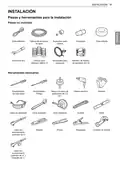
- Page 69: Instalación Piezas y herramientas para la instalación Piezas no incluidas Cable eléctrico Tubería de suministro de agua Accesorios para tubería Herramientas necesarias Destornillador de hoja plana Cinta medidora Cortador de tubería
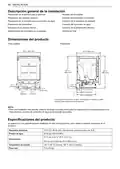
- Page 70: Instalación Descripción general de la instalación Preparación de la abertura para el gabinete Preparación del cableado eléctrico Nivelado del lavavajillas Sujeción del lavavajillas al mostrador Conexión de la manguera de desagüe Conexión del suministro de agua Conexión de la alimentación eléctrica Verificación final Especificaciones del producto Requisitos eléctricos Dimensiones Temperatura de entrada Peso neto
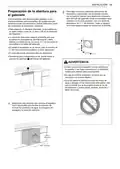
- Page 71: Instalación Preparación de la abertura para el gabinete Este lavavajillas está diseñado para ajustarse a una abertura estándar para lavavajillas. Es posible que sea necesario hacer una abertura en ambos lados para pasar las conexiones de fontanería y eléctricas. Para asegurar un desagüe adecuado, el lavavajillas no se debe instalar a más de 12 pies (3.65 m) de distancia del fregadero. La ubicación debe tener espacio suficiente para que la puerta del lavavajillas se abra fácilmente y debe dejarse una distancia de, al menos, 0.1” (2 mm) entre el lavavajillas y los lados del gabinete. Si instala el lavavajillas en un rincón, deje un mínimo de 2” (50 mm) entre el lavavajillas y el muro adyacente. El muro adyacente debe estar libre de obstáculos. El daño durante la instalación no está cubierto por la garantía, y las fugas causadas por la instalación inadecuada podrían dañar la propiedad. No use los orificios existentes, a menos que se encuentren en el área objetivo. Si no se realiza la perforación para las líneas de agua y desagüe en las ubicaciones adecuadas, esto podría impedir que el lavavajillas quede al ras de los gabinetes y podría plegar, aplastar, tensionar o dañar las líneas.
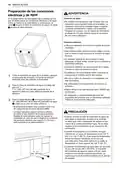
- Page 72: Instalación Preparación de las conexiones Advertencia En la parte inferior del lavavajillas hay 2 canales por los que se deben pasar las conexiones eléctricas y de agua. No reutilice una manguera vieja. Emplee solo una manguera nueva cuando instale el lavavajillas. Utilice un interruptor de corriente o fusible de acción retardada. Este artefacto debe operarse con el voltaje correcto, que se indica en este manual y en la placa de datos técnicos. Corte el suministro de agua de la vivienda y apague el interruptor de corriente o la fuente de energía dedicada antes de conectar el lavavajillas. No use un cable de extensión ni un adaptador con este lavavajillas. Cuando conecte la línea de suministro de agua del lavavajillas al suministro de agua de la vivienda, se debe usar cinta o compuesto de sellado en las roscas de la tubería para evitar fugas. Conecte el lavavajillas a un suministro de agua caliente con un rango de temperatura entre 120 °F (49 °C) y 149 °F (65 °C). La presión del suministro de agua debe ser de entre 20 psi y 80 psi (de 140 a 550 kPa).
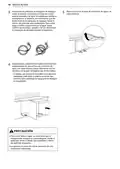
- Page 73: Instalación Abrazadera de envío removible La abrazadera de envío trasera puede ser removida, si es necesario más espacio libre, al instalar el lavaplatos debajo de un mostrador bajo. Preparación del lavavajillas Advertencia No retire la cubierta de seguridad. Si lo hace, puede ocasionar incendios, descargas eléctricas o la muerte. Para soltar la manguera de desagüe Retire la atadura que sujeta la manguera de desagüe a la parte posterior de la abrazadera de envío. Extracción de la cubierta inferior Retire los tornillos ubicados a ambos lados que sujetan la cubierta inferior al lavavajillas. Retire la cubierta inferior. Si hubiera material aislante detrás de la cubierta inferior, retírelo. Reserve las piezas hasta que se complete la instalación. Precaución Si recuesta el lavaplatos por la parte trasera, hágalo con precaución de no dañar la manguera de drenaje y la cuba.
- Page 74: Instalación Retiro de los materiales de empaque del interior Colocación de los soportes de instalación Utilice los soportes de instalación metálicos suministrados para mostradores de madera. Retire todos los materiales de empaque del interior del lavavajillas antes de instalarlo. Para mostradores de granito o mármol, utilice tornillos para madera. Consulte las instrucciones de instalación en la sección Sujeción del lavavajillas. Los soportes de instalación y los tornillos se pueden encontrar en el cesto para cubiertos. Inserte el extremo con lengüeta de los soportes de instalación en las ranuras del bastidor superior. Gire los soportes hasta que los extremos con lengüeta queden hacia arriba. Doble las lengüetas de los soportes con un par de pinzas de punta para fijarlos al bastidor.
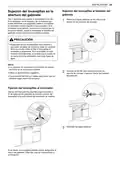
- Page 75: Instalación Abra la puerta y sujete el bastidor del cuerpo del lavavajillas en la abertura del gabinete. No tire ni levante el lavavajillas usando la manija; hacerlo podría dañar la puerta y las bisagras. Alinee el lavavajillas con la abertura. Asegúrese de que la línea de suministro de agua y el cable eléctrico estén en la posición correcta. No empuje la puerta del lavavajillas con las rodillas cuando lo deslice en su lugar. Suavice o acolche los bordes del orificio taladrado para el paso de la línea de suministro de agua. No empuje la parte superior del lavavajillas; hacerlo podría dañar el interior del artefacto.
- Page 76: Instalación Asegúrese de enderezar la manguera de desagüe antes de insertar su extremo a través del orificio. Retire la cinta de la línea de suministro de agua y el cable eléctrico. Es conveniente que tire lentamente de la manguera de desagüe desde el interior del gabinete para enderezarla. Para evitar fugas o daños ocasionados por el agua, tenga cuidado de no plegar, aplastar o tensar demasiado la manguera de desagüe durante la instalación. Asegúrese de que la línea de suministro de agua y el cable eléctrico pasan libremente por los canales y no quedan atrapados bajo el lavavajillas. Deténgase cada tanto para enderezar la manguera de desagüe en el gabinete. Para evitar fallas o fugas, es importante que la manguera de desagüe no quede plegada, tirante ni aplastada. La garantía no cubre los daños derivados de una instalación inadecuada.
- Page 77: Instalación Conexión de la línea de suministro de agua y energía eléctrica La mejor ubicación para el conducto eléctrico es sobre el lado derecho de la pared posterior. Con el suministro de agua de la vivienda cerrado, conecte la línea de suministro de agua a la válvula de entrada en la parte delantera izquierda del lavavajillas. No se debe utilizar cinta ni compuesto en la válvula de entrada del lavavajillas. El lavavajillas debe tener un circuito con la debida conexión a tierra para conectar la configuración de 3 cables que incluye el cable a tierra. Si se usa una línea de alimentación de 3 clavijas, debe estar en un lugar accesible adyacente al lavavajillas.
- Page 78: Instalación Inserte el aliviador de tensión de la caja de empalmes. Haga coincidir los cables blanco, negro y verde con los cables de los colores correspondientes del lavavajillas. Gire las tuercas para cables suministradas y apriételas firmemente para conectar los cables correspondientes. Inserte el cable eléctrico a través del orificio del aliviador de tensión. Ajuste los 2 tornillos para asegurarlo. Envuelva cada conexión con cinta aislante. Tire de los cables existentes a través de las aberturas de la caja de empalmes. Ajuste los 2 tornillos para volver a ensamblar la caja de empalmes en el artefacto. Pliegue los cables conectados, introdúzcalos nuevamente dentro de la caja de empalmes y atornille la cubierta de la caja. Verifique que el cable negro esté caliente (120 V).
- Page 79: Instalación Conexión al triturador sin trampa de aire La altura del extremo de la manguera de desagüe debe ser, como mínimo, de 12” (305 mm) y no debe superar las 40” (1016 mm) desde la base del lavavajillas. Si el extremo de la manguera de desagüe no se adapta a la línea de desagüe, use un adaptador resistente al calor y al detergente. Extraiga el tapón ciego del triturador con un martillo y un destornillador. Para la instalación de la manguera de desagüe, use la abrazadera para manguera con tornillo incluida en el cesto para cubiertos de este lavavajillas. Cumpla los códigos y las ordenanzas locales. La distancia al desagüe no debe superar los 12 pies (3.65 m). No conecte mangueras de desagüe de otros artefactos a la manguera de desagüe del lavavajillas. Si es necesario utilizar una extensión en la manguera de desagüe, use una manguera de diámetro interior de 5/8” o 7/8” y de 2 a 3 pies de longitud. Si no se ha extraído el tapón ciego, el lavavajillas no podrá desagotar correctamente.
- Page 80: Instalación Sujete la manguera de desagüe al triturador con la abrazadera para manguera suministrada. La altura del extremo de la manguera de desagüe debe ser, como mínimo, de 12” (305 mm) y no debe superar las 40” (1016 mm) desde la base del lavavajillas para evitar que el agua haga sifón desde la cuba. Extraiga el tapón ciego con un martillo y un destornillador. Conecte el extremo de la manguera de desagüe a la trampa de aire con la abrazadera para manguera suministrada. Esto impide que el agua haga sifón desde la cuba. Si no está conectado, acople el conector de la manguera de caucho a la pieza en T para desechos o al triturador con una abrazadera para manguera. Si no se ha extraído el tapón ciego, el lavavajillas no podrá desagotar correctamente.
- Page 81: Instalación Coloque un nivel en la pared interior de la cuba para verificar que el lavavajillas esté nivelado de lado a lado. Verifique que el lavavajillas esté nivelado y ajuste las patas de nivelación si es necesario. Si no tiene un nivel, puede utilizar una aplicación de nivel de un teléfono inteligente. Si el lavavajillas no está bien nivelado, pueden producirse fugas, problemas para cerrar la puerta o ruidos. El lavavajillas debe nivelarse y alinearse cuidadosamente para que se apoye completamente en las 3 patas de nivelación. Asegúrese de que el espacio entre las paredes de la cuba y el revestimiento de la puerta sea el mismo de cada lado. Para verificar que la cuba esté nivelada de adelante hacia atrás, retire la bandeja inferior y vierta 169 oz. (5 L) de agua en el fondo de la cuba. El nivel del agua debe quedar cerca del centro de las dos muescas inferiores que presenta la cuba en la parte delantera.
- Page 82: Instalación Ajuste de la pata de nivelación trasera Use un destornillador Phillips para ajustar la pata de nivelación trasera y la parte posterior de la cuba. Ajuste según sea necesario hasta que el lavavajillas esté completamente nivelado. Haga girar el tornillo central en el sentido de las agujas del reloj para levantar la parte posterior de la cuba. Ajuste de las patas de nivelación delanteras Use un destornillador de punta plana para girar las patas de nivelación delanteras y ajustar la parte frontal de la cuba. Haga girar las patas de nivelación delanteras en el sentido de las agujas del reloj para levantar la parte frontal de la cuba. Los ajustes funcionan de la misma forma para ambas patas de nivelación. Para evitar producir daños en el tornillo, no utilice un destornillador eléctrico. Ajuste las patas de nivelación delanteras y traseras hasta que hagan contacto firme con el piso.
- Page 83: Instalación Sujeción del lavavajillas al bastidor del gabinete Hay 2 opciones para sujetar el lavavajillas en su sitio. Si el mostrador es de madera, sujete el lavavajillas al mostrador con los soportes proporcionados. Si el mostrador es de granito o mármol, sujete el lavavajillas al bastidor del gabinete con los tornillos para madera provistos. Asegúrese de que el lavavajillas esté nivelado y que todas las patas de nivelación estén en contacto firme con el piso antes de fijar el lavavajillas. Los soportes de instalación y los tornillos se pueden encontrar en el cesto para cubiertos. Cubra la boca del filtro con toallas para evitar que los tornillos caigan dentro de la bomba. Use los tornillos para los soportes proporcionados a fin de asegurar los soportes de la parte superior del lavavajillas a la parte inferior del mostrador de madera. Reinstale las tapas plásticas. El lavavajillas también puede asegurarse al marco del gabinete.
- Page 84: Instalación Verificación final de la instalación Solo instale la cubierta inferior suministrada con el lavavajillas. Verifique si el lavavajillas está instalado correctamente. Encienda el interruptor de corriente. Abra el suministro de agua de la vivienda. Asegúrese de que la puerta se abre y cierra suavemente. Consulte la siguiente tabla antes de solicitar servicio técnico. Error OE: La manguera de desagüe está plegada o presionada. Error IE: La línea de suministro de agua está plegada debajo del lavavajillas. Vuelva a colocar la cubierta inferior.
- Page 85: Seleccione el ciclo y las opciones que mejor se adapten a la carga. La pantalla mostrará el tiempo estimado para el ciclo y las opciones seleccionados. Lea las instrucciones importantes de seguridad. Conecte al suministro de agua caliente solamente. La temperatura del suministro de agua debería ser de un mínimo de 120 °F (49 °C) para un mejor lavado. Presione el botón de Inicio y luego cierre la puerta antes de que transcurran cuatro segundos. Siga las instrucciones para cargar el lavavajillas para asegurar una limpieza eficaz. No cargue utensilios que no sean resistentes al calor o que tengan decoraciones en metal. Cuando el ciclo haya finalizado, se emitirá un sonido y la pantalla mostrará End. No abra la puerta durante la operación ni inmediatamente después de que se haya completado el ciclo de lavado.
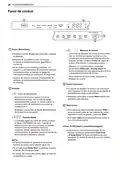
- Page 86: Panel de control Bloqueo de control ayuda a evitar que se cambien los ajustes durante un ciclo. La selección de esta función bloquea todos los botones, excepto el botón Power del panel de control. Presione el botón Power para encender y apagar el artefacto. Después de completar el ciclo, la energía se apaga automáticamente por seguridad y economía. Mantenga presionados Half Load y Energy Saver de forma simultánea por tres segundos para activar o desactivar Cerradura de Control. Si se produce una sobrecarga eléctrica, la energía se apaga de manera automática por cuestiones de seguridad. La bomba de desagüe se activa y se cancela el ciclo. Mantenga presionado el botón Start durante tres segundos para activarla. La pantalla digital del panel de control muestra el tiempo estimado del ciclo.
- Page 87: Download Cycle (Descarga de ciclo) Seleccione el ciclo que desee. Use un ciclo dedicado que se puede descargar mediante Wi-Fi o NFC. Este ciclo detecta la cantidad de suciedad y la dificultad de la suciedad y se optimiza para lograr la mejor limpieza. Ciclo por defecto: P1. Caserolas. Este ciclo se utiliza para lavar vajilla con mucha suciedad y con residuos endurecidos. Este ciclo es para limpiar el interior del lavavajillas. Use este ciclo para limpiar elementos delicados, como por ejemplo porcelana fina y copas. Este ciclo es para suciedad moderada, cargas de todos los días. Este es un ciclo rápido para la vajilla que no se lavará de inmediato. Este ciclo limpiará platos profundamente sucios en una hora usando un poco más de energía y agua.
- Page 88: High Temp (Alta temperatura) Eleva la temperatura de lavado principal para mejorar la limpieza. Extra Dry (Extra seco) Seleccione la opción Extra Dry para un mejor desempeño de secado. Esta opción agrega tiempo de secado extra al ciclo e incrementa la temperatura de enjuague caliente. Dual Zone (Zona dual) Esta opción automáticamente configura una intensidad de aspersión suave en el brazo rociador superior y fuerte en el brazo rociador inferior. Half Load (Media carga) Esta opción lava intensamente al seleccionar la bandeja superior o inferior. Para cargas pequeñas, use solo la bandeja superior o la inferior para ahorrar energía y tiempo. Night Dry (Secado nocturno) La opción de Secado nocturno hace que el ventilador funcione periódicamente para ayudar a ventilar el vapor de la cuba. Energy Saver (Ahorro de energía) Esta opción ahorra energía al reducir las temperaturas de lavado y enjuague. Delay Start (Inicio retardado) La función Delay Start retarda el inicio de un ciclo seleccionado. Cada vez que presione el botón Delay Start, el tiempo de retardo aumenta en una hora.
- Page 89: Funcionamiento Guía de ciclos y opciones La guía de ciclos muestra las opciones disponibles para cada ciclo. Ciclo automático, pesado, delicado, normal, turbo, exprés y enjuague. Uso de agua varía según el ciclo y el nivel de suciedad. Tiempo de lavado con opciones varía entre 12 y 214 minutos. Opciones disponibles incluyen ahorro de energía, alta temperatura, extra seco, secado nocturno y inicio retardado. El consumo real de agua variará según el nivel de suciedad y la dureza del agua. El tiempo actual de ejecución y el tiempo de ciclo pueden cambiar dependiendo de las opciones seleccionadas. El ahorro de energía no puede utilizarse simultáneamente con las opciones de extra seco o alta temperatura. No hay opciones disponibles para el ciclo de descarga.
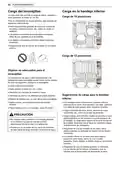
- Page 90: Carga del lavavajillas La cuba extra alta permite la carga de platos, sartenes u otros utensilios de hasta 14 de alto. Para un rendimiento de lavado efectivo, siga siempre las siguientes instrucciones. Retire las partículas grandes de restos de comida de los platos, incluidos huesos, etc., antes de cargar el artefacto. Las piezas con comida quemada deben remojarse antes de ser cargados en el lavavajillas. Los platos o recipientes profundos deben colocarse invertidos. Asegúrese de que las piezas de la vajilla no se toquen entre sí. La combinación de agua a altas temperaturas y de detergentes para lavavajillas puede dañar ciertos objetos. No lave los siguientes objetos en el lavavajillas: cobre o aluminio anodizado, vajilla pintada a mano con oro o plata, utensilios con mangos de madera o hueso, utensilios de hierro o de material que pueda oxidarse, objetos de plástico que no sean aptos para lavavajillas. Cargue placas para hornear, moldes de pasteles y otros objetos grandes en los laterales o la parte posterior de la bandeja. Asegúrese de que los objetos grandes no interfieran con la rotación de los brazos rociadores y que no impidan que el dispensador de detergente se abra.
- Page 91: Carga de ollas y tazones Plegado de las puntas separadoras inferiores Pliegue las puntas separadoras hacia abajo para acomodar la vajilla más grande; despliegue las puntas separadoras hacia arriba para acomodar la vajilla más pequeña. El cesto para cubiertos se encuentra instalado en la parte posterior del estante del fondo. Para un mejor desempeño, instálelo a lo largo del lado derecho, como se muestra en la figura. Carga de platos y ollas
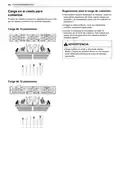
- Page 92: Funcionamiento Sugerencias para la carga de cubiertos El cesto de cubiertos cuenta con separadores para evitar que se raspen y manchen los cubiertos delicados. Para obtener mejores resultados de limpieza, utilice los separadores superiores del cesto cuando cargue los cubiertos. Cargue los objetos filosos, como por ejemplo los cuchillos, apuntando hacia abajo. Cuando se descarga el lavavajillas, lo mejor es comenzar por el cesto de cubiertos. Advertencia Tenga cuidado al cargar y descargar objetos filosos. Cargue los cuchillos filosos con los mangos hacia arriba para disminuir el riesgo de lesiones personales.
- Page 93: Sugerencias de carga para la bandeja superior. Coloque las tazas y los vasos en las filas entre las puntas separadoras. Colocarlos sobre las puntas separadoras puede ocasionar quebraduras y/o manchas de agua. Para evitar que se astillen, no permita que tengan contacto con otros objetos. Ubique los elementos de manera que los extremos abiertos queden orientados hacia abajo para facilitar su limpieza y secado. No apile los objetos. Se recomienda utilizar la bandeja superior para platos pequeños, tazas, platillos, vasos y objetos de plástico aptos para lavavajillas. Las tazas, los vasos y los tazones se deben orientar hacia abajo. Asegúrese de que los objetos no interfieran con la rotación de los brazos rociadores por arriba y por debajo de la bandeja superior. Al cargar objetos grandes en la bandeja superior, podría ser necesario extraer la bandeja para cubiertos.
- Page 94: Funcionamiento Plegado de las puntas separadoras superiores Bandeja superior con altura ajustable La bandeja superior se ajusta hacia arriba y hacia abajo. Suba la bandeja superior para dar lugar a objetos de hasta 14” de altura en la bandeja inferior. Baje la bandeja superior para dar lugar a objetos de hasta 12” de altura en la bandeja superior. El lavavajillas se envía con la bandeja superior subida. Pliegue las puntas separadoras hacia abajo para acomodar la vajilla más grande. Existen tres posiciones disponibles para ajustar la altura de la bandeja superior a fin de crear más espacio. Carga de platos y ollas Para bajar la bandeja, sostenga la bandeja del centro de cada lado.
- Page 95: Funcionamiento Advertencia Antes de ajustar, asegúrese de que el estante no contenga vajilla de ningún tipo. De lo contrario, los platos pueden dañarse o usted puede sufrir lesiones. Nota Levante el estante superior sin presionar los botones ubicados a cada lado. Para ubicar el estante en la posición media, puede resultar más fácil llevarlo por completo hasta abajo y luego levantar cada lado de este individualmente hasta que hagan clic en el lugar. Antes de empujar la bandeja superior en el lavavajillas, asegúrese de que la altura de la bandeja sea la misma en ambos lados. Hay un incremento de 24 5/8 pulgadas (56 mm) en la altura disponible cuando el estante superior se coloca en la posición más baja. Luego de ajustar los niveles de las bandejas, verifique que los brazos rociadores no estén impedidos de rotar. Con la bandeja superior en la posición inferior, compruebe que la parte inferior de la bandeja superior no estorbe los objetos en la bandeja inferior. Cuando la bandeja superior se encuentre en la posición inferior, empuje hacia adentro la bandeja superior primero y la bandeja inferior después.
- Page 96: Funcionamiento Agregado de agentes de limpieza Advertencia El detergente y el abrillantador para lavavajillas contienen componentes químicos, por lo tanto, deben mantenerse fuera del alcance de los niños. Retire la etiqueta del dispensador antes de hacer funcionar el lavavajillas por primera vez. La cantidad de detergente necesario depende del ciclo, el tamaño de la carga y el nivel de suciedad de la vajilla. Precaución Ponga el detergente en el compartimiento para detergente antes de comenzar cualquier ciclo, salvo para el ciclo de enjuague. Solamente utilice detergente especial para lavavajillas. El detergente incorrecto podría hacer que el lavavajillas presente espumación durante el funcionamiento. Llénelo hasta la línea 15 en caso de agua blanda o cargas con poca suciedad. El exceso de detergente puede dejar una película en la vajilla y en el lavavajillas, lo que resulta en un mal lavado. El uso de abrillantador líquido mejora el resultado del secado al permitir que el agua se desagote por completo de la vajilla después del enjuague final.
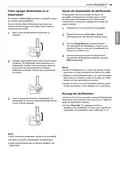
- Page 97: Cómo agregar abrillantador en el dispensador El dispensador tiene cinco niveles de ajuste. El lavavajillas se programa en la fábrica para un nivel de dispensador de abrillantador de 2. El indicador de Rinse Aid aparece en la pantalla cuando se necesita más abrillantador. Se recomienda utilizar abrillantador para evitar que queden marcas de agua en la vajilla. Abra la tapa del abrillantador levantando la lengüeta. Presione los botones Dual Zone y Power simultáneamente para verificar el ajuste actual. Agregue líquido abrillantador hasta el nivel máximo de llenado. Ajuste la configuración a un nivel más elevado si tiene agua dura. Utilice solamente abrillantador líquido en el lavavajillas.
- Page 98: Funciones inteligentes La aplicación SmartThinQ le permite comunicarse con el electrodoméstico usando un teléfono inteligente. Busque la aplicación LG SmartThinQ en Google Play Store desde un teléfono inteligente. El contenido de este manual puede diferir de la versión actual de la aplicación LG SmartThinQ. La función Tag On solo puede utilizarse con la mayoría de los teléfonos inteligentes que cuentan con la función NFC. Descargue ciclos nuevos y especiales que no se encuentran incluidos en los ciclos básicos del artefacto. Una vez que se completa la descarga de un ciclo en el artefacto, el producto mantiene el ciclo descargado hasta que se descarga un nuevo ciclo. Esta función muestra cuántos ciclos quedan antes de que se deba ejecutar el ciclo de Limpieza de la máquina. Smart Diagnosis™ brinda información útil para diagnosticar y resolver problemas con el producto. Ajuste el Nivel de Dispensador de Abrillantador y el Recordatorio de Limpieza de Máquina.
- Page 99: SmartThinQ Smart Diagnosis™ Función Smart Diagnosis™ El aparato tiene la capacidad de transmitir datos a través de su teléfono al Centro de información del cliente de LG. Los modelos equipados con NFC o Wi-Fi pueden transmitir datos a un teléfono inteligente usando la aplicación LG SmartThinQ. Use la función de diagnóstico inteligente en la aplicación SmartThinQ para ayudar a diagnosticar problemas. Smart Diagnosis™ no puede activarse a menos que el electrodoméstico se encienda usando el botón Power. Esto le da la oportunidad de hablar directamente con nuestros especialistas capacitados. El especialista registra los datos transmitidos desde el aparato y los usa para analizar el problema. Para obtener resultados óptimos, no mueva el teléfono mientras se transmitan los tonos. La calidad de la función Smart Diagnosis™ depende de la calidad de la llamada local. Una llamada de mala calidad puede resultar en la mala transmisión de los datos.
- Page 100: Mantenimiento Limpie el interior del lavavajillas periódicamente con un trapo o una esponja suaves y humedecidos para eliminar las partículas de alimentos y suciedad. Es importante verificar el exterior y el interior del lavavajillas, incluidos los filtros y los brazos rociadores, a intervalos regulares. Para eliminar manchas blancas y olores del interior del lavavajillas, ejecute un ciclo con la máquina vacía, sin detergente, colocando vinagre blanco en un recipiente apto para lavavajillas. No utilice benceno ni solvente al limpiar el exterior e interior del lavavajillas, ya que podría ocasionar un incendio o una explosión. Use guantes y/o prendas protectoras durante el cuidado y mantenimiento o limpieza. Cierre la válvula de agua y desenchufe la línea de alimentación si va a ausentarse por un extenso período de tiempo durante los meses más calurosos. Refresque el interior ejecutando un ciclo de limpieza de la máquina sin detergente si no ha utilizado el lavavajillas durante mucho tiempo. Prepare las líneas de suministro de agua y el lavavajillas para el invierno si existe la posibilidad de que haya temperaturas heladas. El exterior del lavavajillas se puede limpiar con un trapo o una esponja suaves y humedecidos, y secar con un trapo suave. No limpie el exterior del producto con productos de limpieza que contengan alcohol, diluyentes, blanqueadores, benceno, líquidos inflamables o abrasivos.
- Page 101: Mantenimiento Trampa de aire del desagüe o triturador del fregadero obstruidos Verifique la trampa de aire del desagüe o el triturador del fregadero si el lavavajillas no desagota correctamente. Limpieza de la trampa de aire Apague el lavavajillas. Retire la cubierta de la trampa de aire y la tapa plástica que se encuentra debajo. Limpie quitando cualquier desecho con un palillo o cepillo. Vuelva a colocar la tapa plástica y la cobertura de la trampa de aire. La trampa de aire del desagüe y el triturador son dispositivos de fontanería externos y no forman parte del lavavajillas. La garantía del lavavajillas no cubre los costos de servicio directamente relacionados con la limpieza o la reparación de la trampa de aire de desagüe externa y el triturador.
- Page 102: Mantenimiento Limpieza de los filtros Retire el estante inferior y coloque el brazo rociador del fondo de modo que se abra una V más amplia. Tenga cuidado con los bordes filosos al manipular el filtro de acero inoxidable. Con los filtros quitados, verifique la apertura del sumidero y elimine cualquier material extraño, si es necesario. Retire los restos de comida que se encuentren atascados en los filtros para evitar la acumulación de bacterias. Para lograr los mejores resultados de lavado, limpie el filtro después de cada carga. En áreas donde hay agua dura, limpie el filtro utilizando un cepillo suave una vez al mes, como mínimo. Limpie los filtros utilizando materiales no abrasivos y agua corriente tibia. Asegúrese de que el filtro esté correctamente ensamblado antes de comenzar un ciclo. Programa de limpieza del filtro recomendada según la cantidad de cargas por semana.
- Page 103: Mantenimiento Enjuague o sacuda el brazo rociador para quitar las partículas de alimentos. Limpieza de los brazos rociadores Si los orificios de los brazos rociadores se encuentran bloqueados por algún residuo de comida, es posible que la vajilla no se lave correctamente. Se recomienda limpiar los brazos rociadores cada dos semanas. Limpieza del brazo rociador inferior Asegúrese de que los orificios propulsores de agua no estén obstruidos con partículas de alimentos. Cuando haya quitado los residuos de comida, limpie los orificios de los brazos rociadores bajo el chorro de agua. Limpieza del brazo rociador superior Tire de la bandeja superior hacia fuera. Asegúrese de que los orificios propulsores de agua no estén obstruidos con partículas de alimentos. Cuando sea necesario realizar una limpieza, extraiga el brazo rociador superior girando la tuerca. Para evitar romper las secciones del brazo atomizador rodante, no tire de ellas ni las rote manualmente.
- Page 104: solución de problemas preguntas frecuentes ¿Es necesario utilizar un abrillantador? Es muy recomendable utilizar un abrillantador para mejorar el rendimiento del secado del lavavajillas. ¿Qué puedo hacer si mi vajilla queda con una película turbia o blanca después del lavado? La película turbia se origina por los minerales del agua que reaccionan con el detergente del lavavajillas. ¿Cómo puedo quitar la película blanca del tambor? Medir 3 cucharadas de polvo de ácido cítrico y utilícelo para llenar el compartimento principal del detergente. ¿Qué pasos debo seguir para mejorar los resultados de secado? El rendimiento del secado se ve directamente afectado por la cantidad de calor que permanece en la cuba después del enjuague caliente. Los lavavajillas LG están diseñados para ser utilizados con abrillantador. El abrillantador maximiza la cantidad de agua que se elimina de la vajilla antes de que comience el ciclo de secado. El agua tiende a repeler en vez de extenderse en plástico y superficies antiadherentes, haciéndolas más difícil de secar. Seleccione la opción Extra Dry o Night Dry para mejores resultados de secado al lavar artículos de plástico. Permita que el lavavajillas finalice por completo el ciclo de secado antes de abrir la puerta.
- Page 105: solución de problemas ¿Qué es el sistema de secado híbrido? El lavavajillas no utiliza un elemento de calentamiento para el proceso de secado, sino que el calor es retenido por la vajilla y el compartimiento durante los ciclos de lavado y enjuague. Nota Se requiere abrillantador para mejorar el rendimiento de secado. Si no se usa abrillantador, podría quedar agua en la vajilla y en la cuba. ¿Por qué se escucha un silbido? Es importante determinar cuánto tiempo dura el ruido y cuándo aparece. Cuando ingresa el agua al lavavajillas, puede escucharse un silbido. Esto es normal. ¿Qué tipo de vajilla puede colocarse en el lavavajillas? Asegúrese que la vajilla que coloque en el artefacto sea apta para lavavajillas. La vajilla plástica no se seca de manera tan efectiva como la vajilla de cristal o de metal. ¿Puedo realizar solamente un ciclo de secado? Para desagotar el agua estancada, mantenga presionado el botón Start durante tres segundos hasta que el ciclo se detenga. ¿Por qué mi lavavajillas emite un pitido continuo si abro la puerta durante o justo después de finalizado un ciclo? Esto es normal. El lavavajillas le informa que las temperaturas interiores de la unidad son altas y que debe tener cuidado cuando coloque sus manos en su interior.
- Page 106: Solución de problemas ¿Qué es el bloqueo de control y cómo se activa? El bloqueo Control Lock es una función que evita que se cambien los controles durante el ciclo. Para activar o desactivar, mantenga presionados Half Load y Energy Saver de forma simultánea durante tres segundos. ¿Puedo agregar una extensión a la manguera de desagüe? Si es necesario utilizar una extensión en la manguera de desagüe, use una manguera de diámetro interior de 5/8 o 7/8 y de 2 a 3 pies de longitud. Una luz LED está parpadeando, la máquina está emitiendo un pitido y el lavavajillas no inicia el lavado. ¿Qué le ocurre al lavavajillas? La puerta se debe cerrar dentro de los cuatro segundos de haberse presionado el botón Start. Si la puerta no se cierra a tiempo, parpadea una luz LED y el lavavajillas no funciona. Antes de cargar la vajilla, ¿debo enjuagarla? No, no necesita enjuagar la vajilla antes de cargarla, especialmente si utiliza los ciclos Normal y Automático. Videos de soporte para el usuario Si necesita más ayuda, puede encontrar videos y tutoriales en el sitio web LG.com.
- Page 107: Solución de problemas Antes de llamar al servicio técnico El artefacto está equipado con un sistema automático de monitoreo de errores para detectar y diagnosticar problemas en una etapa temprana. Si el artefacto no funciona adecuadamente o si no funciona en absoluto, verifique lo siguiente antes de solicitar servicio técnico. No se presionó el botón Start. Presione el botón Start. La puerta no está bien cerrada. Asegúrese de que la puerta esté bien cerrada y trabada. El suministro de energía o la línea de alimentación no están conectados. Conecte el suministro de energía o la línea de alimentación adecuadamente. El fusible está quemado o el interruptor de corriente está desactivado. Reemplace el fusible o restablezca el interruptor de corriente. El bloqueo de control está activado. Desactivar bloqueo de control. El lavavajillas está conectado al agua fría. Controle la conexión del suministro de agua o el ajuste de calentamiento del agua. El ciclo anterior se ha parado antes de su finalización y quedaron residuos de agua en el lavavajillas. Encienda el aparato, ejecute la opción Cancelar ciclo para eliminar el agua residual. Hay alimentos en el fondo de la unidad o en el filtro. Limpie el filtro y el interior según la sección Mantenimiento del manual del propietario. El agua permanece en el compartimiento luego de que el ciclo se completa. La manguera de desagüe está plegada u obstruida. Ajuste la manguera o elimine el bloqueo.
- Page 108: Solución de problemas Los objetos de aluminio rozan contra la vajilla durante el ciclo. Reposicione la vajilla. Película amarilla o marrón en las superficies internas del lavavajillas. Elimine las manchas utilizando un producto quita manchas. Baja temperatura del agua. El suministro de agua debe estar a 120 °F para un mejor rendimiento de lavado. Sobrecarga. No sobrecargue el lavavajillas. Detergente insuficiente. Agregue la cantidad de detergente recomendada. El dispensador del abrillantador está vacío. Recargue el dispensador del abrillantador. Agua dura acumulada en la cuba. Use ácido cítrico en polvo para limpiar. Algunos ruidos son normales durante el funcionamiento. Abra la cubierta de detergente. El lavavajillas no se encuentra a nivel. Ajuste las patas de nivelación. La electricidad está desconectada. Conecte el suministro de energía.
- Page 109: Solución de problemas La bandeja para cubiertos no está cargada de manera adecuada. La puerta no se cierra totalmente. Presione la manija de la puerta para que esta se cierre correctamente hasta que haga clic. Si se choca o toca el panel de control cuando el artefacto está en funcionamiento, puede producirse un sonido de botón desactivado. El lavavajillas emite un pitido si se toca el panel mientras está operando. Puede apagar los sonidos de los botones manteniendo presionado Half Load durante 3 segundos. La puerta se abrió durante el ciclo. Si la puerta se abre durante un ciclo, debe presionarse el botón Start antes de que transcurran 4 minutos o la máquina se apaga. El lavavajillas no está correctamente nivelado. Verifique que la unidad esté correctamente nivelada de lado a lado y de adelante hacia atrás. Se producen pérdidas desde la parte frontal de la unidad. Si el espumado excesivo causa la fuga, deje que la espuma se asiente durante 24 horas. P1, P2, P3, o P4 aparece en la pantalla. Éste no es un código de error, indica el ciclo de Descarga en curso. Bloqueo Infantil está activado. CL aparece en la pantalla. Mantenga presionado Half Load y Energy Saver simultáneamente por tres segundos.
- Page 110: Solución de problemas Códigos de error Hay un problema en la entrada de agua. Controle que la manguera del agua no esté obstruida, plegada o congelada. Controle el suministro de agua. Hay un problema en el desagüe. Controle que la manguera de desagüe de agua no esté obstruida, plegada o congelada. La trampa de aire o el triturador están obstruidos. Limpie la trampa de aire o el triturador. Los filtros están obstruidos. Limpie los filtros. Exceso de espuma causada por el uso de un detergente inadecuado. No utilice detergente para lavar vajillas a mano. Fallo al nivelar el lavaplatos. Asegúrese de que el electrodoméstico haya sido nivelado apropiadamente. Pérdida de agua. Corte el suministro de agua al lavavajillas y comuníquese con un Centro de Información al Cliente de LG. Excesiva cantidad de agua. Comuníquese con un centro de información al cliente de LG Electronics. Fallas en el circuito de calentamiento. Comuníquese con un centro de información al cliente de LG Electronics. Problema con el motor. Comuníquese con un centro de información al cliente de LG Electronics.
- Page 111: Garantía limitada para EE. UU. Aviso de arbitraje: esta garantía limitada contiene una cláusula de arbitraje que le demanda a usted y a LG resolver conflictos a través de un arbitraje vinculante. Si el lavavajillas LG fallara debido a defectos de materiales o de fabricación en el uso doméstico normal, LG tendrá la opción de reparar o reemplazar el producto. Esta garantía limitada solo es válida para el comprador minorista original del producto y será vigente solo cuando se compre y use dentro de los Estados Unidos. Se exige el comprobante de compra minorista original para solicitar servicio por garantía. Alcance de la garantía: un (1) año a partir de la fecha de compra minorista original para mano de obra y piezas. Los productos y las piezas de repuesto están garantizados durante el tiempo restante del período original de garantía o noventa (90) días, lo que resulte mayor. Esta garantía reemplaza cualquier otra garantía, expresa o implícita, lo que incluye sin límite, las garantías de aptitud comercial. Esta garantía limitada no cubre viajes del servicio técnico para entregar, buscar, instalar o reparar el producto. No cubre daños causados por tuberías de agua rotas o con fugas, o daños resultantes de operar el producto en una atmósfera corrosiva.
- Page 112: Garantía limitada Daños o fallas causados por corriente o voltaje eléctricos incorrectos, o por códigos de fontanería, por uso comercial o industrial, o por uso de accesorios no aprobados por LG. Daños causados por el transporte y el manejo, incluye rayas, muescas, astillado y otros daños al acabado del producto. Daños o artículos faltantes a productos reacondicionados, comprados con descuento, con la caja abierta o que hayan estado en exhibición. Productos cuyos números de serie originales hayan sido retirados, alterados o no se puedan determinar fácilmente. Aumentos en los costos de los servicios públicos y otros gastos adicionales de dichos servicios. Reparaciones cuando el producto se use de otra forma que no sea uso doméstico usual y normal. Resultados deficientes de lavado causados por desechos remanentes en el filtro. Limpie el filtro con regularidad. Resultados deficientes de lavado causados por una carga incorrecta o exceso de apilado. Asegúrese de que no haya vajilla ni utensilios que bloqueen los brazos rociadores.
- Page 113: Garantía limitada El tapón ciego del triturador no se ha extraído. Retire el tapón del triturador. Error OE: El triturador o la trampa de aire están bloqueados por desechos. Limpie el triturador o la trampa de aire. Error OE: Problema en la conexión de la válvula de entrada y la manguera de desagüe causado por una instalación inadecuada. Reinstale la manguera. Fuga externa: Movimiento de la puerta o cierre comprometido debido a nivelación incorrecta. Ajuste las patas de nivelación frontales inferiores a la altura requerida. No hay energía eléctrica debido a una conexión floja de la línea de alimentación o a un problema en el tomacorriente eléctrico. Reconecte la línea de alimentación o repare el tomacorriente. Retiro, cableado eléctrico, fontanería. Deberá pagar la instalación. El costo de la reparación o el reemplazo en estas circunstancias excluidas estará a cargo del consumidor.
- Page 114: Garantía limitada Procedimiento para resolver conflictos: Todos los conflictos entre usted y LG se resolverán exclusivamente a través de un arbitraje vinculante. Definiciones: Las referencias a “LG” significan LG Electronics U.S.A., Inc. y sus afiliados. Aviso de disputa: Debe notificar a LG por escrito al menos 30 días antes de iniciar el arbitraje. Acuerdo de arbitraje vinculante y renuncia de demanda colectiva: Cualquier reclamo entre usted y LG se resolverá solo a través de arbitraje vinculante. Normas y procedimientos de arbitraje: El arbitraje será administrado por la Asociación Americana de Arbitraje (AAA). Legislación vigente: La legislación del estado de su residencia regirá esta garantía limitada. Tarifas / Costos: Usted no debe pagar ninguna tarifa para comenzar un arbitraje. LG pagará todos los gastos administrativos a la AAA, salvo que solicite más de $25,000.00 por daños. Si prevalece en el arbitraje, LG pagará los honorarios y gastos de sus abogados, siempre que sean razonables. Si el árbitro considera que su reclamo es frívolo, el pago de todos los honorarios de arbitraje se regirá por las Normas de la AAA.
- Page 115: Garantía limitada Audiencias y ubicación. Si su reclamo es por $25,000 o menos, usted puede optar que el arbitraje sea realizado únicamente sobre la base de: (1) documentos presentados al árbitro, (2) a través de una audiencia telefónica o (3) por una audiencia en persona, según lo establecido por las Normas de la AAA. Exclusión. Usted puede quedarse fuera de este procedimiento de resolución de la disputa. Para excluirse usted debe enviar una notificación a LG, en un lapso de hasta 30 días continuos, contados a partir de la fecha de la primera compra del consumidor del producto. Debe incluir en el correo electrónico de exclusión o suministrar por teléfono: (a) su nombre y dirección; (b) la fecha en la cual el producto fue comprado; (c) el nombre o el número del modelo del producto; y (d) el número del serial. Sólo puede excluirse del procedimiento de resolución de conflictos en la forma descrita anteriormente (es decir, por correo electrónico o por teléfono); ninguna otra forma de notificación será efectiva para hacerlo. Excluirse de este procedimiento de resolución de controversias no afectará de ninguna manera la cobertura de la Garantía Limitada.
- Page 116: Page 116

AEG FFB53600PM Dishwasher

AEG FSE73700RO 7000 Series Dishwasher

FISHER AND PAYKEL DD60D4HNB9 Drawer Dishwasher

BOSCH SMS26DI01B Dishwasher

BOSCH SMS2HKI04E Dishwasher

SIEMENS SN65HX01VI Dishwasher

GE APPLIANCES GDF550PGR Plastic Interior Dishwasher with Front Controls

FISHER and PAYKEL DD60SHTI9 Tall Dishwasher

FISHER PAYKEL DD24STX6PX1 Tall Sanitize Dishwasher

FISHER PAYKEL DD60SDFTB9 Dishwasher